
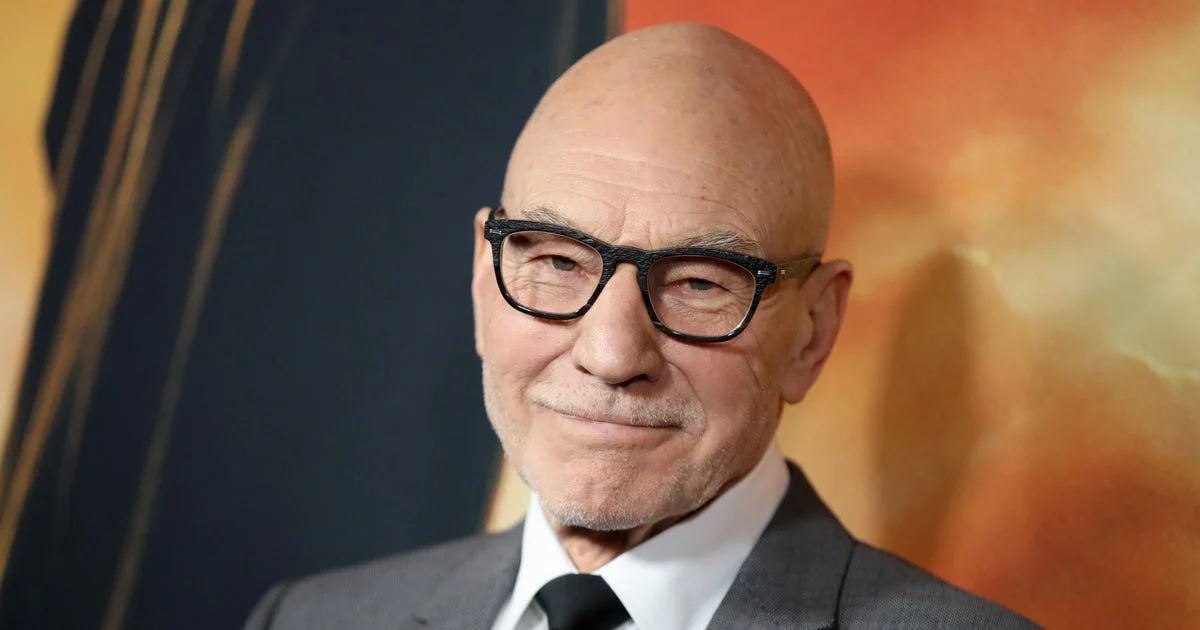
The world of entertainment is in mourning following the passing of Sir Patrick Stewart, a titan of the stage and screen whose career spanned more than six decades. Sir Patrick died at his home on Wednesday at the age of 86, according to a statement released by his longtime spokesperson, Kelly Bush Novak. The actor had been navigating a private and "poignant journey" with Alzheimer’s Disease and Lewy Body Dementia. His passing marks the end of an era for both the Royal Shakespeare Company and the global science fiction community that he helped define.
In the hours following the announcement, tributes poured in from across the globe, reflecting the profound impact Stewart had on generations of fans. Novak noted that his final moments were defined by the same grace that characterized his life, surrounded by family, friends, live music, and the warmth of a lifetime of shared memories.
A Legacy Defined by Range and Gravitas
Born in Mirfield, West Yorkshire, in 1940, Stewart’s path to international stardom was paved in the rigorous traditions of British theater. He joined the Royal Shakespeare Company (RSC) in 1966, a tenure that would eventually lead to his recognition as one of the finest classical actors of his generation. Throughout his career, Stewart remained a stalwart of the stage, frequently returning to London’s West End and Broadway to tackle the most challenging roles in the dramatic canon, including Macbeth, Prospero, and his perennial favorite, Ebenezer Scrooge.
His contribution to theater was formally recognized through three Olivier Awards and a Tony nomination, solidifying his reputation as a master of the craft. Beyond his professional accolades, his work with the RSC—where he was named an Honorary Associate Artist—served as a masterclass for aspiring actors worldwide. His ability to inhabit the complexities of the human condition was matched only by his resonant, authoritative voice, which became a hallmark of his performances.
The Galactic and Cinematic Icon
While his stage work earned him the respect of critics, Stewart achieved global cultural icon status through two defining roles that bridged the gap between high art and popular entertainment. In 1987, he was cast as Captain Jean-Luc Picard in Star Trek: The Next Generation. At the time, the casting of a classically trained Shakespearean actor as the lead of a science fiction television series was considered a gamble. Stewart’s portrayal of the diplomatic, intellectual, and morally steadfast Captain of the USS Enterprise defied industry expectations, turning the show into a cultural phenomenon that ran for seven seasons and four major motion pictures.
Decades later, Stewart proved the enduring power of the character by reprising the role for Paramount+’s Star Trek: Picard, which explored the character’s aging process and existential struggles. This return not only satisfied longtime fans but also allowed Stewart to portray a more vulnerable, nuanced version of the legendary starship captain.
Parallel to his work in the final frontier, Stewart became the face of the X-Men film franchise, portraying Professor Charles Xavier. His performance as the mentor to a generation of mutants brought a sense of gravitas to the superhero genre, grounding the fantastical elements of Marvel’s world in themes of prejudice, education, and social responsibility. His upcoming appearance in the December 2026 release of Avengers: Doomsday will serve as a poignant final cinematic contribution to a role he defined for nearly 25 years.
A Chronology of a Remarkable Life
- 1940: Born in Mirfield, West Yorkshire.
- 1966: Joins the Royal Shakespeare Company, beginning a lifelong commitment to classical theater.
- 1987: Debuts as Captain Jean-Luc Picard in Star Trek: The Next Generation, changing the trajectory of his career.
- 1995: Wins a Grammy Award for Best Spoken Word Album for Children.
- 2000: Debuts as Professor Charles Xavier in the first X-Men feature film.
- 2001: Appointed an Officer of the Order of the British Empire (OBE) by Queen Elizabeth II.
- 2010: Receives a knighthood for his services to drama.
- 2013: Marries singer-songwriter Sunny Ozell.
- 2023: Publishes his critically acclaimed memoir, Making It So.
- 2026: Passes away at age 86 after a battle with Alzheimer’s and Lewy Body Dementia.
Industry Reactions and Tributes
The loss of Stewart has been felt acutely by his peers, many of whom noted his humility and kindness behind the scenes. William Shatner, the original Star Trek captain, expressed his heartbreak on social media, emphasizing that Stewart was "a friend, a colleague, and a magnificent actor." Shatner noted that Stewart’s portrayal of Picard represented the "best of us," a sentiment echoed by many who knew him personally.
Seth MacFarlane, the creator of Family Guy and a frequent collaborator with Stewart, highlighted the actor’s rare ability to elevate any material he was given. "He was that rare actor who could take any bit of dialogue and elevate it," MacFarlane wrote. "We have lost a legendary actor today, and for many of us, a good friend."
Marvel Studios, representing the home of his X-Men character, expressed deep sorrow, acknowledging that Stewart was a "singular talent" whose influence on the character of Charles Xavier would endure for generations of fans.
Beyond the Spotlight: Advocacy and Humanity
While Stewart was best known for his acting, he was also a tireless advocate for social causes. Throughout his life, he utilized his public platform to champion women’s rights, particularly in his work to combat domestic violence. He was a vocal supporter of refugees, animal rights, and political reform. His advocacy was not performative; it was deeply rooted in his personal history and his belief that artists have a moral obligation to engage with the pressing issues of their time.
His spokesperson, Kelly Bush Novak, noted that his advocacy work was an extension of the same empathy and compassion he brought to his stage and screen roles. "He will be remembered for the dignity, compassion and humanity he brought to every role—in his art and life," Novak stated.
Analysis: A Cultural Void
The passing of Sir Patrick Stewart represents more than just the loss of a famous face; it marks the disappearance of a bridge between the traditional theater of the 20th century and the modern, digital-first entertainment landscape. Stewart’s ability to remain relevant across multiple decades—from the rigid, dusty boards of the RSC to the sophisticated CGI-driven world of modern Marvel cinema—is a testament to his adaptability and the timeless quality of his craft.
His influence on future generations of actors cannot be overstated. He demonstrated that an actor could be both a serious intellectual and a blockbuster star, never sacrificing one for the other. As the film and television industry continues to evolve, the blueprint Stewart left behind—of grace, discipline, and profound empathy—will remain a standard for those who seek to follow in his footsteps.
In his final year, even as his health declined, Stewart remained active, lending his voice to Shakespearean sonnets and participating in animated projects. This final period of productivity was, in many ways, a reflection of his life: a constant, restless pursuit of artistic expression. As his fans around the world revisit his performances, they will find not just a master of his craft, but a man who, through his dedication to his work and his causes, left the world a slightly more thoughtful and compassionate place. Sir Patrick Stewart is survived by his wife, Sunny Ozell, and his two children, Daniel and Sophia.

