
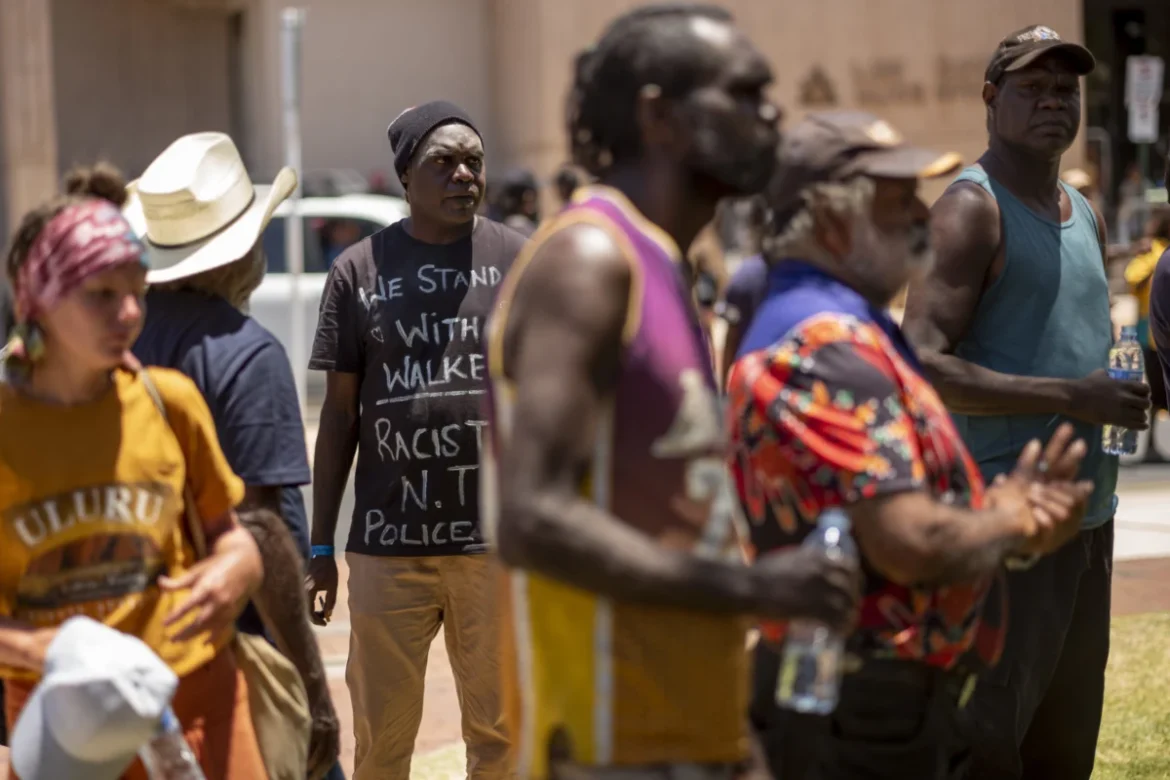
The series provides a forensic and deeply human look at the 2019 killing of 19-year-old Warlpiri man Kumanjayi Walker in the remote Northern Territory community of Yuendumu. The title, 2.6 Seconds, refers to the fleeting window of time in which three shots were fired by police officer Zachary Rolfe—the first of which was non-fatal, followed by two subsequent shots that resulted in Walker’s death. The ensuing legal proceedings and the subsequent acquittal of the officer involved triggered a profound national reckoning regarding the treatment of First Nations people by the justice system in Australia.
A Chronology of the Yuendumu Tragedy
The events explored in the documentary began on November 9, 2019, in Yuendumu, a remote Aboriginal community located approximately 290 kilometers northwest of Alice Springs. Following a period of unrest and the failure of police to execute an arrest warrant for Walker, an Immediate Response Team (IRT) was deployed to the community. During a confrontation in a residential dwelling, Constable Zachary Rolfe fired his service weapon, striking Walker three times.
The immediate aftermath saw an outpouring of grief and anger across Australia. Kumanjayi Walker’s death became a flashpoint for the Black Lives Matter movement in Australia, as activists and community leaders drew parallels between his death and the systemic racial inequities observed globally. The legal process that followed was protracted and highly contentious. In March 2022, a Northern Territory Supreme Court jury found Rolfe not guilty of murder, manslaughter, and a violent act causing death. The acquittal sparked widespread protests across major Australian cities, with thousands marching to demand an overhaul of the justice system and an inquiry into the state of Indigenous incarceration.
Contextualizing the Documentary’s Significance
Blackfella Films, known for its commitment to telling stories that center First Nations voices, has crafted this series not merely as a crime procedural but as a socio-political autopsy of a nation. Under the stewardship of director Darren Dale and writer Andrew Boe, the production delves into the structural failures that led to the IRT’s deployment and the subsequent lack of accountability perceived by the Warlpiri community.
The selection for TIFF’s Primetime program is a testament to the series’ high production value and its narrative urgency. As international festivals increasingly favor long-form documentary storytelling, the inclusion of 2.6 Seconds suggests that the global appetite for nuanced examinations of colonial legacies and modern policing is at an all-time high.
Industry and Institutional Perspectives
The involvement of Netflix is expected to provide a platform for this story that far exceeds the reach of domestic broadcasting. For Netflix, this acquisition aligns with its strategy to invest in "prestige" factual content that offers cultural insight alongside dramatic tension. Amanda Duthie, Content Director for Netflix ANZ, noted that the project is a "deeply moving" piece of storytelling that carries weight well beyond the borders of Australia.
"Some stories stay with you long after the screening," Duthie stated. "Netflix is honoured to bring this deeply moving Australian documentary to Netflix audiences around the world, giving a powerful and important story the opportunity to resonate far beyond our shores."
Darren Dale echoed this sentiment, emphasizing that the story of Kumanjayi Walker, while inherently Australian, speaks to universal tensions regarding state power and racial identity. "2.6 Seconds is a shocking story about the collision of race and power that is uniquely Australian but one I’ve always believed also has global resonance," Dale said. "Netflix coming on board ahead of our TIFF premiere is confirmation of that belief."
Financial and Production Foundations
The production of 2.6 Seconds was a complex collaborative effort involving various stakeholders committed to amplifying First Nations narratives. As a co-commission between the Special Broadcasting Service (SBS) and the National Indigenous Television (NITV), the series represents a major investment in public-interest journalism.
The production was bolstered by significant financial support from Screen Australia’s First Nations Department, highlighting the agency’s mission to support indigenous-led storytelling that challenges the status quo. Additional funding was provided by Screen NSW, with All3Media International serving as an associate in the production process. This multi-layered financing structure reflects the project’s ambition to meet international quality standards while remaining rooted in the local cultural context.
The Broader Implications for Justice Reform
The death of Kumanjayi Walker remains one of the most significant cases in contemporary Australian history, largely because it forced a public conversation about the "Royal Commission into Aboriginal Deaths in Custody," which, despite being established decades ago, has yet to see its recommendations fully implemented.
Fact-based analysis of the case suggests that the documentary will focus on several critical themes:
- The Deployment of Tactical Units: The series is expected to scrutinize the decision-making process behind sending armed tactical response teams into remote communities.
- The Legal Framework: By exploring the trial of Zachary Rolfe, the series will likely highlight the difficulty of securing convictions in cases involving police-involved deaths, a topic that has seen intense scrutiny from legal experts and human rights organizations.
- Community Impact: The trauma inflicted upon the Warlpiri community is central to the narrative. The documentary aims to shift the focus from the legal technicalities of the courtroom back to the human cost of the loss of a young man.
The Future of Indigenous Documentary
The transition of this story to a global streaming giant like Netflix signifies a shift in how Indigenous stories are curated for international consumption. No longer confined to niche regional channels, these narratives are being presented as high-stakes, essential viewing. For the Australian screen sector, the global pickup is a victory, demonstrating that local stories with specific cultural markers can achieve universal appeal if the storytelling is sufficiently robust and empathetic.
As 2027 approaches, the anticipation for the release will likely center on how the series navigates the delicate balance between reporting on a real-world legal case and honoring the dignity of the victim’s family. The production team has maintained a close relationship with the Warlpiri community, ensuring that the storytelling process remained respectful of cultural protocols and sensitivities.
Ultimately, 2.6 Seconds stands as a profound document of a historical moment that changed the Australian landscape. By bringing this narrative to a global stage, Netflix is ensuring that the questions posed by the tragedy in the outback—questions about justice, equality, and the accountability of the state—will continue to be asked by audiences in every corner of the world. The series serves as a reminder that the echoes of those 2.6 seconds continue to reverberate, serving as a catalyst for ongoing discourse on the human rights of Indigenous peoples in post-colonial nations.
