
Methane, a colorless and odorless hydrocarbon, has emerged as one of the most significant hurdles in the global effort to mitigate the climate crisis. While carbon dioxide (CO2) often dominates the conversation regarding global warming, methane (CH4) is responsible for approximately one-third of the planetary heating observed since the Industrial Revolution. As a primary component of natural gas, which fuels roughly 25 percent of the world’s electricity, methane is inextricably linked to modern energy systems, yet its environmental cost is increasingly under scrutiny by scientists and policymakers alike.
Structurally, methane consists of one carbon atom bonded to four hydrogen atoms. It is produced through both geological processes—where heat and pressure act on organic matter over millions of years—and biological processes known as methanogenesis. In the latter, microorganisms called archaea produce methane in oxygen-free environments such as wetlands, the digestive tracts of ruminant livestock, and landfills. Despite its relatively short atmospheric lifespan of about 12 years, its ability to trap heat is staggering. Over a 20-year period, methane is 86 times more potent than carbon dioxide on a pound-for-pound basis, making it a "fast lever" for climate action.

Technological Evolution in Methane Measurement
The accuracy of methane reporting has historically been a point of contention between industry groups and environmental scientists. Traditionally, emissions have been calculated using "bottom-up" methods. This involves taking a known emission factor—such as the amount of methane a single cow burps or the average leak rate of a gas valve—and multiplying it by the total number of units in a region. While useful for general bookkeeping, this method frequently fails to account for "super-emitters"—specific facilities or incidents responsible for disproportionately large volumes of gas.
In recent years, "top-down" measurement technologies have revolutionized the field. Using aircraft, high-altitude sensors, and sophisticated satellites like MethaneSAT and GHGSat, researchers can now pinpoint massive leaks in real-time. The data has been eye-opening. A landmark study published in the journal Science revealed that methane emissions from the U.S. oil and gas industry were 60 percent higher than estimates provided by the Environmental Protection Agency (EPA). Satellite imagery in 2022 identified over 1,000 super-emitting events globally, including a leak in Turkmenistan that released methane at a rate equivalent to the entire hourly emissions of France.
A Chronology of Rising Atmospheric Concentrations
The trajectory of methane in the atmosphere provides a stark visual of human industrial expansion. Before the Industrial Revolution, atmospheric methane levels hovered around 722 parts per billion (ppb). By 2023, the World Meteorological Organization (WMO) reported that concentrations had surged to a record 1,934 ppb—a 265 percent increase.

The timeline of this rise shows distinct phases. While levels stabilized somewhat in the early 2000s, they began a rapid and mysterious acceleration around 2007. Scientists attribute this second surge to a combination of expanded fossil fuel extraction (particularly fracking) and increased biological emissions from tropical wetlands and livestock. The urgency of the situation led to the 2021 launch of the Global Methane Pledge at COP26 in Glasgow, where 159 nations committed to a collective 30 percent reduction in methane emissions by 2030. However, despite these diplomatic efforts, 2023 data shows that global emissions continue to reach new heights.
Primary Anthropogenic Sources: Agriculture, Energy, and Waste
Human activity accounts for approximately 60 percent of total methane emissions, with three sectors dominating the landscape:
The Agricultural Footprint
Agriculture is the largest human-caused source, contributing roughly 40 percent of emissions. Within this sector, livestock is the primary driver. Ruminant animals like cattle, sheep, and goats possess specialized stomachs where microbes break down tough plant fibers, releasing methane as a byproduct of enteric fermentation. Manure management systems, particularly liquid lagoons used in industrial pig and dairy farming, also contribute significantly. Furthermore, rice cultivation—which feeds billions—is responsible for 8 percent of human-caused methane due to the anaerobic conditions in flooded paddies.

Fossil Fuel Extraction and Distribution
The energy sector follows closely, contributing 35 percent of anthropogenic methane. During oil extraction, methane is often "vented" or "flared" (burned off) if the infrastructure to capture it is unavailable. Leaks in the aging pipeline infrastructure of major economies also represent a constant, invisible drain. Coal mining remains a significant factor as well; methane trapped in coal seams is released during the mining process, with underground mines being particularly "gassy" and dangerous for workers.
Waste Management
Landfills and wastewater treatment plants account for 20 percent of emissions. As organic waste—such as food scraps and paper—decomposes in the oxygen-starved environment of a landfill, it produces "landfill gas," which is roughly 50 percent methane. With global solid waste production expected to rise by 73 percent by 2050, this sector represents a growing challenge for urban planners.
The Feedback Loop: Natural Sources and Climate Tipping Points
Natural sources, such as wetlands and permafrost, account for the remaining 40 percent of methane emissions. However, the line between "natural" and "human-caused" is blurring due to positive feedback loops. As the planet warms, the "wetland methane feedback" kicks in: higher temperatures and altered rainfall patterns cause tropical wetlands to expand and produce more gas.

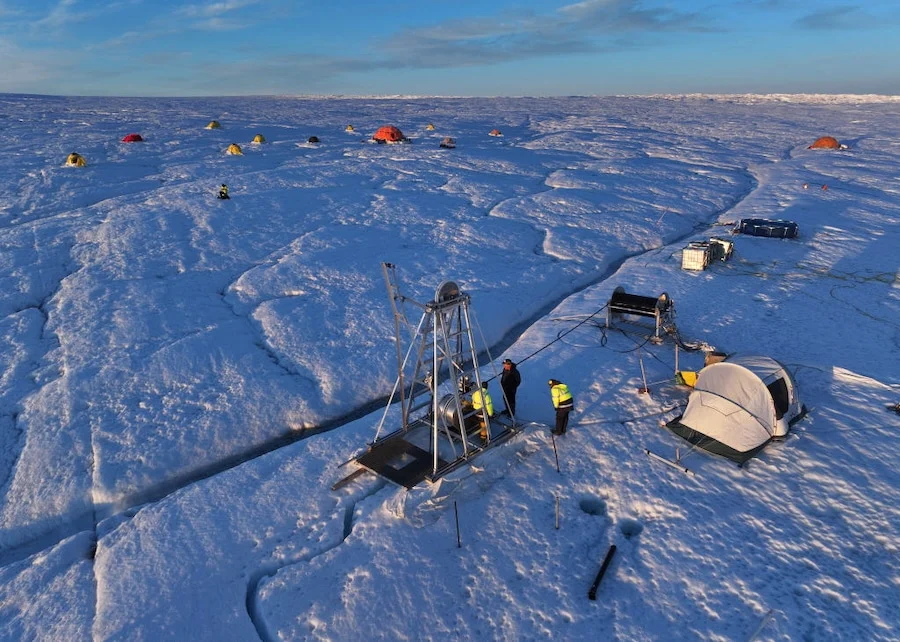
In the Arctic, the thawing of permafrost—ground that has been frozen for millennia—threatens to release massive stores of organic carbon and methane hydrates. The Arctic currently holds 2.5 times more carbon than is present in the entire atmosphere. Scientists warn that if a significant portion of this is released, it could trigger a "tipping point," leading to irreversible warming that persists regardless of human emission cuts.
Deconstructing the ‘Bridge Fuel’ Myth
For over a decade, natural gas (methane) was marketed as a "bridge fuel" that would help the world transition from coal to renewables. The logic was simple: burning natural gas for electricity produces about half the CO2 of burning coal. However, this narrative often ignores the "upstream" and "midstream" leaks.
Recent research, including a 2023 study by Cornell University, suggests that if even 0.2 percent of methane leaks during its lifecycle, natural gas becomes as damaging to the climate as coal. When accounting for the energy-intensive process of liquefying gas for export (LNG), its global warming potential over a 20-year horizon can be 33 percent higher than coal. Bill McKibben, a prominent environmental advocate, has warned that the massive planned build-out of LNG terminals in the U.S. and Australia could "overwhelm our efforts to rein in global warming," effectively locking in high emissions for decades.

Public Health and the Ozone Connection
The impact of methane extends beyond temperature charts; it is a direct threat to human health. Methane is a primary precursor to ground-level ozone (smog), which forms when the gas reacts with other pollutants in the presence of sunlight. Unlike the protective ozone layer high in the stratosphere, ground-level ozone is a powerful respiratory irritant.
Health data indicates that methane-generated ozone is responsible for approximately 500,000 premature deaths annually. It exacerbates asthma, reduces lung function, and causes chronic obstructive pulmonary disease (COPD). Furthermore, ozone is toxic to plants, reducing global crop yields for staples like wheat and soy by millions of metric tons every year. Reducing methane emissions would therefore provide an immediate "double dividend": slowing climate change while saving hundreds of thousands of lives and improving food security.
Strategic Solutions and the Path to 2030
The Intergovernmental Panel on Climate Change (IPCC) states that methane emissions must be cut by 34 percent by 2030 to keep the 1.5°C warming limit within reach. Achieving this requires a multi-pronged approach:

- Technical Fixes in Energy: The International Energy Agency (IEA) estimates that 70 percent of oil and gas methane emissions can be eliminated using existing technology, and 40 percent can be cut at no net cost by selling the captured gas. This includes rigorous leak detection and the replacement of pneumatic controllers.
- Agricultural Innovation: Introducing seaweed supplements (like Asparagopsis taxiformis) into cattle feed has shown the potential to reduce enteric methane by up to 82 percent. In rice farming, "Alternate Wetting and Drying" techniques can reduce emissions by 45 percent without sacrificing yields.
- Circular Waste Economies: Diverting organic waste from landfills to composting facilities or anaerobic digesters can turn a pollutant into a resource.
- Dietary Shifts: Policy experts emphasize that technical fixes alone may not be enough. Shifting global diets away from heavy meat consumption, particularly in wealthy nations, remains one of the most effective ways to lower the agricultural methane burden.
Analysis of Global Implications
The global response to methane will likely determine the success of the Paris Agreement. Because methane is short-lived, reducing it provides nearly immediate results in the rate of warming. Unlike CO2, which persists for centuries, a major cut in methane today would lead to a noticeable stabilization of temperatures within a decade.
However, the "implementation gap" remains wide. While 159 countries have signed the Global Methane Pledge, few have backed it with the mandatory regulations needed to force industry compliance. The upcoming years will be a test of whether international cooperation can move beyond voluntary pledges to enforceable standards. As satellite monitoring makes it impossible for "super-emitters" to hide, the pressure on both governments and corporations to act has never been higher. The window to prevent the most catastrophic feedback loops is closing, but the tools to seal that window are already in hand.
