
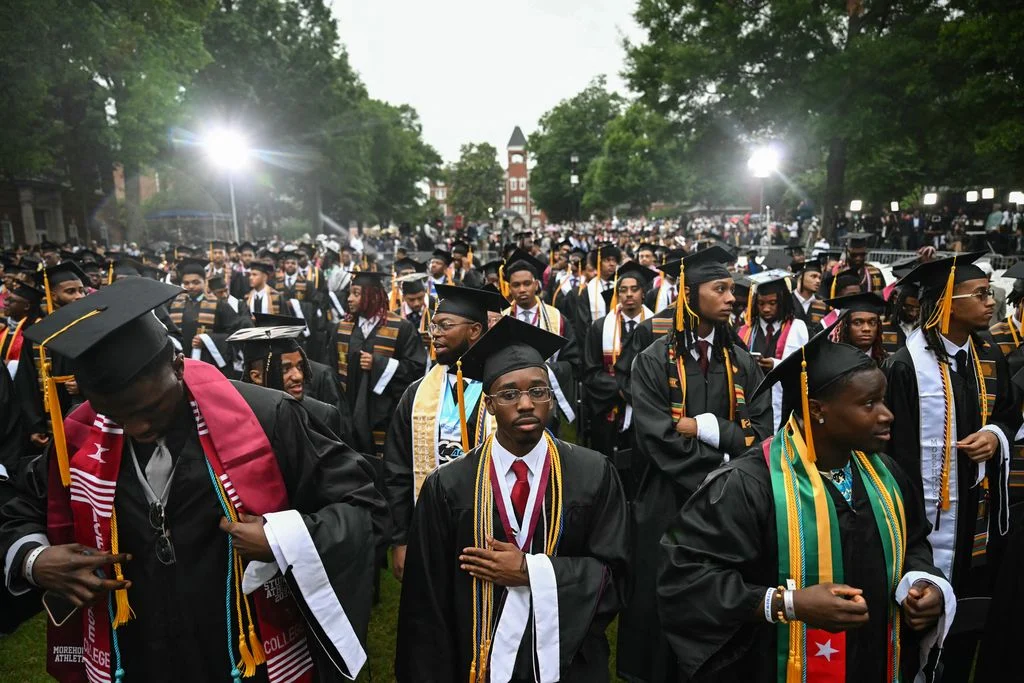
Trinity Williams, a junior and dedicated student ambassador at Howard University, offers a consistent piece of counsel to prospective students touring the historic Washington, D.C. campus. In an era marked by the Supreme Court’s landmark decision to prohibit race-conscious admissions, her message is unequivocal: "Always choose an HBCU." For Williams, Howard is more than a top-ranked private research institution; it is a vital engine of social mobility, founded in 1867 to educate newly freed African Americans and currently serving as a bastion of professional preparation. She describes a campus culture where students are not just learning, but are being "primed and mentored" for an elite level of competition.
However, the optimism found on the grounds of Historically Black Colleges and Universities (HBCUs) contrasts sharply with the growing anxiety permeating other corners of higher education. Recent reporting from The Hechinger Report and Soledad O’Brien Productions suggests that for many minority students at predominantly white institutions (PWIs), the path to career entry is becoming increasingly obstructed. The ripple effects of the 2023 Supreme Court ruling, combined with subsequent executive orders from the Trump administration targeting Diversity, Equity, and Inclusion (DEI) initiatives, have created a volatile landscape for students entering the workforce.
The Legislative and Judicial Timeline
The current climate is the result of a multi-year shift in both legal precedent and administrative policy. In June 2023, the U.S. Supreme Court effectively ended the use of race-conscious admissions in higher education, arguing that such programs violated the Equal Protection Clause. While the ruling specifically addressed university admissions, its societal reach proved to be immediate and pervasive.
Following the ruling, the administration took further steps to dismantle DEI frameworks. In October 2026, President Trump issued executive orders aimed at curbing what the administration termed "discriminatory practices" associated with DEI programs. This created a profound "chilling effect," as corporations and academic institutions began to preemptively dismantle recruitment and support programs out of fear of litigation, political targeting, or public backlash.
Data and the "Cascade Effect"
The impact on student enrollment at elite institutions has been immediate. Data from the 2025-2026 academic year indicates a sharp decline in Black and Hispanic representation at many top-tier universities. Harvard University, a defendant in the original Supreme Court case, reported that its incoming class of Black students fell from 18 percent in 2023 to 9.3 percent in 2026.
This shift has triggered what sociologists call a "cascade effect." As high-achieving Black and Hispanic students are displaced from the most selective universities, they migrate to less competitive institutions. This displacement, in turn, creates a domino effect that leaves fewer spots available for underrepresented students at those lower-tier schools, effectively thinning the presence of minority groups across the entire hierarchy of higher education.
Moreover, a 2025 survey by Veris Insights revealed that the percentage of large employers identifying diversity as a primary factor in choosing where to send recruiters plummeted from nearly 60 percent in 2022 to just 31 percent in 2025. This has led to a noticeable contraction in the corporate pipelines that previously connected minority students to prestigious internships and entry-level positions.
Institutional Responses and Corporate Retrenchment
The corporate response to these legal and political shifts has been marked by caution. According to research from Columbia Business School, many firms have scrubbed diversity-related language from their job descriptions and re-evaluated their candidate sourcing strategies. The fear of being targeted by "reverse discrimination" lawsuits—often encouraged by conservative legal groups—has led companies to prioritize "race-neutral" hiring, even if such policies inadvertently disadvantage groups that were once the focus of dedicated recruitment efforts.

This climate of fear extends to non-profit and educational support structures. In November 2026, the Hispanic Scholarship Fund reached a legal settlement requiring it to open scholarships previously reserved for Hispanic students to all applicants, regardless of race. This case serves as a bellwether for the future of targeted financial aid and support programs across the country.
The Role of HBCUs in a Changing Economy
Amidst this turbulence, HBCUs have emerged as critical sanctuaries for talent development. Michael Collins, a senior vice president at the nonprofit Jobs for the Future, notes that while recruiters are increasingly hesitant to engage in race-conscious hiring, they remain interested in high-performing students. HBCUs provide a structured environment where students can access professional networks that are currently being dismantled or rendered inaccessible elsewhere.
However, experts caution that HBCUs cannot serve as a panacea for the broader systemic exclusion of minority students. These institutions account for only 3 percent of U.S. higher education enrollment. Furthermore, while they have received some federal support, many private HBCUs continue to struggle with significant financial instability and aging infrastructure. Relying solely on these institutions to bridge the gap in career opportunities ignores the fact that millions of Black and Hispanic students remain enrolled in non-HBCU institutions, where their access to professional support is rapidly eroding.
Political Shifts and Future Outlook
The political landscape remains fractured. Following the 2026 midterm elections, some analysts suggest that a new, more diverse Congress—including high-profile figures like incoming House Speaker Hakeem Jeffries—could provide a check against further dismantling of civil rights protections. Natasha Warikoo, a professor at Tufts University, suggests that such a legislative shift could help stem the tide of anti-DEI attacks on campuses, providing a more stable environment for students to succeed.
Conversely, others remain skeptical. David Hinojosa of the National Center for Youth Law argues that the current administration’s focus on prioritizing "privileged" demographics remains a central policy objective. He believes that even if a new Congress pushes back, the administrative power to enforce a retreat from diversity initiatives is immense.
Long-Term Implications
The full extent of the Supreme Court’s decision on the labor market has yet to be realized. Because the first post-ruling class of students will not graduate until 2028, the long-term impact on employment demographics remains a projection. Experts like Jonathan E. Collins of Teachers College, Columbia University, warn that the "employment consequences are still ahead of us."
The current reality is one of transition. As corporations move away from explicit diversity targets in favor of a "risk-averse" model, the burden of professional advancement is shifting heavily onto the students themselves. For those at schools like Howard, the existing alumni networks and institutional support systems offer a buffer against the changing tides. For others, the future is significantly more precarious.
As the legal and political battles continue to unfold, the primary question for American higher education is whether it can maintain its role as an engine of meritocracy when the tools designed to ensure that merit is recognized across all racial lines are being systematically dismantled. The "chilling effect" described by researchers like Julie Park is already rewriting the rules of the professional game, and for many students from underrepresented backgrounds, the opportunity to enter that game is becoming harder to secure.
The story of the next decade in American labor will be defined by how the workforce adapts to a landscape where diversity is no longer an explicit organizational goal, but rather a casualty of a broad, legally-backed retreat from inclusive policies. Whether HBCUs can expand their capacity to fill the void, or whether the "cascade effect" will continue to push minority students out of the upper echelons of the economy, remains the defining challenge for the current generation of students and the institutions tasked with their education.
