
The geopolitical landscape of the Middle East and South Asia faced a significant realignment as regional powers recalibrated their defense postures amid an escalating series of cross-border skirmishes, naval confrontations, and diplomatic standoffs. In a joint defense council meeting held on Friday, senior officials from Pakistan and Turkey reaffirmed their unwavering commitment to safeguarding Saudi Arabia’s territorial integrity. The high-level talks, organized under the framework of a trilateral defense pact, underscore a growing regional consensus to counter the persistent threat posed by Iran-backed Houthi rebels operating out of Yemen.
According to televised statements issued by Pakistan’s Foreign Minister Ishaq Dar, the trilateral pact operates on the foundational principle that an act of aggression against any single member constitutes an attack against all signatories. However, both Islamabad and Ankara have taken pains to characterize the pact as strictly defensive in nature. Turkish defense officials emphasized that while Ankara is actively weighing various forms of military assistance to Riyadh, the terms of the Joint Mecca Defense Agreement do not mandate the deployment of Turkish combat troops to the battlefields of Yemen, nor do they envision offensive operations targeting Houthi positions. Similarly, Pakistani leadership reiterated that the pact is not formulated as a hostile maneuver against any neighboring state, including Iran, but rather serves as a shared vehicle for deepening strategic security architecture and deterrence capabilities across the broader Islamic world.
Diplomatic Fallout and Security Crisis in Kuwait
The diplomatic tension rippling through the region was further compounded by a fatal drone strike in Kuwait that claimed the lives of two Italian technical specialists and left two others—a Pakistani national and a Kuwaiti citizen—gravely wounded. The incident prompted immediate international condemnation and a swift diplomatic reprimand from Kuwaiti authorities.
On Friday, the Kuwaiti Ministry of Foreign Affairs summoned the Iranian ambassador to hand over a formal note of protest. Deputy Foreign Minister Hamad Sulaiman Al-Mashaan condemned the drone strike as a flagrant violation of Kuwait’s sovereignty and territorial integrity, directly holding the government in Tehran accountable for the attack and its subsequent ramifications. Al-Mashaan explicitly underscored Kuwait’s inherent right to self-defense under international law. Despite the mounting pressure and circumstantial indicators pointing toward regional proxies, the Iranian government has consistently denied any operational involvement in the strike.
Against the backdrop of the Kuwaiti attack, United Nations Secretary-General António Guterres issued an urgent plea for maximum restraint from all regional actors. Speaking through his spokesman Stéphane Dujarric, Guterres expressed profound alarm over the compounding escalatory spiral threatening the Persian Gulf. The U.N. chief warned that any renewed conventional hostilities or proxy-driven escalations would yield catastrophic humanitarian and economic consequences for both the immediate region and the global community at large.
Maritime Blockades and Economic Warfare in the Gulf of Oman
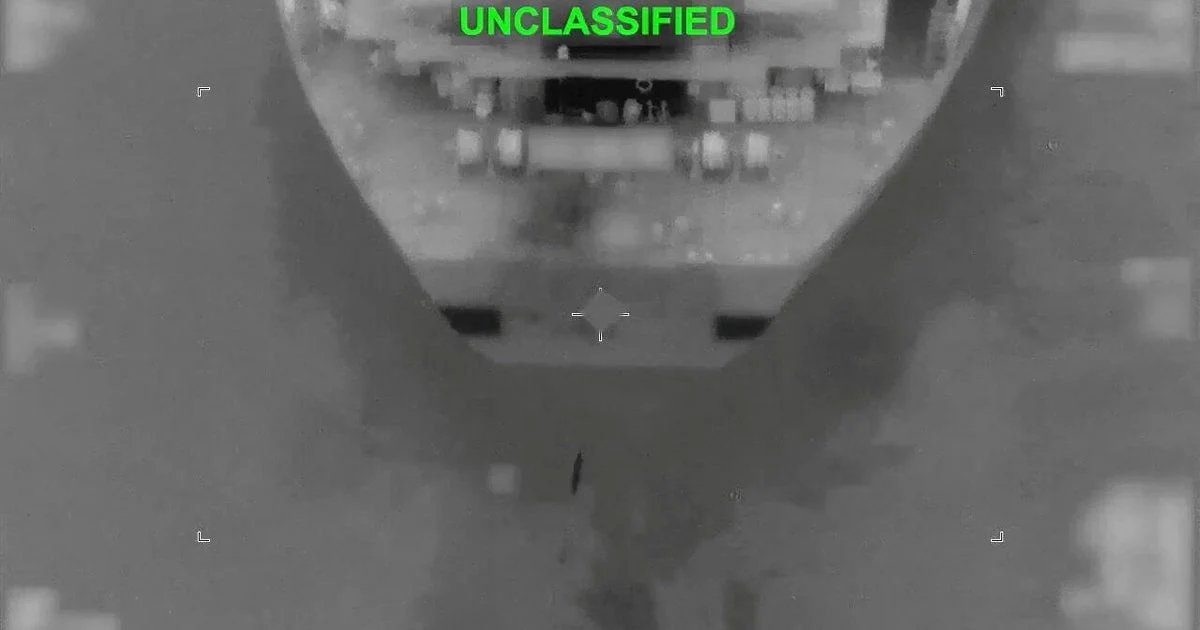
At sea, the enforcement of maritime blockades has transformed the strategic waterways of the Middle East into volatile theaters of kinetic engagement. United States Central Command (CENTCOM) confirmed on Friday that U.S. military assets successfully disabled a commercial vessel attempting to breach the American-led blockade of Iranian port infrastructure.
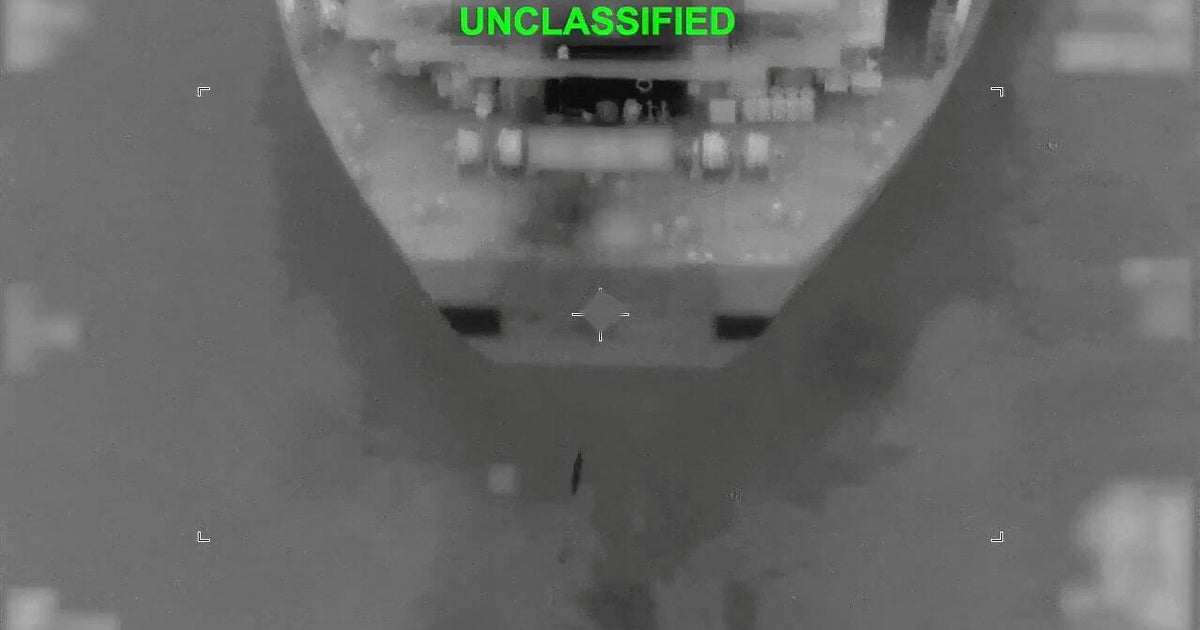
The Palau-flagged cargo ship M/V Pacific Archer, which had recently departed from the strategic Iranian port city of Bandar Abbas near the Strait of Hormuz, ignored multiple repeated radio warnings from coalition forces. Consequently, a U.S. military aircraft deployed precision-guided munitions, striking the stern of the vessel and effectively disabling its propulsion systems in the Gulf of Oman. CENTCOM reported that while the crew remained unharmed, the interception marks the sixth time U.S. forces have been forced to physically disable non-compliant vessels attempting to bypass economic restrictions, contrasting with 158 other commercial ships that have successfully complied with redirection protocols.
Concurrently, the maritime domain witnessed a war of narratives concerning the security of the Strait of Hormuz. Iran’s Islamic Revolutionary Guard Corps (IRGC) Navy claimed that an unidentified oil tanker caught fire after striking a sea mine while attempting to transit the strait via what Tehran termed an "unauthorized route." The term refers to southern shipping lanes that coalition forces maintain are safe and routinely swept for ordnance. The IRGC asserted that the incident demonstrated its absolute sovereignty over the critical waterway, pointing to a recent dip in commercial traffic statistics—which saw weekly transits drop from 217 at the start of November to approximately 147 by November 23—as proof of its coercive deterrence.
Adding to the confusion, Iranian Navy Commander Rear Adm. Shahram Irani made a bold, unverified assertion during state media broadcasts, claiming that Iranian commando units successfully boarded and reclaimed two oil tankers previously seized by U.S. forces while American sailors were asleep. CENTCOM declined to immediately comment on the claim, though military analysts noted a total absence of independent maritime verification or any official U.S. acknowledgment of vessel seizures in the area since the apprehension of the cargo ship Touska in April.
Regional Realignment and Iraq’s Crackdown on Smuggling
The tightening economic and military vice around Tehran has also shifted focus toward neighboring Iraq, where Prime Minister Ali al-Zaidi’s administration has initiated aggressive campaigns to dismantle regional smuggling networks. U.S. President Donald Trump publicly voiced strong backing for Baghdad’s efforts to centralize state authority, eradicate systemic corruption, and bring all national armaments under the exclusive command of the Iraqi state.
The presidential endorsement follows Prime Minister al-Zaidi’s recent declaration that federal forces would assume direct control over key border crossings in the Kurdish-administered region—specifically transit points with Syria and Iran—alongside several lucrative oil fields. The move is designed to choke off illicit oil smuggling operations that intelligence dossiers suggest have historically funneled billions of dollars to Iran-backed proxy militias, such as Kataeb Hezbollah, to circumvent international sanctions. Iraqi state agencies estimate that the northern Kurdistan region alone has suffered historic losses of approximately $100 billion through illicit crude diversions, which are reportedly blended with Iranian oil before being exported onward to regional markets like Afghanistan.
While regional authorities in Kurdistan have condemned Baghdad’s federalization push as a constitutional overreach, Washington views the crackdown as an essential step toward neutralizing the economic lifelines sustaining Tehran’s network of regional proxies.
International Superpower Dynamics and Trump’s Ultimatum
Addressing reporters from his Mar-a-Lago resort in Florida on Thursday, President Trump offered a candid assessment of the broader strategic paradigm, downplaying the significance of intelligence-sharing agreements between Iran and its major global allies, Russia and China. Trump noted that the conflict had been a point of discussion during his recent trilateral summit with Chinese President Xi Jinping and Russian President Vladimir Putin, concluding that neither Beijing nor Moscow was providing material support that crossed the threshold of direct military intervention.
"They could get involved, but involvement to me would mean shooting, not giving them little information," Trump remarked, adding a pragmatic acknowledgment of global espionage realities: "We do the same thing, by the way." The U.S. president asserted that both global superpowers ultimately share an interest in bringing a swift cessation to the hostilities.
Looking toward the endgame of the conflict, Trump maintained an assertive stance regarding Washington’s military posture, declaring that total victory would be achieved "whenever I want it to be." While emphasizing that his administration is extending diplomatic off-ramps to the Iranian regime to negotiate a settlement before the turn of the year, he warned that Tehran’s negotiators—whom he previously characterized as professional practitioners of delay—must act decisively to prevent further catastrophic escalation.
Domestic Repression and Human Rights Under Duress
Beneath the macro-level geopolitical clashes and naval maneuvers, Iranian society continues to experience severe internal convulsions. International human rights organizations, including Iran Human Rights (IHR) and Reporters Without Borders (RSF), sounded the alarm Friday over a sweeping domestic crackdown on dissent, independent journalism, and cultural expression.
The plight of Iranian women remains central to the domestic struggle, highlighted by the recent sentencing of singer Parastoo Ahmadi, who was subjected to 74 lashes for performing without a mandatory head covering. Human rights monitors note that Ahmadi’s public flogging is symptomatic of a broader, violent enforcement campaign aimed at rolling back the fragile social freedoms fought for during the "Woman, Life, Freedom" uprising four years ago. This climate of intolerance has also seen a spike in so-called "honor killings" targeting young women across various provinces.
Concurrently, the regime’s campaign to silence independent reporting has intensified following the arrest of prominent journalist Mehdi Mahmoudian. Arrested on Wednesday after publishing leaked judicial documents on his Telegram channel, Mahmoudian exposed orders for the imminent hangings of political prisoners Milad Armoun and Navid Najaran, both arrested during the 2022 protests. According to advocacy groups, Mahmoudian was subjected to severe physical abuse and torture while in police custody to force a retraction. Although the scheduled executions of Armoun and Najaran were temporarily postponed following the public leak, human rights defenders warn that both men remain in immediate danger of execution as the Iranian state utilizes domestic repression to project strength amidst external pressures.

