
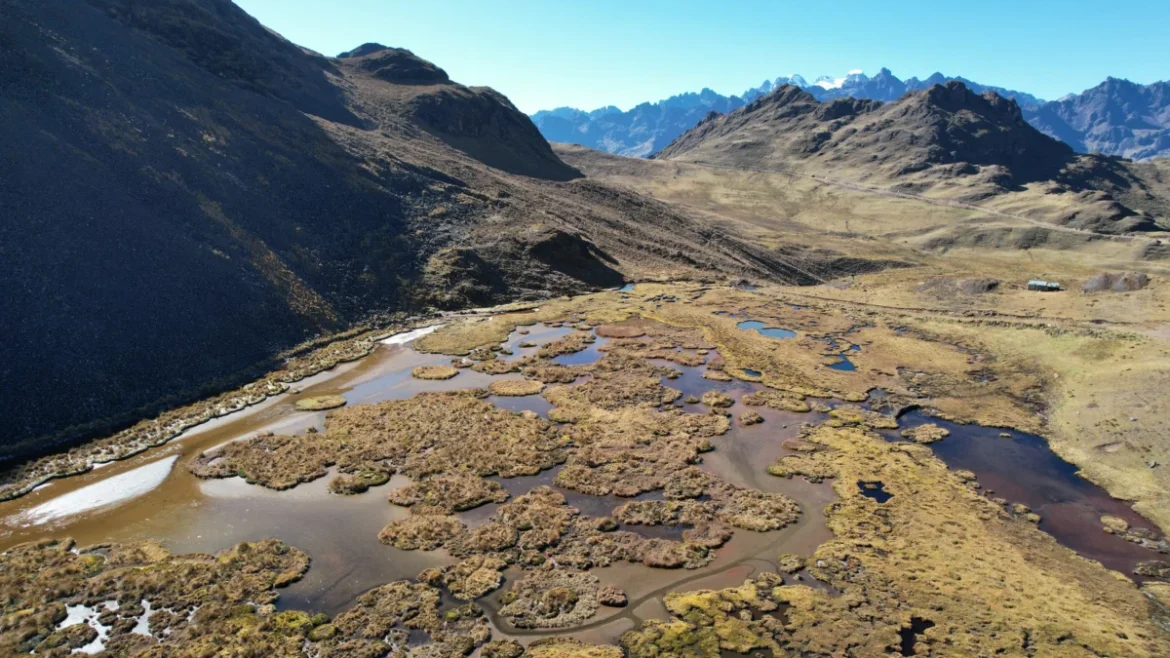
For generations, the community of Phinaya in the high Andes of southeastern Peru has looked toward the Quelccaya ice cap as both a physical landmark and a spiritual progenitor. Standing at an elevation of 5,600 meters, this massive expanse is the world’s second-largest tropical ice cap, serving as a critical water tower for the Amazon basin and the arid regions of Cusco and Puno. However, this ancient landscape is now the focal point of a modern collision between Peru’s aggressive pursuit of transition minerals and the urgent necessity of ecological preservation. As the administration of President Keiko Fujimori pushes to revitalize the nation’s mining sector to secure a dominant position in the global clean energy transition, the Quelccaya glacier finds itself at the center of an escalating debate over the true cost of "green" development.
The Mineral Rush: A Strategic Pivot
The Peruvian government has formally designated lithium and uranium as minerals of "national importance," viewing them as the bedrock of the country’s future economic agenda. This policy shift has provided significant tailwinds for American Lithium, a Canadian firm that, through its subsidiary Macusani Yellowcake, holds at least 174 mining concessions spanning over 1,090 square kilometers in the Puno region.

The centerpiece of this industrial expansion is the Falchani Lithium project, an open-pit operation located just a few kilometers east of the Quelccaya glacier. Projections for the project are substantial: it is expected to yield 25,000 tonnes of lithium carbonate annually, with an estimated lifetime economic value exceeding $6 billion. Construction is slated to commence in 2028. While proponents, including many residents in the neighboring province of Carabaya, view the project as a vital engine for job creation in one of Peru’s poorest regions—with potential employment for 5,000 workers—the environmental community remains deeply skeptical of the regulatory framework supporting it.
A Chronology of Controversy and Expansion
The path to this moment has been marked by legal friction and shifting corporate ownership. The region was originally targeted for uranium exploration, but the discovery of lithium in 2017 fundamentally altered the economic landscape.
- 2019: The Peruvian government declared 32 of the 149 initial concessions invalid due to missed payment obligations, sparking a protracted legal battle.
- 2021: American Lithium acquired the concessions, inheriting both the mineral potential and the complex legal disputes surrounding the project.
- 2025 (August): The Peruvian Supreme Court delivered a decisive ruling, dismissing the prior legal challenges and confirming American Lithium’s ownership of the disputed concessions. This ruling served as a catalyst for the government to accelerate its national mining agenda.
- 2026 (June): The state formally declared lithium and uranium as critical minerals, a move lauded by the mining sector.
- 2026 (August): President Keiko Fujimori signed a strategic minerals pact with Argentina, Chile, and Bolivia, signaling a regional commitment to intensifying the extraction of critical minerals.
Environmental Risks: The Dust and the Ice
The technical concern centers on the open-pit nature of the proposed extraction. Environmental engineers and researchers, including those from the monitoring network Red Muqui, warn that the proximity of these pits to the glacier poses a direct threat to its stability. Bladimir Martínez, an environmental engineer, highlights the risk of particulate matter—specifically metal-rich dust—being transported by high-altitude winds onto the surface of the glacier.

The presence of dust on the white surface of an ice cap lowers its albedo, or reflectivity, causing the ice to absorb more solar radiation. This phenomenon, known as the "albedo effect," leads to accelerated melting. Furthermore, the presence of uranium in the region adds a layer of radioactive concern. While company assessments maintain that their operations adhere to high environmental standards and claim that no endangered species or critical habitats are at risk, local activists argue that the lack of specific, rigorous laws governing uranium mining in Peru leaves the region vulnerable to contamination.
Scientific data provided by the National Research Institute for Glaciers and Mountain Ecosystems (INAIGEM) underscores the gravity of the situation: the Quelccaya glacier has already lost 58% of its mass over the last 40 years due to climate change. With 2.43 billion cubic meters of water held within its structure, the glacier serves as a lifeline for the surrounding ecosystems, supporting 56 plant species and 76 bird species, including the glacier finch, which nests directly on the ice.
Conflicting Perspectives on Economic Development
The divide within local communities is sharp. For many in the town of Corani, the mine represents a rare opportunity to escape generational poverty. As social services and state investment have historically been scarce in this remote corner of the Andes, the promise of infrastructure, steady wages, and a boost to the local economy provides a compelling argument for the project.

Conversely, downstream communities, such as Phinaya, fear the long-term depletion of their water supply. Donato Bermúdez, a former president of the Phinaya community, echoes the concerns of many who view the glacier not as a resource to be mined, but as an essential, living entity that provides the "lifeblood" for their agricultural way of life. The fear is that the combination of climate-driven recession and mining-induced degradation will trigger an irreversible water crisis in the Puno and Cusco departments.
The Call for Protective Legislation
Leading voices in the scientific community are calling for a radical change in how the region is managed. Lonnie Thompson, a pioneer in the study of the Quelccaya ice cap who has conducted research there since 1974, advocates for the immediate creation of a national park to provide the glacier with legal immunity from industrial activity.
"If [mining concessions] were to develop fully, the whole ice cap is at risk," Thompson noted, emphasizing that while he cannot stop the natural retreat of the glacier caused by global climate change, the added pressure of nearby industrialization is an avoidable catastrophe. He views the glacier as a "terminal patient" that requires protection to extend its lifespan, rather than further environmental stress.

Implications for Peru’s Energy Transition
The situation in Puno raises a fundamental question for modern policymakers: how does a nation balance the global imperative of the clean energy transition with the local necessity of environmental stewardship?
Critics like Professor Roger Merino of the Universidad del Pacifico argue that the current government approach is one of "lowering social and environmental standards" to fast-track development. Without established, transparent protocols for uranium extraction and clear, enforced regulations for industrial activity in glacial proximity, the pursuit of "green" minerals could result in significant "brown" environmental damage.
As the 2028 construction date for the Falchani project approaches, the tension between economic aspiration and ecological preservation will likely intensify. The outcome in Puno will not only determine the future of the Quelccaya glacier but will also serve as a litmus test for whether Peru can truly navigate a sustainable path toward a leadership role in the global energy transition, or if it will repeat the historical patterns of resource exploitation at the expense of its most vital and vulnerable ecosystems. For now, the people of the high Andes remain caught in the crosswinds of a global shift, watching the ice retreat as the machinery of the future begins to assemble on their horizon.
