
A horrific mass shooting in the historic heart of Krakow, Poland, has left six people dead, including a British national, and at least 15 others injured. The attack,
which unfolded on a Saturday afternoon, saw a lone gunman open fire indiscriminately from a moving vehicle as it drove through the city’s bustling Main Market Square—a major cultural hub and tourist destination. Polish authorities have since confirmed that the perpetrator, identified as a 25-year-old Polish citizen with suspected far-right ideology, was shot and wounded by police during the confrontation and subsequently detained. In the wake of the carnage, a grim secondary discovery was made at the gunman’s residential property, where three more bodies were found, plunging the nation into a state of shock and prompting an intensive, multi-agency security investigation.
Chronology of Terror in the Historic Square
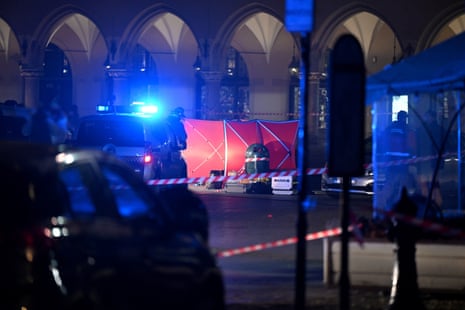
The unfolding tragedy began at approximately 3:00 p.m. local time (2:00 p.m. GMT) on Saturday, November 7, 2026. According to eyewitness accounts and municipal authorities, the tranquility of Krakow’s Main Market Square was violently shattered when a dark-colored vehicle suddenly breached the pedestrian-heavy zone. Witnesses reported seeing a man leaning out of the driver’s side window, firing rounds from an AR-15 semi-automatic rifle directly into crowds of unsuspecting locals and tourists.
Konrad, a witness who spoke to the Polish news website Interia, described the harrowing scene: “I saw shots being fired from the driver’s side window, and smoke was coming out. I ran to the police station in the main market square; when I burst inside, it was full of people hiding on the floor.”

Another witness, a 67-year-old man named Julek, told Reuters reporters that the timing of the attack narrowly spared countless others. “If we had been two minutes earlier, we might have been shot,” he said, recounting how the vehicle sped away almost as quickly as it had appeared after discharging its payload of bullets into the gathered crowds.
Emergency services were immediately overwhelmed by distress calls. Police and firefighters rushed to the scene, where they engaged the suspect. During the confrontation, the gunman was shot and wounded by officers before being overpowered and transported to a hospital under heavy armed guard.
Casualties and International Impact
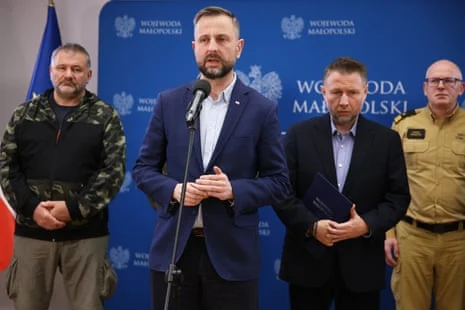
The regional Malopolski government and Polish police chief Marek Boron confirmed that the death toll rose to six following the initial chaos. Boron detailed the grim composition of the fatalities during a media briefing: "There are six fatalities: four women and two men—three Polish women, one British national, and two people who have not yet been identified."
In addition to the deceased, 16 people were hospitalized with varying degrees of trauma and gunshot wounds. Interior Minister Marcin Kierwinski revealed that five of those hospitalized are foreign nationals, underscoring the international scope of the tragedy in a city that attracts millions of global visitors annually. Among the injured foreigners is a Portuguese woman, whose condition was officially confirmed by the Portuguese Foreign Ministry.
Two police officers were also wounded in the line of duty while attempting to neutralize the attacker, with one sustaining severe injuries. The confirmation that a British citizen was among the dead triggered immediate diplomatic engagement, with foreign ministries coordinating consular support for the affected families.
Investigation Uncovers Grisly Scene at Gunman’s Home
As investigators combed through the immediate aftermath in Krakow, the focus swiftly expanded to the perpetrator’s private residence. Polish Prime Minister Donald Tusk announced a chilling development late Saturday evening: drone footage and physical searches of the suspect’s home revealed three more bodies inside—two women and one man, believed to be members of the gunman’s immediate family.
While authorities have withheld the formal identity of the 25-year-old suspect pending further forensic work, police spokesperson Andrzej Fijolek confirmed to broadcaster TVN 24 that the assailant utilized an AR-15 rifle. Crucially, investigators established that the gunman possessed a legally obtained firearms licence, raising urgent questions regarding Poland’s vetting processes for gun ownership.
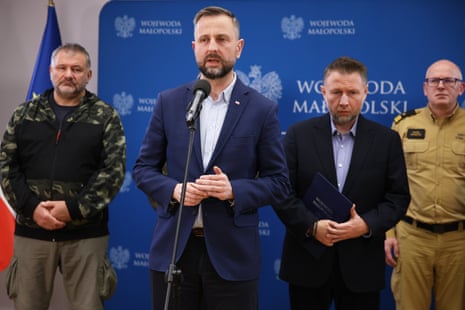
Amid rampant speculation and conspiracy theories proliferating across social media platforms in the immediate aftermath of the attack, Małopolska region police firmly pushed back against rumors, clarifying that the shooter was a lone Polish national and dispelling reports that an accomplice remained at large. Furthermore, Poland’s Defense Minister, Wladyslaw Kosiniak-Kamysz, forcefully rejected false claims circulating online that the perpetrator was an active-duty service member. "The man was not and is not a soldier in the Polish Armed Forces and has never had anything to do with the military," Kosiniak-Kamysz stated during a press conference.
Ideological Motives and Political Reactions
Interior Minister Marcin Kierwinski told reporters that preliminary findings strongly suggest the gunman was radicalized by extremist beliefs. "Everything points to the fact that the shooter was influenced by far-right ideology, a matter that will also be subject to investigation," Kierwinski said, noting that elite agents from Poland’s Internal Security Agency (ABW) had been deployed alongside local police to scour both the crime scene and the suspect’s domestic quarters.
The attack drew swift, unified condemnation from Poland’s highest-ranking officials. Prime Minister Donald Tusk took to social media to express his profound grief and issue a stern warning against the politicization of the tragedy. "My deepest condolences to the families and loved ones of the victims of the tragic attack in Kraków," Tusk wrote on X. "The highest praise for the heroic police officers who risked their lives. And a heartfelt appeal to politicians of all stripes: do not exploit this tragedy. We will establish all the circumstances of this crime."
Justice Minister Waldemar Żurek echoed these sentiments, appealing for public calm and assuring citizens that the state apparatus was fully mobilized. "A terrible tragedy in Kraków’s Main Market Square," Żurek said in a public statement. "We will ensure that the perpetrator of this crime is held fully accountable and severely punished."
International leaders also expressed solidarity with Poland. British Prime Minister Andy Burnham wrote on X: "I’m shocked and saddened by the appalling shooting in Kraków today. My thoughts are with the families of those who have lost their lives, everyone injured and all those affected by this senseless violence. The United Kingdom stands in solidarity with the people of Poland."
Municipal Response and Broader Implications
In response to the unprecedented violence, Krakow Mayor Łukasz Gibała announced that the city would enter an official period of mourning lasting until Wednesday. Public events have been canceled, and flags fly at half-mast across the historic municipality.
Despite the profound sorrow enveloping the city, Mayor Gibała vowed that Krakow’s spirit would not be permanently broken by extremist violence. In a video message posted to social media, he declared defiantly: "The square will belong to us again," emphasizing that Krakow remains open and welcoming to visitors from around the world even as it grapples with its darkest hour in recent memory.
The incident is expected to spark intense legislative and societal debate within Poland regarding gun control laws, the monitoring of far-right radicalization among young adults, and security protocols in open public spaces. As prosecutors and security services continue their exhaustive review of the gunman’s digital footprint and personal associations, the nation mourns a senseless loss of life that has left an indelible scar on one of Europe’s most cherished cultural landmarks.
