
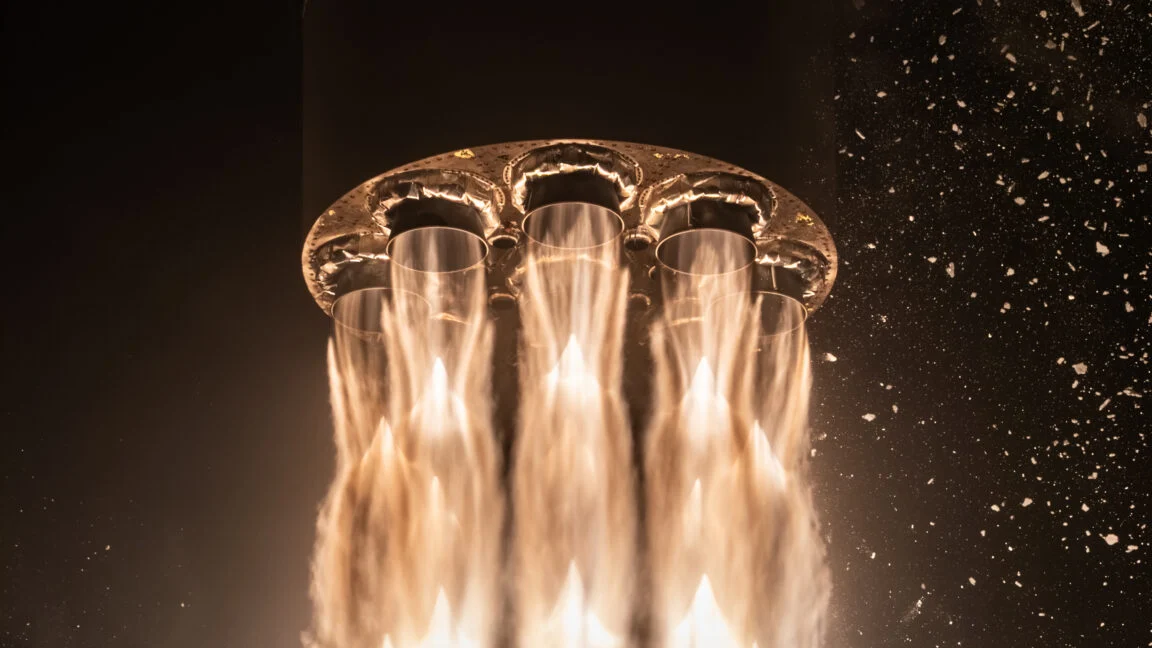
The global aerospace landscape is undergoing a structural transformation characterized by a severe capacity crunch, shifting commercial strategies from industry titan SpaceX, and the aggressive ascent of boutique, dedicated launch providers. While rideshare missions on heavy-lift vehicles have long been the default economic choice for the broader satellite industry, specialized orbital service providers—most notably Astroscale—are increasingly finding that bespoke, dedicated flights are mandatory to execute complex missions into unique orbits. This shift has been sharply accelerated by recent milestones, including the historic first orbital success of Germany’s Isar Aerospace, which successfully delivered a batch of CubeSats to low-Earth orbit (LEO) using its propane-fueled Spectrum rocket launched from northern Norway.
The successful flight follows a failed test campaign last year and represents a major triumph not only for Isar Aerospace but for the broader European space ecosystem. For years, Europe has sought a reliable, indigenous path to orbit to complement legacy providers like Arianespace and Avio. Isar’s breakthrough positions the Munich-based startup at the vanguard of a new wave of continental launch companies, which includes competitors like Rocket Factory Augsburg and PLD Space. For satellite operators facing an increasingly crowded and constrained launch market, these emerging alternatives provide a vital safety valve.
The Launch Squeeze and the Rise of Dedicated Providers

For the past several years, the commercial space sector has relied heavily on the blistering flight cadence of SpaceX’s Falcon 9 rocket. However, market dynamics are shifting rapidly. Industry analysts and satellite operators have noted that SpaceX is actively dialing back elements of its Falcon 9 program as it shifts internal focus toward the maturation of Starship, its next-generation fully reusable super-heavy-lift system. Compounding this uncertainty is the reality that Starship’s early manifest remains heavily weighted toward deploying SpaceX’s own Starlink constellation rather than accommodating third-party commercial payloads.
This tightening of global launch capacity has created a severe bottleneck for companies whose business models depend on precise orbital insertion parameters. While rideshare missions offer lower marginal costs per kilogram, they fundamentally restrict destination flexibility. For a standard communications or Earth-observation satellite, sharing a bulk ride to a standardized orbit is often acceptable. But for orbital debris removal, active satellite servicing, and proximity operations, the target orbit is dictated entirely by the client or the piece of space junk in question.
Astroscale’s High-Stakes Strategy
Among the commercial entities most affected by these launch dynamics is Astroscale, a global leader in satellite servicing and space debris mitigation headquartered in Japan. Despite the unproven status of Isar Aerospace prior to its recent flight, Astroscale made the strategic decision to contract Isar for two critical upcoming missions: ELSA-M and ADRAS-J2.

The decision underscores a calculated risk appetite among mature satellite operators. Speaking with industry reporters, Chris Blackerby, Astroscale’s group chief operating officer, detailed the complex intersection of payload mass, orbital requirements, and budget constraints that led the company to Isar Aerospace.
"Launch, as you well know, is the big issue around the industry writ large," Blackerby explained. "Dedicated launch is pretty essential for us for most of our missions. We could do a rideshare, but it’s much more complicated. So a dedicated launch makes it much better."
Astroscale’s previous flagship demonstration mission, ADRAS-J (Active Debris Removal by Astroscale-Japan), successfully approached and inspected an uncooperative, derelict Japanese H-IIA rocket upper stage in 2024. That mission utilized Rocket Lab’s Electron rocket, a proven light-lift vehicle. However, as Astroscale’s spacecraft designs have scaled up in mass to handle more advanced tasks, they have outgrown the capacity of conventional small-launch vehicles while remaining too specialized to wait for heavy-lift rideshares.
With Astroscale’s upcoming payloads weighing between 500 and 700 kilograms, the market options for dedicated 1-ton class launchers are remarkably thin. While companies like Firefly Aerospace offer vehicles in this general class, industry-wide volatility has left operators searching for reliable redundancies. Isar’s Spectrum rocket, capable of handling payloads within this specific sweet spot, emerged as a logical, albeit bold, choice after exhaustive technical due diligence by Astroscale’s engineering teams.

Decoding the Roadmap: From ADRAS-J to ELSA-M
Astroscale’s methodical approach to technology development mirrors a classic aerospace engineering philosophy: crawl, walk, run.
The journey began with ELSA-D (End-of-Life Services by Astroscale-Demonstration), an internally funded mission where the spacecraft deployed its own simulated debris target and successfully recaptured it in orbit. Following this foundational step, the ADRAS-J mission achieved a groundbreaking commercial milestone by performing a rendezvous and proximity operation (RPO) with an uncommunicative, tumbling-free rocket body, capturing exquisite high-resolution imagery that confirmed the structural integrity of the target’s payload adapter.
Building directly on these lessons, Astroscale is now preparing for two distinct follow-up missions assigned to Isar Aerospace:
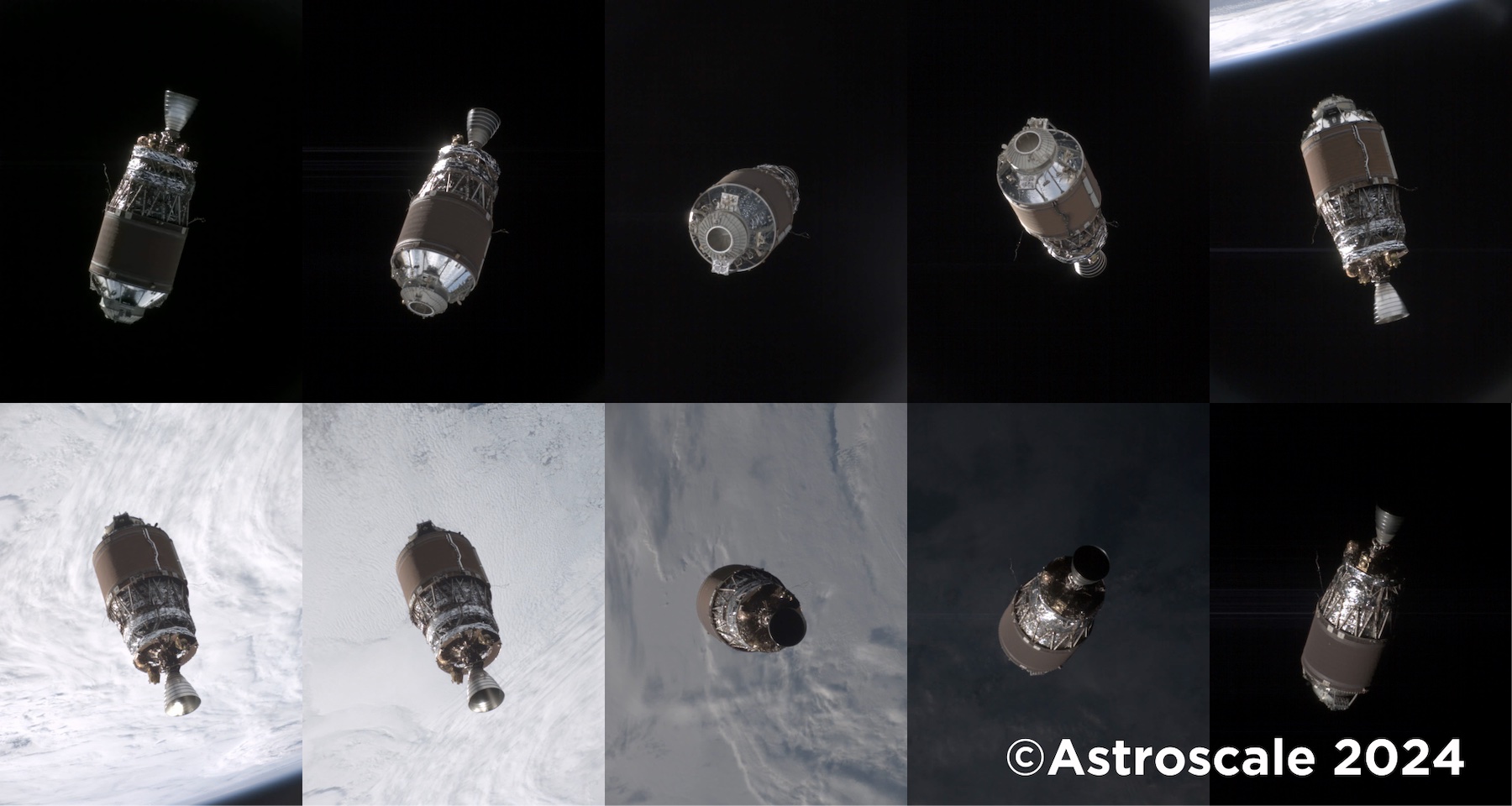
- ADRAS-J2: Co-funded by the Japan Aerospace Exploration Agency (JAXA), this mission will revisit the H-IIA rocket body inspected by its predecessor, but with the ultimate objective of securing a physical connection to the payload adapter to pull the defunct hardware out of orbit.
- ELSA-M: Led by Astroscale’s UK division and supported by the European Space Agency (ESA) and the UK Space Agency, this spacecraft will rendezvous with and capture a retired commercial broadband satellite from Eutelsat’s OneWeb constellation, demonstrating end-of-life deorbit capabilities for commercial mega-constellations.
In addition to these debris-mitigation efforts, Astroscale is expanding into the lucrative domain of in-orbit logistics and military space resilience. The company has secured a contract with the US Space Force for the Provisioner mission, designed to demonstrate satellite refueling capabilities. According to Blackerby, demand signals from both civil and defense sectors are surging for close-in inspection, life-extension services, and orbital refueling.
Implications for the Global Space Economy
The success of Isar Aerospace and the aggressive procurement strategies of companies like Astroscale point toward a maturing commercial architecture in space. No longer is the industry solely dependent on a duopoly of massive launch providers. Instead, a diversified tier of boutique, dedicated launchers is beginning to fill the critical middle market.
For Europe, Isar’s orbital arrival injects much-needed economic vitality and technological sovereignty into a sector that has struggled to match the cadence of American and Asian competitors. For the satellite servicing sector, the alignment between emerging launch providers and orbital operators proves that the economic foundations for a sustainable space ecosystem are finally falling into place.

As Astroscale and other pioneers look toward the early 2030s, the goal of establishing a repeatable, commercially viable servicing economy appears increasingly attainable. However, achieving that vision will continue to require a delicate balance between technical innovation, rigorous safety protocols, and a resilient, diversified global launch market.
