
The summer of 2026 will be remembered not merely for its discomfort, but as a definitive turning point in global climatology. Across the Northern Hemisphere, nations shattered long-standing temperature records, transforming routine seasonal transitions into periods of existential crisis. From the parched landscapes of Western Europe to the infrastructure-straining heat domes of North America, the message from the planet is unequivocal: the era of climate stability has concluded, and we have entered a period of systemic atmospheric volatility.
The immediate consequences of this year’s heat were catastrophic. In Western Europe, five consecutive, grueling heat waves desiccated soils, reduced river levels to historic lows—stranding aquatic life and crippling inland shipping—and turned verdant landscapes into tinderboxes. The human toll was equally severe, with early epidemiological assessments indicating at least 35,000 excess deaths across the continent during the initial four heat waves alone. This figure, however, is likely a conservative estimate, as health systems struggled to quantify the cumulative impact on those suffering from pre-existing cardiovascular and respiratory conditions exacerbated by sustained, ambient heat.
A Chronology of Escalation
The 2026 crisis did not occur in a vacuum; it is the culmination of decades of incremental warming. While localized heat events have always been a feature of the Earth’s climate, their frequency, intensity, and duration have undergone a marked shift since the early 21st century.
- 2003: The European heat wave, which claimed an estimated 70,000 lives, served as a grim wake-up call, prompting the initial development of early warning systems and national heat-health action plans.
- 2021: The "Heat Dome" event in the Pacific Northwest of the United States demonstrated that even regions accustomed to temperate climates were unprepared for extreme thermal stress, leading to infrastructure failures including buckled roads and melted power lines.
- 2026 (June–August): The current summer cycle reached record-breaking intensity, characterized by unprecedented humidity levels and "off-the-charts" temperature anomalies that exceeded the predictive capabilities of existing meteorological models.
The World Health Organization (WHO) has characterized this year’s events as a "dress rehearsal." This terminology reflects a consensus among the scientific community that while these heat waves are unprecedented in modern records, they are statistically destined to become the new baseline for summer temperatures within the next decade.
The Convergence of El Niño and Anthropogenic Forcing
The current escalation of global temperatures is driven by two primary, reinforcing mechanisms: the natural variability of the El Niño-Southern Oscillation (ENSO) and the persistent, human-driven accumulation of greenhouse gases.

We are currently in the early stages of an El Niño cycle that climate scientists fear could be the most powerful in a millennium. El Niño—a climate pattern characterized by the warming of surface waters in the central and eastern Pacific—typically amplifies global mean temperatures. When this natural cycle interacts with an atmosphere already saturated with carbon dioxide and methane, the result is a non-linear spike in thermal energy.
Beyond the temporary, albeit powerful, influence of El Niño, the structural problem remains the global reliance on fossil fuels. Despite the 2015 Paris Agreement—a landmark accord in which nations pledged to limit warming to 2 degrees Celsius above pre-industrial levels, with an aspirational target of 1.5 degrees C—the trajectory of emissions has not aligned with these goals. A recent United Nations report, released in late 2026, confirms that the world is now almost certain to overshoot the 1.5-degree threshold within the next few years.
Analysis of Adaptive Failure
The central challenge identified by researchers like Dr. Kristie Ebi, a professor of global health at the University of Washington and a lead author of the recent U.N. report, is that "there really is nowhere that is terribly well adapted to these very extreme events."
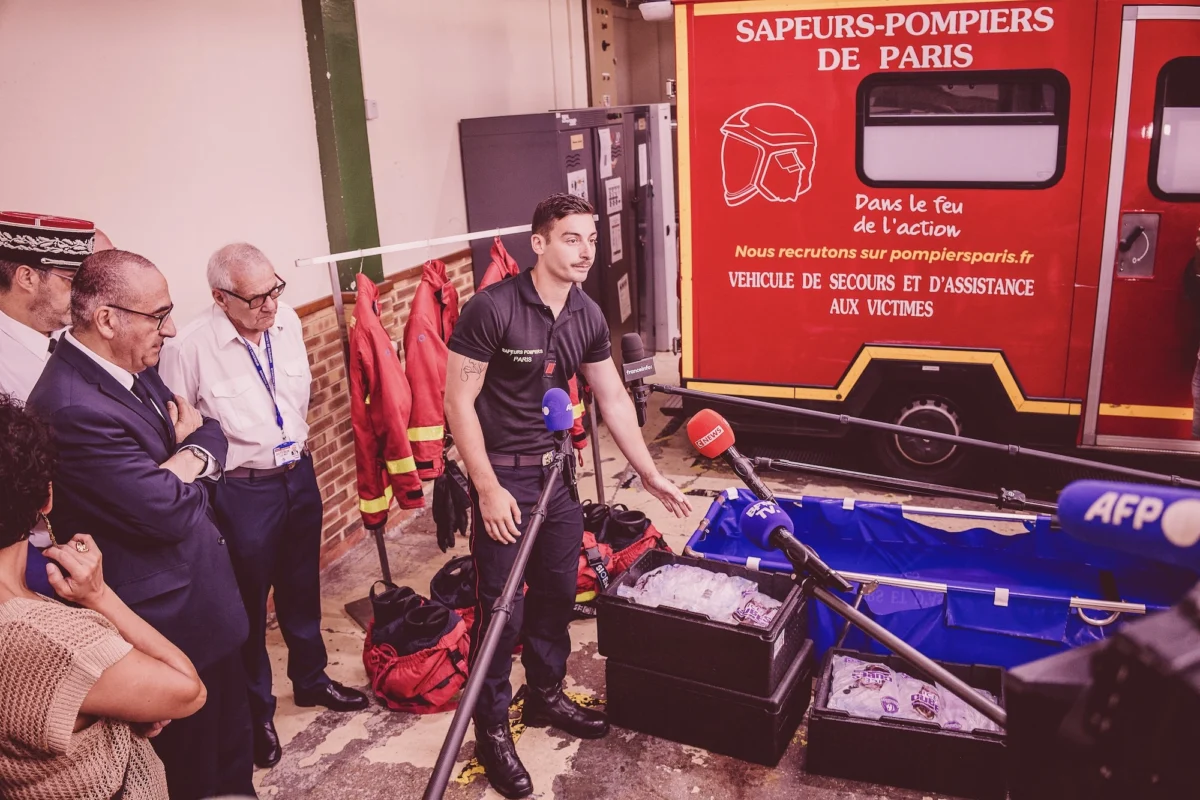
While adaptation strategies have saved lives, they are currently outpaced by the velocity of environmental change. France, for instance, has been a model for success. Following the 2003 tragedy, the French government implemented aggressive policies: mandating climate-controlled environments in nursing homes, establishing public cooling centers, and integrating urban greening projects to mitigate the "urban heat island" effect. These interventions have demonstrably reduced mortality rates for subsequent heat waves.
However, Christopher Callahan, a climate scientist at Indiana University, provides a sobering caveat. His research suggests that if countries continue to adapt at their current pace, they will only prevent approximately 10 percent of the projected heat-related deaths. The reality is that we are approaching a thermal threshold where traditional adaptation—such as air conditioning and hydration protocols—will no longer suffice. When wet-bulb temperatures (a measurement of heat and humidity) rise, the human body loses its ability to cool itself through perspiration, leading to rapid, lethal organ failure. Recent studies suggest this danger zone begins at temperatures as low as 26 degrees Celsius (79 degrees Fahrenheit) when combined with high humidity.
The Economic and Infrastructural Burden
The implications of failing to meet these climate targets extend far beyond public health. The global economy is built on an assumption of climatic stability. Infrastructure, agricultural supply chains, and power grids were designed for the climate of the 20th century, not the volatile, high-energy environment of the 2020s.
When temperatures reach extremes, the physical components of our society begin to fail. As seen in Portland during the 2021 heat dome, extreme heat causes materials to expand beyond their design tolerances. This leads to the catastrophic failure of power grids—which are simultaneously stressed by the surge in demand for air conditioning—and the degradation of transportation networks.
Economically, the cost of "overshooting" is astronomical. The U.N. report indicates that there are no "good outcomes" above 1.5 degrees C. Even in the best-case scenario—where global temperatures peak at 1.8 degrees C before being slowly drawn back down—the environment will not reset to its former state. Coral reefs, once dead, may not recover, and glaciers that have melted will not refreeze on a human timescale.
A Call for "Stress Testing" the Future
The scientific community is now calling for a shift in strategy. Rather than continuing to plan for "extreme" weather as an outlier, policymakers must begin "stress testing" their societies against worst-case scenarios. This involves treating climate resilience with the same level of analytical rigor that banks and militaries apply to financial crashes or national security threats.
This approach would require:
- Grid Resilience: Modernizing electrical grids to handle both extreme load and extreme physical temperatures.
- Urban Redesign: Moving beyond simple cooling centers to systemic changes in urban planning, such as reflective roofing, water-retention infrastructure, and the massive expansion of urban canopies.
- Early Warning Evolution: Updating meteorological systems to detect heat anomalies that fall outside of traditional "summer seasons," recognizing that extreme heat is becoming a year-round threat.
As we look toward 2027, the data suggests it will likely be the hottest year in recorded history. The global community stands at a precarious juncture. While the window to prevent the worst outcomes of climate change is closing, the imperative to build resilience has never been more urgent. We can no longer treat record-breaking heat as a "new normal" to be accepted; it is a signal that our systems must be entirely re-engineered.
As Dr. Ebi noted, the assumption that 1.5 degrees C would be "relatively safe" was based on a different era of understanding. Today, as we hover at 1.4 degrees C, it is evident that for millions, the threshold of safety has already been crossed. The challenge ahead is not merely to mitigate future warming, but to learn how to survive in a world that is becoming fundamentally inhospitable to the infrastructure and lifestyles we have long taken for granted.

