
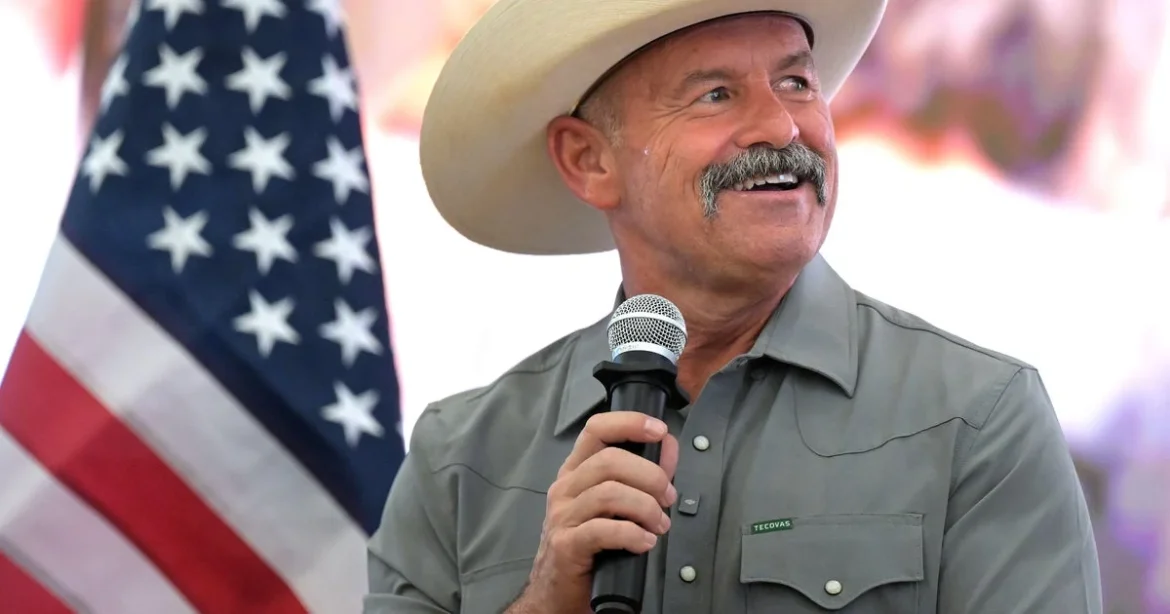
In a unanimous and sweeping decision, the California Supreme Court ruled that Riverside County Sheriff Chad Bianco violated state election law and overstepped his legal boundaries when he ordered his deputies to seize more than 650,000 ballots associated with the high-stakes Proposition 50 special election. The landmark ruling not only orders the immediate return of all confiscated ballots to county election officials but also firmly establishes the limits of local law enforcement jurisdiction when interacting with state-administered election processes.
The justices ruled decisively against Sheriff Bianco in two consolidated cases, finding that his department directly contravened the plain text of California Elections Code Section 15551, which mandates that voted ballots must remain exclusively in the custody of authorized election officials. Furthermore, the court held that Bianco unlawfully ignored direct legal directives from California Attorney General Rob Bonta, who had ordered the sheriff to halt his inquiry into alleged election irregularities.
The state’s highest court has commanded Bianco to cease his investigation entirely and refrain from any further handling of the ballots, barring what is strictly necessary to return them to the Riverside County Registrar of Voters. This decision concludes a months-long legal battle that pitted local law enforcement ambitions against state constitutional oversight, raising critical questions regarding the separation of powers and the protection of democratic institutions in California.
The Genesis of the Controversy: Proposition 50 and Ballot Seizure
The roots of this unprecedented constitutional showdown trace back to a contentious special election regarding Proposition 50, a redistricting measure designed to recalibrate congressional boundaries across the state. The measure ultimately resulted in shifting five of California’s Republican-leaning U.S. House seats into configurations more favorable to Democratic candidates ahead of the midterm elections.
Following the election, Sheriff Bianco—who launched an unsuccessful bid for California governor in the primaries—announced that his agency was launching a criminal investigation into alleged discrepancies. Citing a complaint from a local political group, Bianco claimed there was a numerical discrepancy of approximately 45,800 votes between initial machine counts and the final certified tallies reported to the California Secretary of State.
Despite public skepticism and immediate pushback from county election authorities, Bianco authorized his deputies to raid storage facilities, confiscating more than 611,000 ballots from the special election. These ballots were subsequently transported and held in undisclosed locations, sparking intense panic among voters, election administrators, and civil rights groups regarding the chain of custody and the security of confidential voting materials.
County election officials swiftly disputed the sheriff’s claims, clarifying that the variance between machine tallies and final certifications amounted to a mere 100 votes—a standard discrepancy well within normal administrative margins and accounted for during standard provisional and mail-in ballot curing processes. Nevertheless, Bianco defended the operation as a routine "fact-finding mission" aimed at uncovering corruption, echoing broader national narratives regarding election security and mail-in voting.
Chronology of a Constitutional Conflict
The escalation and judicial resolution of the Bianco ballot seizure case followed a rapid and intense timeline over the course of several months:
- Post-Election (Early 2026): Proposition 50 passes, altering congressional maps. Riverside County Sheriff Chad Bianco receives complaints from a local group regarding alleged vote discrepancies.
- Spring 2026: Sheriff Bianco’s office seizes over 611,000 ballots from Riverside County storage facilities, transporting them to an undisclosed location. Attorney General Rob Bonta issues formal directives ordering Bianco to pause the investigation and return the materials.
- Late March 2026: Facing mounting public pressure and politically motivated lawsuits, Bianco announces a temporary pause in his investigation.
- April 2026: The California Supreme Court issues a formal, binding order halting the sheriff’s probe while lower court arguments are prepared.
- August 2026: The California Supreme Court hears oral arguments from both the Attorney General’s Office and legal representatives for Sheriff Bianco, focusing heavily on the constitutional scope of state supervision over local law enforcement.
- September 19, 2026: Governor Gavin Newsom signs a comprehensive package of legislative bills specifically designed to criminalize the seizure of ballots and protect election infrastructure from unlawful interference.
- September 24, 2026: The California Supreme Court issues its unanimous, final ruling declaring the seizure illegal, reaffirming the Attorney General’s supervisory authority, and ordering the immediate return of all ballots.
Legal Arguments and Constitutional Interpretations
At the heart of the legal dispute was a fundamental clash over Article V, Section 13 of the California Constitution. This provision explicitly designates the state attorney general as the chief law officer, granting direct supervision over every district attorney, sheriff, and designated law enforcement officer regarding matters pertaining to their official duties.
Legal representation for Sheriff Bianco argued before the justices that the Attorney General’s Office was attempting to arrogate "unchecked power" over local investigations, effectively preventing independent law enforcement agencies from investigating potential criminal wrongdoing or corruption. In post-ruling statements, Bianco expressed defiance regarding the message sent by the court, asserting that local sheriffs answer to the local populace rather than state executives in Sacramento.
Conversely, Attorney General Rob Bonta lauded the court’s decision as a vital reinforcement of the rule of law and democratic order. Bonta emphasized that elections require an extraordinary level of systemic trust and that rogue law enforcement actions cannot be permitted to compromise the integrity of the democratic process.
The Supreme Court justices ultimately sided with Bonta, noting that Bianco’s expansive interpretation of police powers would create chaos and undermine the statutory frameworks established by the Legislature to govern elections. Writing for the court, the justices emphasized that the plain text of Section 15551 leaves no legal gray area: voted ballots belong exclusively in the hands of bipartisan election administrators, not criminal investigators.
Legislative Reactions and Broader Implications
The fallout from the Riverside County ballot seizure has extended far beyond the courtroom, triggering immediate legislative action in Sacramento. Just days before the Supreme Court’s final decision, Governor Gavin Newsom signed a robust package of bills specifically tailored to fortify election security against unwarranted interference, criminalizing any future attempts by law enforcement or political actors to confiscate live ballots.
"Today’s ruling affirms that in California we will defend democracy using every branch of government," Governor Newsom stated following the decision. "The new laws I signed just last week add new protections so attacks like this cannot happen again. People deserve to know their ballot is counted and secure, and in California we will do everything we can to protect that constitutional right—this year, and beyond."
Political analysts and legal scholars suggest that the Supreme Court’s ruling establishes a crucial legal precedent across the United States. As local law enforcement agencies face growing political polarization, the decision provides a definitive boundary marker, demonstrating that police powers cannot be weaponized to challenge certified election results or seize sensitive voting infrastructure under the guise of criminal investigations.
As the ballots are formally returned to the Riverside County Registrar of Voters, local officials have confirmed that they will resume standard administrative duties under strict security protocols. Meanwhile, Sheriff Bianco has indicated that while he will comply with the specific legal writs issued by the court, his broader political crusade regarding election transparency and administrative skepticism will likely remain a central pillar of his ongoing public platform.
