
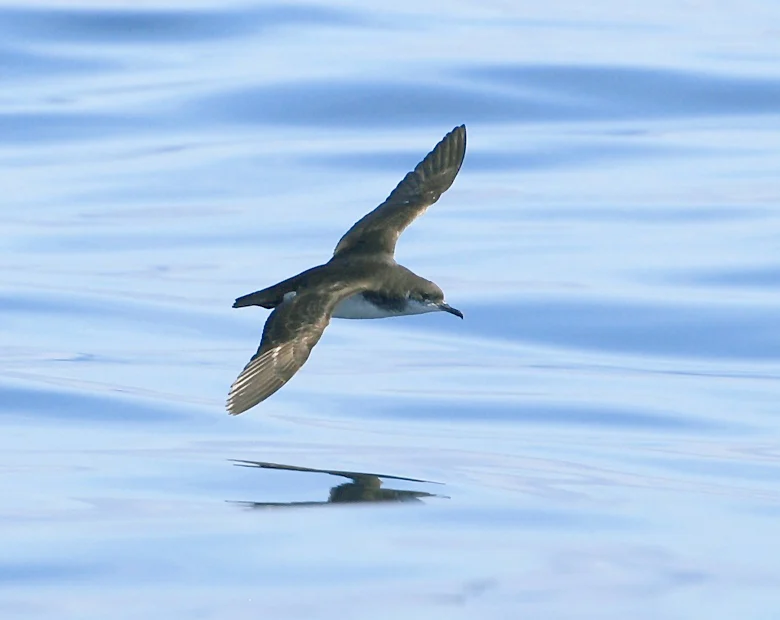
Flying across multiple time zones is widely recognized among humans as a disruptive physiological hurdle, frequently inducing a state of acute circadian misalignment commonly known as jet lag. During such episodes, biological rhythms dictated by an internal master clock clash sharply with external environmental cues. While long considered a uniquely human nuisance or a byproduct of modern commercial aviation, recent scientific findings confirm that circadian disruptions of this nature are experienced by wildlife in natural settings. A comprehensive study published in the journal Science reveals that Manx shearwaters—pelagic seabirds renowned for endurance flights spanning hundreds of kilometers across the open North Atlantic Ocean—regularly induce jet lag in themselves during routine foraging expeditions. Because these birds rely heavily on a solar compass to navigate vast stretches of featureless water, this self-inflicted temporal displacement leaves a distinct, measurable footprint: it skews their navigational heading.
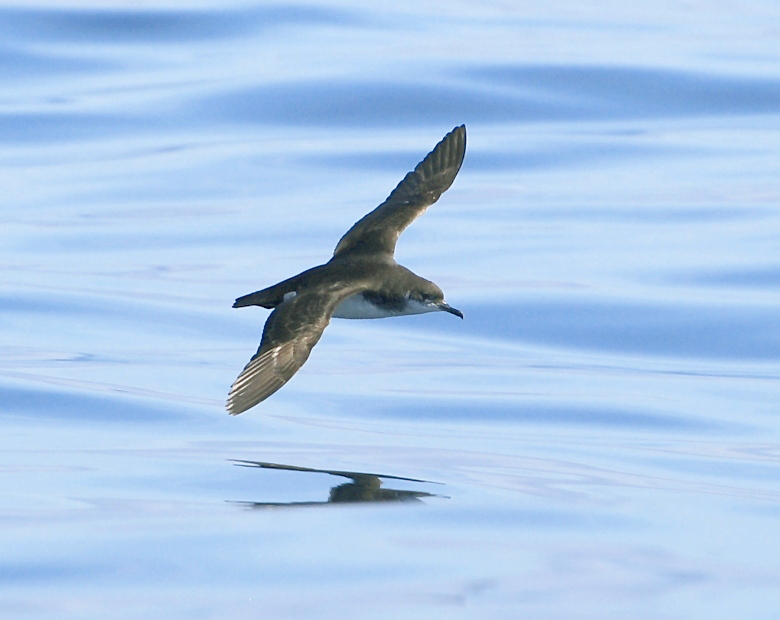
The mechanics of this phenomenon stem from the interplay between avian biology and celestial navigation. Led by behavioral and sensory ecologist Patrick Lewin of the University of Oxford, a research team investigated how these medium-sized seabirds—comparable in dimensions to a common pigeon, characterized by dark dorsal plumage, white underparts, and exceptionally long wings—manage to traverse vast oceanic expanses. Breeding primarily in subterranean burrows on coastal islands across the United Kingdom and Ireland, with roughly half of the global population residing in Wales, Manx shearwaters routinely depart from their colonies to forage. These feeding trips take them anywhere from a few dozen to upwards of 1,000 kilometers deep into the Atlantic. To retrace their paths back to nesting sites, the birds rely on a sophisticated dual-system approach: a map sense, hypothesized to involve olfactory cues, combined with a sun compass used to establish directional vectors.
Operating a solar compass, however, presents a fundamental geometric challenge. Unlike a magnetic compass that points toward a static pole, the sun moves dynamically across the sky from east to successful sunset. An individual traveling due south at sunrise, for instance, must maintain a heading 90 degrees clockwise from the sun’s position. By solar noon, that same traveler must head directly toward the sun, and by sunset, 90 degrees counter-clockwise. Effective navigation under these conditions requires an internal clock that accurately reflects local time. While birds, like nearly all vertebrates, possess an endogenous circadian clock, the biological timekeeper of the Manx shearwater is not instantaneously updated across geographical longitudes.
The process of biological recalibration compounds the issue. Shearwaters typically reset their internal clocks at dusk and dawn. Consequently, for every degree of longitude a bird crosses between sunrise and sunset, its internal circadian clock falls approximately four minutes out of sync with the local time of its current geographical position. This temporal lag causes the shearwater to miscalculate the expected position of the sun, prompting it to veer off course in a predictable direction: clockwise when flying eastward and counter-clockwise when flying westward.
Although previous studies demonstrated similar navigational errors in captive penguins subjected to rapid artificial displacement across longitude lines, Dr. Lewin’s research marks the first time this phenomenon has been definitively documented in wild animals executing unprompted, natural movements. Because the resulting navigational deviation is subtle, identifying it required an exceptionally large and robust empirical dataset.
Two Decades of Tracking Data
The foundation for this breakthrough was laid two decades prior. In 2004, Tim Guilford, a behavioral ecologist and Lewin’s supervisor at Oxford, alongside long-time shearwater researcher Chris Perrins, began outfitting Manx shearwaters with miniature global positioning system (GPS) tags. As engineering advancements reduced the size and weight of tracking devices, deployment became feasible for birds of this scale. Over the subsequent twenty years, the research group accumulated high-resolution movement data from 3,688 individual foraging trips, representing 1,045 distinct birds originating from colonies along the western coasts of the United Kingdom. These foraging excursions typically spanned durations ranging from a single day to two weeks.
To isolate the relevant data, Lewin and his colleagues filtered out the erratic, looping flight paths associated with active feeding, during which birds make frequent dives and short adjustments. They focused exclusively on homeward journeys. According to the researchers, homing shearwaters transition into a distinct behavioral mode characterized by continuous, high-speed, linear flight sustained over extended periods without major interruptions.
For every recorded homing flight, the scientists reconstructed the bird’s trajectory by determining the exact geographic coordinate where it last witnessed sunrise—the moment its internal clock theoretically aligned with local solar time. By tracking subsequent GPS coordinates, the research team calculated the longitudinal distance covered eastward or westward and quantified the theoretical disruption to the bird’s solar compass. Because the terminal destination of each bird was its known nesting burrow, the team could directly contrast predictive mathematical models of solar drift with the observed deviations in flight paths.
Micro-Displacements and Navigational Precision
The magnitude of the temporal shifts observed in the field was remarkably small. Approximately one hour represented the upper limit of circadian displacement recorded by the sensors, with the vast majority of instances reflecting time discrepancies of just 10 to 15 minutes. To a human observer, such minor shifts would be virtually imperceptible; yet, they produced a measurable, systematic bias in compass orientation.
Analysis of 335 homing flights conducted entirely out of sight of land revealed that the birds drifted precisely along the trajectories predicted by solar compass error models. To ensure methodological rigor, the investigators evaluated alternative hypotheses, including the potential steering biases introduced by crosswinds, the Coriolis effect, or geomagnetic navigation. None of these variables correlated with the empirical data as strongly as the calculated solar compass discrepancies. The observed directional biases aligned most closely with the mathematical models of circadian-induced solar error.
Despite these predictable misalignments, the biological cost to the birds remained minimal. Navigational errors induced by the temporal shifts reached a maximum threshold of approximately 15 degrees. Because Manx shearwaters retain an independent map-based sense of location, they are capable of periodically assessing their true position, recognizing drift, and executing course corrections. Calculations performed by the research team indicated that for a shearwater executing a 1,000-kilometer eastward flight within a single day—representing the extreme upper bound of observed travel distances—the resulting cumulative directional error averaged roughly seven degrees. Frequent positional checks meant that this angular deviation added a mere five kilometers of extra distance to the overall journey.

Furthermore, tracking data indicated that when shearwaters flew in proximity to coastlines, they exhibited slight tendencies to drift closer to or further from the shoreline in accordance with their predicted compass errors. This behavior mirrors findings from historical experiments conducted at Oxford two decades earlier, which demonstrated that homing pigeons with experimentally shifted internal clocks exhibited identical deviations while navigating along familiar roadways. These combined observations support the hypothesis that avian species operate dual, parallel navigation systems—one anchored to a compass mechanism and the other to familiar landmarks—maintaining a dynamic equilibrium between the two without relying exclusively on either.
Broader Implications and Future Research Directions
While the current study successfully links circadian misalignment to compass error in wild seabirds, it leaves open questions regarding other physiological manifestations of jet lag. The researchers have not yet determined whether Manx shearwaters experience secondary symptoms such as sleep deprivation or anomalous metabolic hunger cycles. Future investigations by the Oxford team will aim to evaluate whether these longitudinal time shifts influence foraging timing, the volume of provisions delivered to chicks, and overall avian reproductive success.
Beyond pelagic seabirds, the implications of routine circadian displacement extend to other mobile taxa. Dr. Lewin suggests that any animal possessing an internal biological clock that traverses significant longitudinal distances within a compressed timeframe is theoretically vulnerable to self-induced jet lag. This vulnerability is particularly pronounced among avian fliers and fauna inhabiting high-latitude polar regions, where lines of longitude converge closely together, allowing animals to cross multiple time zones with minimal physical displacement.
The long-term objective of this research line is to determine whether organisms subjected to chronic, routine jet lag have evolved specialized physiological adaptations to mitigate its effects. In humans, chronic circadian disruption is well-documented to produce adverse long-term health consequences. By examining how wild species cope with constant temporal displacement, researchers hope to uncover biological mechanisms that could ultimately inform human medicine and the design of bio-inspired autonomous navigation systems for engineering applications.
