
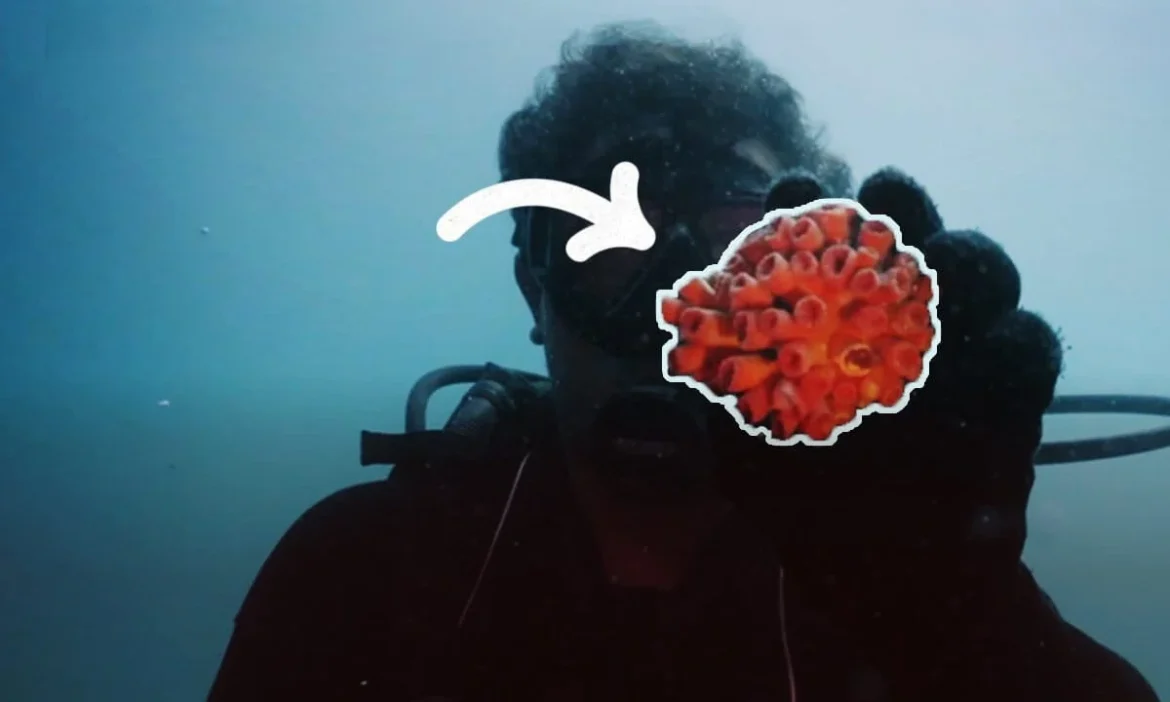
Beneath the azure surface of Brazil’s coastal waters, a silent and relentless invasion is fundamentally altering the delicate balance of marine ecosystems. The culprits are two species of sun coral, Tubastraea coccinea and Tubastraea tagusensis, both native to the Indo-Pacific. Since their accidental introduction to the South Atlantic, these hardy, non-native organisms have embarked on an expansive colonization of the Brazilian coastline, posing an existential threat to endemic biodiversity and the structural integrity of rocky reef habitats.
This biological invasion, characterized by rapid colonization and a lack of natural predators, has prompted a massive, multi-year mobilization of government agencies, academic researchers, and dedicated volunteer divers. As the sun coral continues its southward and northward march, the situation has become a litmus test for regional conservation efforts and the effectiveness of international environmental policy regarding invasive species.
A Chronology of a Silent Spread
The arrival of sun coral in Brazil is largely attributed to the global shipping and oil industries. First documented in the 1980s, the initial colonies were discovered encrusted on the hulls of offshore oil platforms operating near the coast of Rio de Janeiro. Marine biologists believe the coral was introduced via ballast water or as "biofouling," where larvae attach to submerged infrastructure and are transported across oceanic basins.
For the first two decades, the spread was relatively localized, primarily associated with man-made structures such as piers, jetties, and deep-water oil rigs. However, by the early 2000s, the species began to transition from artificial substrates to natural rocky reefs. This shift marked a critical turning point in the invasion’s trajectory. Once established on natural reefs, the coral’s expansion accelerated, aided by its high reproductive rate and its ability to thrive in a variety of light and depth conditions.
Today, the coral has successfully colonized approximately 3,500 kilometers (2,175 miles) of the Brazilian coastline. Estimates from marine surveys indicate an average dispersal rate of roughly 2 kilometers (1.2 miles) per year. This expansion has effectively bypassed traditional marine protected areas, turning once-pristine environments into laboratories for invasive species management.
The Mechanism of Ecological Disruption
The success of Tubastraea species in the Atlantic is driven by a suite of biological advantages. Unlike many native Brazilian corals, which have specific environmental requirements for growth and reproduction, sun coral is an opportunistic generalist. It is a colonial organism that does not require symbiotic zooxanthellae (algae that provide energy via photosynthesis) to thrive, allowing it to colonize shaded areas, deep crevices, and undersides of rocks where native species cannot compete.
Once a colony takes root, its impact is twofold: physical displacement and chemical warfare. Sun coral is a voracious feeder, extending its tentacles to capture plankton and small invertebrates. Because it is highly aggressive, it quickly monopolizes available space on rocky surfaces. Furthermore, it secretes specialized chemical compounds—allelochemicals—that serve as a defense mechanism, effectively inhibiting the growth of or killing neighboring native corals, such as the Mussismilia species (brain corals) and Siderastrea (star corals) that are foundational to Brazilian reef ecosystems.
Research conducted by the Chico Mendes Institute for Biodiversity Conservation (ICMBio) suggests that the threshold for ecosystem collapse is alarmingly low. Once sun coral coverage reaches 45% on a rocky reef, the entire structural and biological composition of the site is considered profoundly altered. At this stage, the loss of architectural complexity—the nooks and crannies that provide shelter for small reef fish and crustaceans—leads to a measurable decline in local biodiversity. Smaller organisms, which serve as the base of the food web, disappear, subsequently impacting the larger fish populations that depend on these reefs for foraging and reproduction.
National Response and the 2018 Pivot
Recognizing the severity of the threat, the Brazilian government formally acknowledged the crisis in 2018 with the establishment of the National Plan for the Prevention, Control, and Monitoring of Invasive Coral. This policy framework was designed to transition from reactive, ad-hoc removals to a coordinated, strategic program of eradication and mitigation.

The National Plan integrates the efforts of ICMBio, state environmental agencies, universities, and private sector stakeholders. The strategy focuses on three pillars: early detection, rapid response, and public awareness. By mapping the "invasion front," officials aim to prevent the further spread of larvae into critical, high-biodiversity zones.
Adriana Gomes, a marine biologist with ICMBio, has been at the center of this operational response. Working with a dedicated team of volunteer divers, she leads the physical removal of sun coral from the Cagarras Islands archipelago. Located just 5 kilometers (3 miles) from the famous Ipanema Beach in Rio de Janeiro, this area is a designated "Hope Spot," a title awarded by the Mission Blue organization to marine areas deemed critical for the health of the ocean.
"The physical removal process is grueling and delicate," says a researcher associated with the program. "Divers must use specialized scrapers to dislodge the coral without breaking it into pieces, as even small fragments can drift to new locations and restart a colony. It is a fight against a biological entity that is constantly trying to re-establish itself."
Scientific and Economic Implications
The implications of this invasion extend beyond simple biology. Brazil’s tourism industry, which relies heavily on the health of its coastal reefs, faces long-term risks if the underwater aesthetic and biodiversity are diminished. Furthermore, the loss of reef-dwelling fish could impact local artisanal fishing communities, which have relied on these waters for generations.
From an academic perspective, the Brazilian experience with sun coral is providing critical data for global studies on invasive marine species. The lessons learned in the Cagarras Islands regarding the effectiveness of manual removal versus chemical or mechanical containment are being shared with international scientific bodies. Experts suggest that the "lesson of Brazil" is that early intervention is the only viable path; once a species reaches a certain saturation point, total eradication becomes mathematically and logistically impossible, leaving authorities to manage the damage rather than eliminate the threat.
Challenges and the Future of Mitigation
Despite the progress made under the National Plan, significant challenges remain. The vastness of the Brazilian coast makes continuous surveillance nearly impossible. Furthermore, climate change may exacerbate the problem; rising ocean temperatures are linked to altered currents, which can accelerate the dispersal of coral larvae to previously unaffected areas.
There is also the ongoing issue of human-assisted transport. Recreational boats, which move between marinas and coastal islands, can act as vectors for the coral. To combat this, the National Plan emphasizes public education, urging boat owners to maintain clean hulls and to report any sightings of the distinct, bright-orange sun coral colonies to environmental authorities.
Looking forward, the scientific community is investigating biological control measures, though these remain in the early, highly regulated stages of research. For now, the reliance remains on manual labor, rigorous monitoring, and public participation. The efforts of volunteers like those working with Gomes are not merely cleaning reefs; they are acting as the thin blue line protecting a unique, endemic ecosystem from permanent alteration.
As the international community watches, the battle against Tubastraea in Brazil highlights the increasingly difficult task of managing global biodiversity in an era of unprecedented human-led environmental change. The persistence of the sun coral is a stark reminder that while invasive species can arrive in a matter of hours on the hull of a ship, their removal may take decades, requiring a commitment that outlasts the initial alarm.
