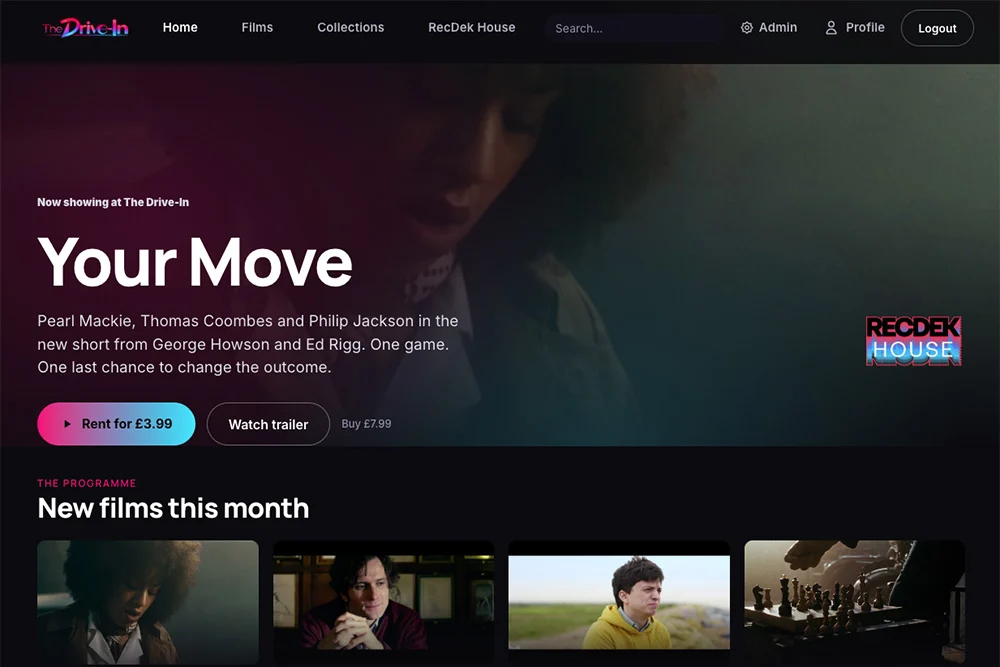
The independent film landscape is undergoing a significant structural shift with the unveiling of The Drive-In, a new transactional video-on-demand (TVOD) service designed specifically to bridge the gap between niche production and global distribution. Set to launch on October 17, coinciding with the high-profile London Film Festival, the platform integrates directly into the existing independent film discovery ecosystem, RecDek. By leveraging decentralized infrastructure and prioritizing creator ownership, The Drive-In aims to challenge the traditional distribution models that have long acted as gatekeepers for emerging talent.
The Genesis of a New Distribution Ecosystem
RecDek began its journey as a specialized discovery application, acting as a curated hub where film and television recommendations were aggregated from a trusted network of cinephiles, critics, and festival curators. Over the years, the platform evolved into a robust professional network known as RecDek House, which currently boasts a community of 17,000 directors, producers, talent representatives, financiers, and distributors.
The development of The Drive-In represents the natural evolution of this community. While the app previously functioned as a digital billboard for independent work, the new streaming service serves as the functional infrastructure that allows that work to be monetized directly. According to the company, the goal is to transform the transient, often frantic nature of festival-season networking into a sustained, year-round engine for commerce and exhibition. By partnering with Hiway—an infrastructure firm specializing in the direct-to-fan economy—RecDek is attempting to provide filmmakers with a "simple platform to monetize work that may otherwise never see the light of day."
Operational Mechanics and the Producer-First Philosophy
The technical architecture of The Drive-In is built on a philosophy of non-intrusive distribution. Unlike traditional platforms that require content to be ingested, re-encoded, and stored within proprietary servers—often resulting in complex rights management and delayed royalty cycles—The Drive-In streams directly from the filmmaker’s library.
This model offers several distinct advantages for independent producers:
- Total IP Retention: Filmmakers retain full ownership of their intellectual property. There is no transfer of rights or long-term exclusivity agreements.
- Dynamic Territory Control: If a filmmaker successfully negotiates a regional distribution deal with a traditional buyer, they can instantly remove that specific territory from The Drive-In, providing unprecedented flexibility in a fragmented global market.
- Direct Financial Transparency: Producers set their own price points and receive receipts from the first sale. Furthermore, they are granted access to real-time audience data, a luxury rarely afforded by major streaming services, which often keep such metrics opaque.
- Lower Barrier to Entry: By removing the "gatekeeper" model, the platform allows filmmakers to bypass traditional sales agents for smaller or highly niche projects that might not be considered "commercially viable" by legacy studios.
Contextualizing the Independent Distribution Crisis
The launch of The Drive-In comes at a pivotal time for the independent film sector. The post-pandemic theatrical landscape has become increasingly hostile to mid-budget and low-budget independent films. According to recent data from the British Film Institute (BFI) and various independent trade organizations, the theatrical window for independent cinema has shrunk significantly. Many films that would have previously enjoyed a modest theatrical run now struggle to secure screen space, and those that do often find that the cost of distribution—marketing, P&A (prints and advertising), and exhibitor fees—far outweighs the revenue generated.
In this context, the "long tail" of digital distribution has become the only viable path for many creators. However, the existing digital marketplace is dominated by massive subscription-based platforms (SVODs) that focus on library volume rather than individual film performance. For the independent filmmaker, the standard TVOD or SVOD licensing deal often involves a loss of control, a lack of transparency regarding viewing habits, and a significant delay in payment, if payment is guaranteed at all.
Perspectives from Industry Leadership
Ed Rigg, the writer and director who founded RecDek, views the new platform as a necessary response to the systemic frustrations of the industry. "We champion the voices studios drown out, and for too long it had been unclear exactly how filmmakers get their movies distributed," Rigg stated. He emphasizes that the platform is not intended to replace the traditional festival hustle—which he believes remains a vital component of the filmmaking process—but rather to provide a safety net and a secondary revenue stream for projects that do not secure traditional backing.
"Sure you can pitch, screen your work, hustle and so you should," Rigg added. "Go after wherever you think your movie will be looked after best. The Drive-In will exist for when filmmakers decide to take their film’s future into their own hands."
David Orman, CEO of Hiway, echoed these sentiments, highlighting the technological disparity between modern creators and the systems they are forced to use. "The missing piece was a screen of their own," Orman noted. "The Drive-In gives them that, on terms the industry rarely offers: every filmmaker keeps their IP, their audience, and the majority of their revenue. RecDek owns the brand and the relationship; we provide the rails. The tools now exist for RecDek to run their own show."
Broader Implications for the Film Industry
The introduction of The Drive-In could have profound implications for how film distribution is perceived by both creators and investors. If successful, the model could force a shift in the power dynamic between independent talent and established distributors. By proving that a community-driven, transparent, and creator-led platform can monetize niche content effectively, RecDek may provide a blueprint for other professional organizations to reclaim their distribution channels.
Furthermore, the integration of real-time data collection offers a significant research and development advantage. In the traditional system, producers often work in a vacuum, lacking clear information on who their audience is, where they are located, and how they engage with the material. By providing this data, The Drive-In is effectively turning each filmmaker into a data-driven enterprise, allowing for more targeted marketing campaigns and better-informed decisions for future projects.
However, the platform will face challenges. The primary hurdle will be discoverability. In an age of extreme content saturation, simply providing a platform to watch a film is not enough; the challenge lies in driving traffic to that platform. RecDek is banking on the strength of its 17,000-member professional community to act as the primary marketing engine, relying on word-of-mouth and industry-led advocacy to draw viewers.
Future Roadmap and Next Steps
As of September, RecDek has begun accepting submissions for the inaugural slate of films to be featured on The Drive-In. Interested filmmakers are encouraged to submit their work via the official portal at RecDekHouse.com. The vetting process is designed to ensure a high standard of quality while maintaining the platform’s commitment to independent voices.
The formal launch in October, timed to leverage the international attention surrounding the London Film Festival, is a strategic move intended to capture the interest of the global industry when it is most concentrated on independent film. If the service can successfully convert a fraction of the festival’s audience into consistent users of The Drive-In, it may well establish a new standard for independent distribution, proving that the future of cinema may lie not in the hands of the studios, but in the hands of the communities that create the content itself.
As the industry moves toward a more digitized and decentralized future, the success of The Drive-In will be measured by its ability to remain profitable for its users while maintaining the integrity of its mission. By prioritizing the producer’s right to control their product, RecDek is making a bold assertion: that the future of independent film is not about waiting for a distributor to pick up a project, but about building the infrastructure to distribute it oneself. Whether this model scales to accommodate the broader independent market remains to be seen, but the launch represents a significant departure from the status quo and a notable test case for the future of digital film exhibition.