
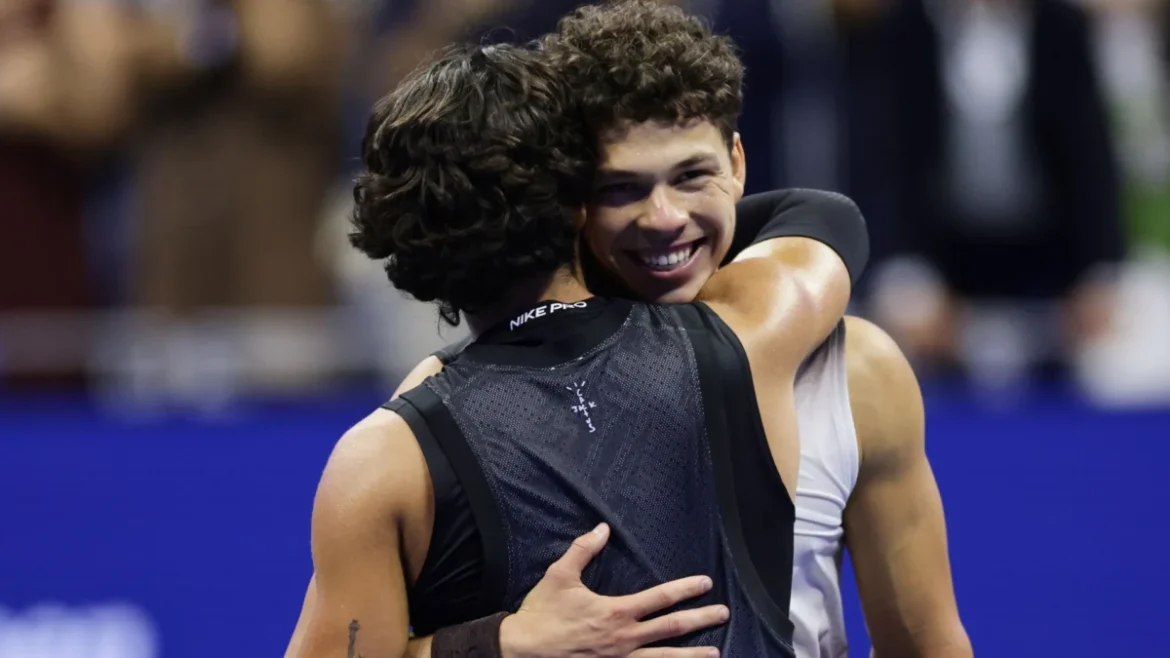
The clock at Arthur Ashe Stadium struck 3:33 a.m. local time when Ben Shelton delivered a thunderous final ace to secure his victory over Carlos Alcaraz, punctuating a marathon encounter that left thousands of spectators in a state of weary euphoria. While the atmosphere inside the iconic New York venue remained electric, the conclusion of this high-stakes quarterfinal has reignited a fierce global conversation regarding the sustainability of the tournament’s scheduling policies. With the match not commencing until after 11:00 p.m. due to a series of prolonged daytime and early evening contests, the incident has highlighted a growing rift between the demands of television broadcasting, fan engagement, and the physical well-being of the athletes.
A Chronology of the Midnight Marathon
The sequence of events leading to the 3:33 a.m. finish was not an anomaly but rather the culmination of a day-long backlog at the Billie Jean King National Tennis Center. Tuesday’s program featured several five-set battles that stretched the limits of the schedule, leaving the night session participants waiting in the wings far longer than anticipated. By the time Shelton and Alcaraz walked onto the court, the New York City night air had turned crisp, yet the anticipation remained palpable.
For the tournament organizers, these late-night spectacles have become a hallmark of the US Open brand. The unique energy of a New York crowd, combined with the primetime slot, provides unparalleled television ratings and a distinct cultural identity for the event. However, as matches increasingly bleed into the early hours of the following day, the logistical burden on staff, spectators, and players has become impossible to ignore. Even at this record-breaking hour, a significant portion of the capacity crowd remained in their seats, testifying to the allure of the sport, yet raising questions about the human cost of such scheduling.
The Athlete Perspective: Physical and Mental Toll
The impact of these nocturnal finishes extends well beyond the final point of the match. Professional tennis is a sport defined by precision, recovery, and strict physiological management. For players like Aryna Sabalenka and Venus Williams, the disruption to their circadian rhythms and recovery protocols is substantial.
"When you finish that late, the entire next day is compromised," noted a source close to the tour. "Players are forced to adjust their sleep schedules, nutrition, and training loads, which creates a cumulative fatigue effect that can lead to injury and diminished performance in subsequent rounds."
Venus Williams, a veteran of the sport, has been vocal about the logistical impracticality of matches starting after midnight. From a physiological standpoint, the body’s ability to recover from high-intensity anaerobic activity is hampered when the athlete is subjected to extreme sleep deprivation. While the adrenaline of the match carries them through the final set, the "crash" that follows can take several days to overcome, effectively disadvantaging winners who must return to the court in less than 48 hours.
Historical Context and Statistical Trends
The 3:33 a.m. finish ranks among the latest in the history of the sport, serving as a reminder that this issue is not confined to Flushing Meadows. The list of the latest singles finishes in professional tennis history is dominated by Grand Slam events, where the stakes are highest and matches are played in a best-of-five format for men.
- Alexander Zverev vs. Jenson Brooksby (Acapulco, 2022) – 4:54 a.m.
- Lleyton Hewitt vs. Marcos Baghdatis (Australian Open, 2008) – 4:34 a.m.
- Andy Murray vs. Thanasi Kokkinakis (Australian Open, 2023) – 4:05 a.m.
- Daniil Medvedev vs. Emil Ruusuvuori (Australian Open, 2024) – 3:39 a.m.
- Andreas Seppi vs. Bobby Reynolds (Australian Open, 2007) – 3:34 a.m.
- Ben Shelton vs. Carlos Alcaraz (US Open, 2026) – 3:33 a.m.
The data suggests a clear trend: the combination of increased match intensity, the prevalence of tie-breaks, and the commercial necessity of primetime slots is pushing the professional game toward a "night owl" paradigm. Critics argue that this shift is not sustainable for the long-term health of the athletes or the integrity of the tournament.
Official and Expert Reactions
The reaction from the tennis community has been polarized. Former world No. 1 and tennis legend Martina Navratilova led the criticism on social media, asserting that the current scheduling is "not normal" and lacks parity with other major professional sports. Navratilova’s sentiment reflects a broader concern that the sport is prioritizing revenue over the safety and performance of its stars.
Conversely, some voices within the industry suggest that the blame is misplaced. Andy Roddick, speaking on the Served podcast, offered a pragmatic defense of the tournament organizers. "I hear a lot of complaining, but I don’t hear a lot of proposed solutions," Roddick noted. He pointed out the immense difficulty of managing the ingress and egress of 25,000 spectators and the inherent unpredictability of tennis match durations. Because tennis does not have a fixed time limit—unlike football or basketball—organizers are essentially at the mercy of the scoreline.
Potential Solutions and Structural Reforms
As the conversation shifts from criticism to potential reform, several proposals have gained traction among analysts and coaches.
1. Limiting the Night Session:
Former Wimbledon champion Marion Bartoli has suggested a structural change to the night session format. "In the first week, when you have many matches, two per session makes sense. But as you move into the quarterfinals and beyond, when matches are inevitably longer and more competitive, the schedule should be limited to one match," Bartoli argued. This would create a hard cap on how late a session could realistically run.
2. Earlier Start Times:
While television contracts are the primary hurdle, many experts suggest that moving the start of the evening session forward by 30 to 60 minutes could alleviate the pressure. This would, however, conflict with the habits of the average American commuter, potentially reducing the live attendance for the first match of the evening.
3. Implementing "Hard" Curfews:
Some tournaments, such as those in the UK, have implemented strict noise and time curfews for local residents. While this effectively ends play by a certain hour, it risks leaving high-profile matches unfinished, creating a different set of logistical nightmares regarding ticket refunds and tournament momentum.
The Broader Implications
The controversy surrounding the US Open’s late-night finishes is symptomatic of a larger conflict in modern professional sports: the tension between tradition and the evolving demands of a 24-hour global media cycle. Tennis is a sport that prides itself on its history and etiquette, yet it is currently operating in an environment where the "show" must go on at all costs.
From an analytical perspective, the current model risks diluting the quality of play. Fatigue leads to unforced errors and a reduction in the physical speed that makes top-tier tennis compelling to watch. If the governing bodies of tennis—the ATP, WTA, and the Grand Slam boards—do not address these concerns, they risk alienating both the players who endure the grueling schedules and the fans who are left waiting for a resolution in the early hours of the morning.
As the US Open continues, the debate serves as a critical junction for the sport. Whether the solution lies in reduced match quantities per session, a shift in broadcast timing, or a fundamental change in how Grand Slam tournaments are administered, it is clear that the status quo is becoming increasingly untenable. For now, the images of empty stands at 3:00 a.m. and exhausted players fighting through the dark remain the defining—and perhaps most controversial—visuals of the current tennis season. The sport must decide if the commercial success of the "night session" brand is worth the growing toll on the athletes who carry it.
