
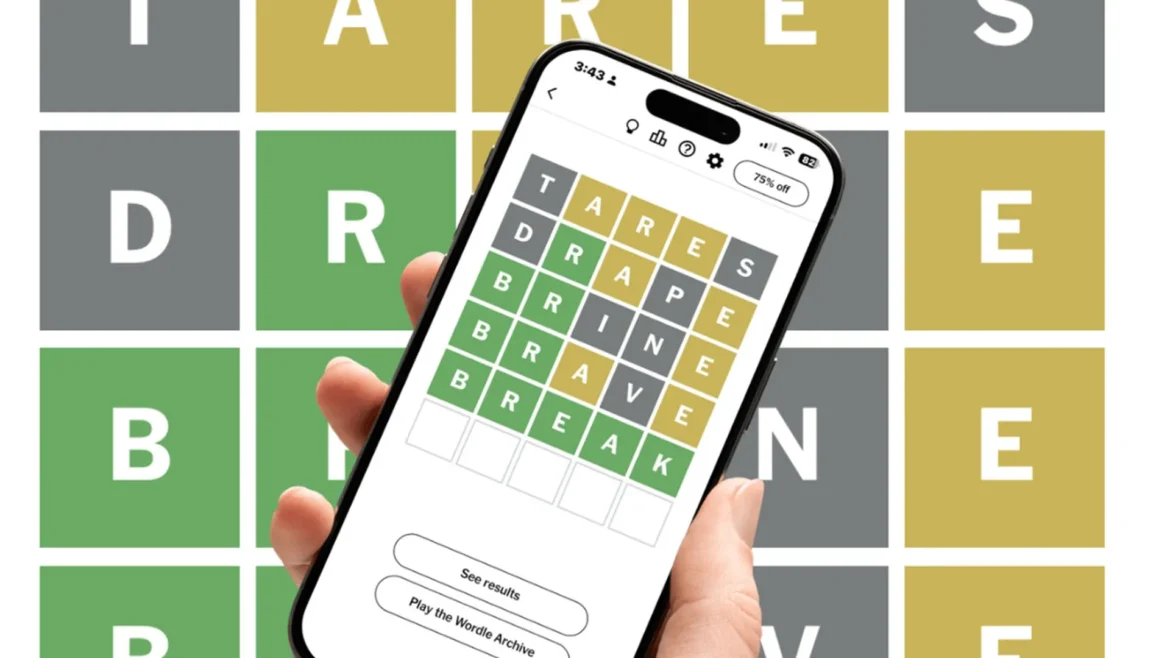
Millions of people across the globe start their mornings with a familiar digital ritual: opening the minimalist grid of Wordle to deduce a secret five-letter word within six attempts. While many players rely on intuition, personal superstitions, or common linguistic patterns, researchers at Binghamton University, State University of New York, have unveiled a data-driven approach that fundamentally changes the game. By applying the principles of information theory, a team led by Assistant Professor Congyu "Peter" Wu has developed a strategy that succeeds in 99 percent of simulated puzzles, effectively turning a game of vocabulary into a masterclass in mathematical optimization.
The Mathematical Foundation of the Daily Puzzle
Wordle, created by software engineer Josh Wardle and later acquired by The New York Times, operates on a relatively simple set of rules. A player inputs a five-letter word, and the game provides feedback: green tiles indicate the correct letter in the correct position, yellow tiles denote a correct letter in the wrong position, and gray tiles signal that the letter is absent from the word entirely. This iterative process of elimination is, at its core, a problem of uncertainty reduction.
The Binghamton research team recognized that Wordle is a perfect candidate for the application of Shannon entropy. Developed by Claude Shannon in 1948, information theory provides a mathematical framework for quantifying the amount of "surprise" or "uncertainty" in a set of data. In the context of Wordle, entropy measures how much information a specific guess provides about the hidden word.
"The objective shifts to maximizing the expected reduction in uncertainty rather than the probability of being right," explains Donald Stephens, a doctoral student at Binghamton and co-author of the study. This represents a departure from traditional human gameplay, where players often prioritize words that they believe are likely to be the actual answer. Instead, the optimal strategy, as identified by the researchers, often involves choosing words that act as "information probes"—guesses designed to eliminate the largest possible number of incorrect candidates, even if those guesses themselves have a near-zero probability of being the solution.
A Chronology of Discovery: From Classroom to Publication
The journey of this research began not in a high-tech laboratory, but within the walls of a classroom at the Thomas J. Watson College of Engineering and Applied Science. As part of a coursework assignment, Professor Wu challenged his students to demonstrate the utility of information theory in solving a real-world, dynamic problem.
The students identified Wordle as an ideal sandbox for this experiment. What began as a practical exercise in applying academic theory to a recreational puzzle quickly grew into a rigorous scientific investigation. Over several months, the team refined their algorithms, moving beyond simple letter-frequency analysis to build a dynamic model that updates its strategy in real-time based on the feedback provided by the game.
The culmination of this work was the paper "Solving Wordle Using Information Theory," published in the Northeast Journal of Complex Systems. The evolution of this project serves as a testament to the university’s pedagogical approach, which emphasizes the application of theoretical concepts to solve complex, real-world engineering challenges. Co-author Talal Aladaileh noted that the transition from a student project to a published paper reflects the high standard of the School of Systems Science and Industrial Engineering.
Comparative Performance: Information Theory vs. Traditional Heuristics
To validate their findings, the research team conducted an extensive comparative analysis between their information-theory-based model and a conventional strategy. The latter is the approach most commonly employed by casual players: guessing words composed of high-frequency letters, such as "A," "E," "R," or "S," to maximize the chance of hitting a correct letter early.
The simulation results were stark. While the high-frequency letter strategy achieved a 90 percent success rate in solving Wordle puzzles, the information theory method hit a 99 percent success rate. The 9 percent difference, while seemingly narrow in a vacuum, represents a significant leap in efficiency.
The mathematical difference lies in the "trajectory" of the game. A high-frequency letter strategy is static; it treats each turn as an independent event focused on finding letters. The information theory strategy is dynamic; it treats the game as a sequence of state-space reductions. By calculating the Shannon entropy of every possible word in the remaining dictionary after each turn, the algorithm selects the word that provides the highest expected gain in information. This ensures that even when a player does not uncover any green letters, the "cost" of that turn—in terms of eliminated possibilities—is optimized to the greatest degree possible.
The Strategy in Practice: Why "Wrong" Guesses are Right
The most counterintuitive aspect of the Binghamton strategy is that the most "valuable" guess is rarely the one that the player believes to be the answer. For a human, there is a psychological pull to guess a word that feels "right" or appears to be a likely solution. The information-theory approach ignores this heuristic entirely.
For example, if a player has narrowed the field down to a set of words that all end in "-IGHT," a standard player might try to guess one of those words directly. The mathematical strategy, however, might suggest a word that contains none of the letters already identified but possesses a high diversity of letters that can split the remaining candidates into smaller, more manageable subsets. By "wasting" a turn on a word that is unlikely to be the solution, the player gains enough information to solve the puzzle with absolute certainty on the subsequent move.
To replicate this in a real-world scenario, a player would need to interface with a computational script. After each guess, the player inputs the game’s color-coded feedback into the program, which then calculates the next optimal guess based on the remaining dictionary of valid Wordle words.
Implications for Decision Science and Engineering
Beyond the niche appeal of optimizing a daily word game, the research has broader implications for decision science and industrial engineering. The ability to manage uncertainty in a dynamic environment is a cornerstone of many critical industries, ranging from supply chain logistics to medical diagnostics.
"What is especially creative and valuable about the team’s intellectual contribution is that it transformed a static measurement in a scientific domain into a dynamic solution that helps accomplish a popular task better," says Professor Wu. This research demonstrates that information theory is not merely a descriptive tool used to measure the entropy of a system, but an active, prescriptive tool for decision-making.
In fields like systems engineering, where decision-makers must often act with incomplete information, the Wordle model provides a clear, scalable example of how to prioritize "information gain" over "immediate gratification." By focusing on the reduction of the state space, engineers can create systems that are more resilient, efficient, and capable of navigating complex variables.
The Future of Algorithmic Gaming
The success of the Binghamton team’s model highlights the increasing intersection of artificial intelligence, mathematics, and consumer-facing technology. As games like Wordle continue to dominate cultural discourse, the desire to "solve" them using advanced computation will likely grow. However, the true value of this research lies in its accessibility. By framing complex information theory within the context of a five-letter puzzle, the team has provided a tangible bridge for students and enthusiasts to understand how high-level mathematics functions in a practical, daily setting.
While the 99 percent success rate is an impressive benchmark, the researchers acknowledge that there is always a margin for the "unlucky" game—where the remaining possibilities are so closely aligned that even the best information gain cannot guarantee a win within six attempts. Nevertheless, the study remains a definitive look at how mathematical rigor can transform a simple game of chance into a predictable system of logic.
As the academic community continues to explore the limits of information theory, projects like this serve as a reminder that even the most mundane activities can harbor profound scientific truths. For the average Wordle player, the takeaway is clear: sometimes, the best way to get closer to the truth is to stop guessing what the answer is, and start asking what information you need to make the next step inevitable.
