
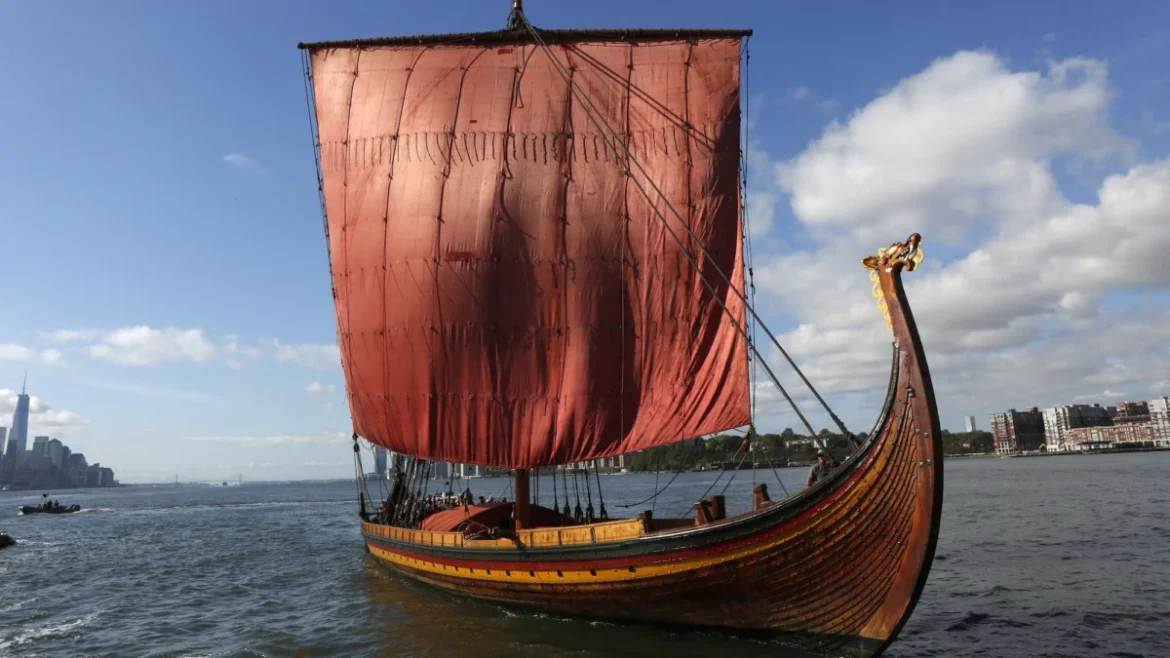
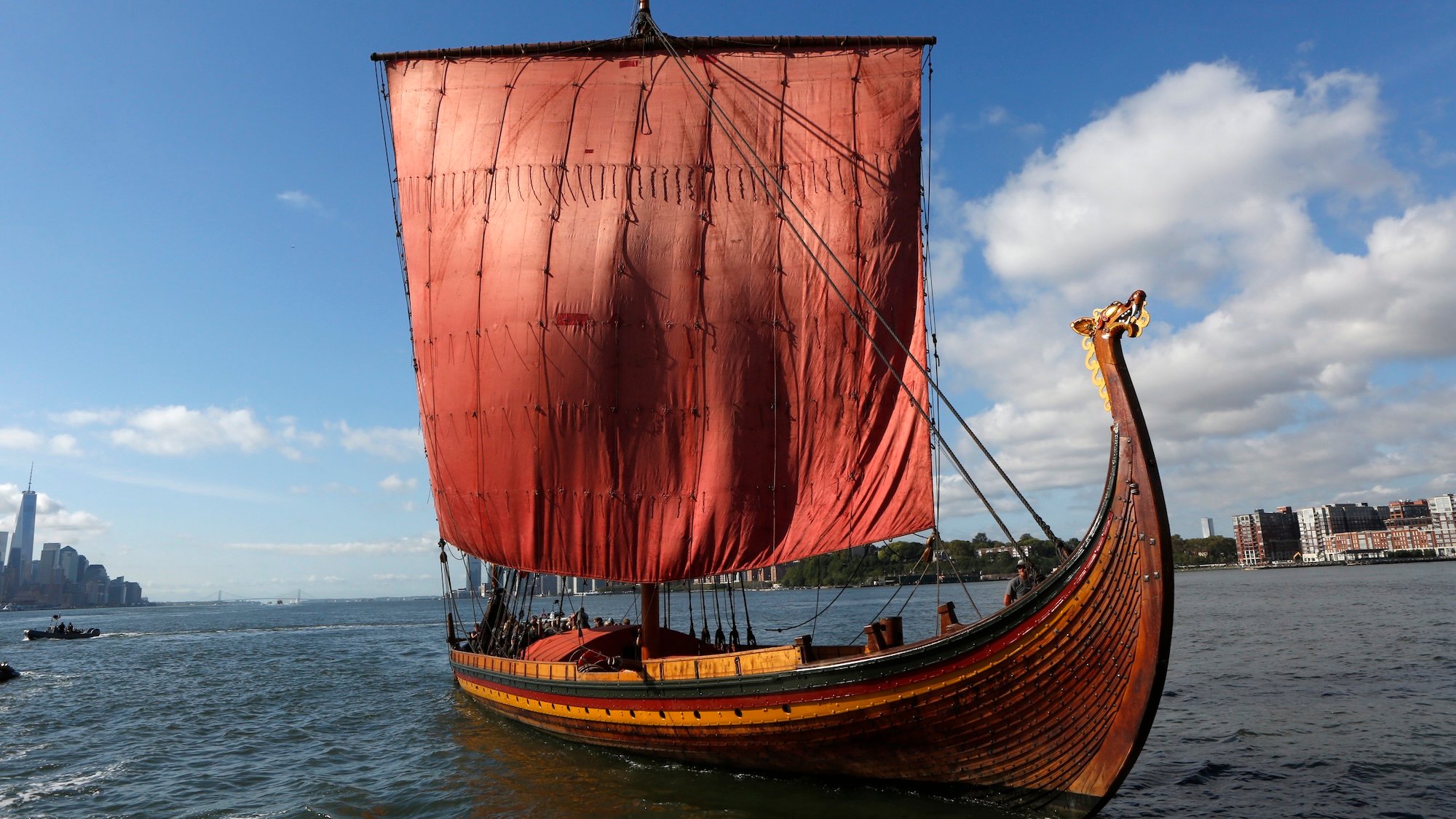
The Draken Harald Hårfagre, the world’s largest operational Viking ship and a recent star in Christopher Nolan’s cinematic adaptation of The Odyssey, is preparing for an extensive maintenance cycle this coming spring. Owners of the vessel are currently soliciting applications from global volunteers to participate in a four-week restoration effort in Norway. Beginning April 10, 2027, and concluding May 15, the project aims to preserve the structural integrity of the 114-foot longship, which has garnered international attention both for its historical significance and its recent transition into a major film prop.
A Legacy of Maritime Engineering and Experimental Archaeology
Commissioned in 2010 by Norwegian entrepreneur and oil magnate Sigurd Aase, the Draken Harald Hårfagre was conceived as a testament to the sophistication of Norse maritime technology. Unlike modern vessels constructed with steel or composite materials, the Draken was built using traditional clinker-style construction—a method involving overlapping oak planks fastened with iron rivets. This design mirrors the archaeological evidence found in the Gokstad ship, a 9th-century burial vessel discovered in 1880.
The ship measures 114 feet in length and 26 feet in width, featuring a 79-foot-tall mast capable of carrying 2,800 square feet of silk sail. Its development was fueled by a desire to test the veracity of historical sagas and skaldic poetry, which detailed the extraordinary endurance of Viking explorers. The vessel’s maiden voyage in 2012 served as a proof-of-concept for its durability, leading to its historic 2016 transatlantic crossing from Haugesund, Norway, to Newfoundland, Canada. This journey successfully replicated the navigational routes historically attributed to Leif Erikson, providing researchers with invaluable data regarding the stamina and capabilities of ancient longships in modern open-ocean conditions.
The Odyssey: From Historical Re-enactment to Cinematic Icon
The vessel’s recent prominence in Christopher Nolan’s The Odyssey underscores a broader trend in high-budget filmmaking: a return to practical, large-scale sets. In an industry increasingly dominated by computer-generated imagery (CGI), Nolan’s insistence on using a full-scale, seaworthy ship for the role of Odysseus’s galley provided a tangible aesthetic that digital effects often struggle to replicate.
While maritime historians have noted that the Draken is not strictly accurate to the Late Bronze Age setting of Homer’s epic, its presence serves as a functional and visual centerpiece. The ship’s robust construction allowed it to withstand the rigors of film production, though the intensive nature of the shoot—involving water-based filming and exposure to varying environmental conditions—necessitated the upcoming maintenance program. The use of the Draken in the film has effectively bridged the gap between maritime archaeology and popular culture, introducing millions of viewers to the realities of ancient naval architecture.
Maintenance Requirements and Volunteer Protocols
The upcoming maintenance cycle is a labor-intensive process, critical to the vessel’s longevity. The work is scheduled to span five one-week intervals, allowing volunteers to participate based on their availability. According to the official project guidelines, the scope of work includes:
- Clinking and Hull Restoration: Replacing weakened or damaged oak planks to ensure the hull remains watertight.
- Surface Preparation: Scraping the exterior to remove marine growth and bio-fouling accumulated during the vessel’s recent travels.
- Preservation Treatments: Re-tarring the hull with traditional substances and applying protective coatings to shield the wood from the harsh Norwegian climate.
- Rigging and Deck Maintenance: Assessing the integrity of the mast, rigging, and wooden deck fixtures that sustain the ship’s primary mechanical functions.
Applicants must be at least 18 years of age. While the organization welcomes enthusiasts, preference is explicitly given to those with a background in carpentry, boatbuilding, or professional maritime maintenance. The organization provides accommodations and meals for the duration of the volunteer’s service, fostering a collaborative environment that brings together historical reenactors, maritime professionals, and cinema buffs.
Broader Implications for Maritime Heritage
The maintenance of the Draken Harald Hårfagre represents a significant investment in the preservation of living history. In the field of experimental archaeology, keeping such a vessel in active service is vital. If a ship remains in a museum, it becomes a static object; by keeping the Draken in the water, the crew continues to gain data on how these vessels handle stress, wind, and current—data that cannot be extrapolated from static displays.
Furthermore, the vessel’s dual life as a historical research project and a cinematic asset highlights the economic sustainability of heritage ships. The revenue generated through exhibitions, educational tours, and, increasingly, media appearances, provides the capital necessary to fund the expensive, specialized maintenance required for a ship of this scale. The model employed by the Draken project serves as a potential blueprint for other organizations seeking to maintain historical replicas in an era of rising costs for skilled labor and traditional materials.
Looking Ahead: The 2027 Schedule
As the project prepares for the April 2027 launch of its restoration efforts, the maritime community anticipates a rigorous assessment of the ship’s condition. Project managers have indicated that the focus will not merely be on aesthetic repair, but on the deep structural health of the oak framework.
For the volunteers, the experience offers an immersion into a craft that has remained largely unchanged for a millennium. By engaging with the ship at the physical level—hammering rivets, applying pine tar, and inspecting the seams of the planks—participants are effectively participating in the ongoing narrative of the vessel itself.
The Draken Harald Hårfagre project stands as a unique nexus of engineering, history, and modern entertainment. Whether it is sailing the North Atlantic to retrace the paths of the Vikings or serving as the backdrop for a Hollywood epic, the ship remains a primary vehicle for understanding the ingenuity of the past. For those selected to participate in the upcoming maintenance, the work serves as a reminder that the preservation of such history is a constant, physical endeavor, requiring the dedication of those willing to keep the spirit of the longship alive in the modern age.
Interested parties are encouraged to visit the official Draken Harald Hårfagre website to submit their credentials and review the specific physical requirements for the maintenance season. The application window remains open as the team coordinates logistics for the spring, ensuring that the vessel will be prepared for its next chapter, whatever that may entail.
