
The announcement that Troy’s last remaining hospital intended to shutter its birthing center struck like a physical blow to residents of this historic industrial city nestled along the Hudson River. For Starletta Washington, executive director of the local YWCA, the news was not merely shocking; it felt like an existential threat to the community she has called home all her life. Washington, who was born at Samaritan Hospital and later brought her own children into the world there, struggled to fathom a future where local families would face a half-hour transit window just to reach the nearest delivery room—or worse, face the harrowing prospect of an emergency roadside delivery.
The grim reality of the situation prompted Washington to voice a stark warning that resonated throughout the region: no new babies would be born within the municipal boundaries of Troy unless they arrived on a city bus, in the back of a taxicab, or on the pavement of a public street. Her disbelief mirrored the sentiments of thousands of residents across Rensselaer County who suddenly realized their local healthcare infrastructure was vulnerable to decisions made hundreds of miles away.
Yet, unlike numerous other municipalities across the United States that have quietly watched their maternity wards vanish over the past decade and a half, Troy charted a different course. Through an unlikely coalition of patient advocates, bipartisan elected officials, mothers, midwives, doulas, and religious leaders, the city launched a fierce resistance campaign. This concerted push ultimately compelled a multibillion-dollar health system to reverse its decision, offering a rare beacon of hope in an era defined by healthcare consolidation and the rapid erosion of rural and urban community services alike.
The National Crisis of Maternity Ward Closures
The battle in Troy did not occur in a vacuum. Since 2010, hundreds of maternity units across the United States have closed their doors. This sweeping trend is driven by a combination of shrinking populations in legacy industrial towns, shifting demographic birth rates, and the relentless consolidation of independent hospitals into massive, centralized health systems.
When hospitals merge or are acquired by large corporate entities, obstetrical departments—which are frequently viewed as low-margin or high-liability services—are often the first on the chopping block. The financial calculus of these large entities typically prioritizes institutional overhead and operating margins over localized community needs, leaving vast maternity deserts in their wake. According to healthcare researchers, the closure of these units disproportionately impacts low-income families, women of color, and individuals without reliable transportation, significantly increasing the risk of adverse maternal and infant health outcomes.
In this broader national landscape, healthcare has increasingly become a volatile political flashpoint. Yet, away from the polarized debates of Washington, D.C., ordinary citizens in places like Troy are discovering that the fight for healthcare access can bridge deep political divides. Frustration over corporate healthcare models that appear to value the bottom line over patient welfare has ignited a grassroots awakening, proving that communities are increasingly willing to organize, strategize, and fight back to preserve vital local infrastructure.
Samaritan Hospital and the Legacy of Burdett Birth Center
To understand why the proposed closure provoked such visceral outrage, one must examine the deep roots of Samaritan Hospital and its renowned Burdett Birth Center. Perched on a hill overlooking Troy—a city that a century ago powered the American economy as the nation’s primary producer of shirt collars—the hospital has served as a cornerstone of public health for generations.
In recent decades, the Burdett Birth Center evolved far beyond a standard delivery ward, earning a national reputation as a progressive model for patient-centered, low-intervention obstetric care. Operating on an integrated team model, midwives and doulas work in close collaboration with board-certified OB-GYNs to support expectant mothers who wish to minimize medical interventions and avoid cesarean sections whenever clinically safe.
This philosophy has yielded exceptional clinical outcomes. Patient safety advocates have spent decades campaigning against the overuse of surgical deliveries, which carry elevated risks of post-operative complications and prolonged recovery times. While statewide hospital data from 2025 indicated that roughly one-third of all newborns in New York were delivered via C-section, Burdett maintained a remarkably low C-section rate of approximately 25 percent. Furthermore, the center consistently recorded superior metrics regarding preterm births and low-birth-weight infants compared to regional averages.
For local families, the center was an invaluable community asset. Lidia Zambrano-Madera, a Troy resident who recently established a children’s play center in the city, welcomed both of her children at Burdett with the assistance of a midwife. For Zambrano-Madera, the proximity and quality of care were unmatched, located just a five-minute drive from her front door.
Corporate Strategy Meets Community Backlash
The crisis erupted three years ago when Trinity Health—a multibillion-dollar, Michigan-based Catholic health system that oversees Samaritan Hospital through its regional network, St. Peter’s Health Partners—announced that the Burdett Birth Center was operating at a financial deficit and would be permanently closed. Under the consolidation proposal, families in Troy and the surrounding county would be redirected to deliver at another Trinity-affiliated facility located in Albany, a commute that can stretch to thirty minutes or more depending on traffic, weather, and transit access.
Dr. Steven Hanks, a physician who oversees Trinity Health operations across New York and New England, defended the decision by pointing to the unsustainable pressures facing modern hospital networks. Hanks explained that leadership had fought exhaustively to protect direct bedside care, but ultimately reached a tipping point where systemic consolidation and workforce shortages forced difficult decisions regarding service reductions.
The announcement, which broke via a local newspaper report, caught obstetrical staff and municipal leaders completely unawares. The lack of advance communication or community consultation triggered an immediate firestorm.
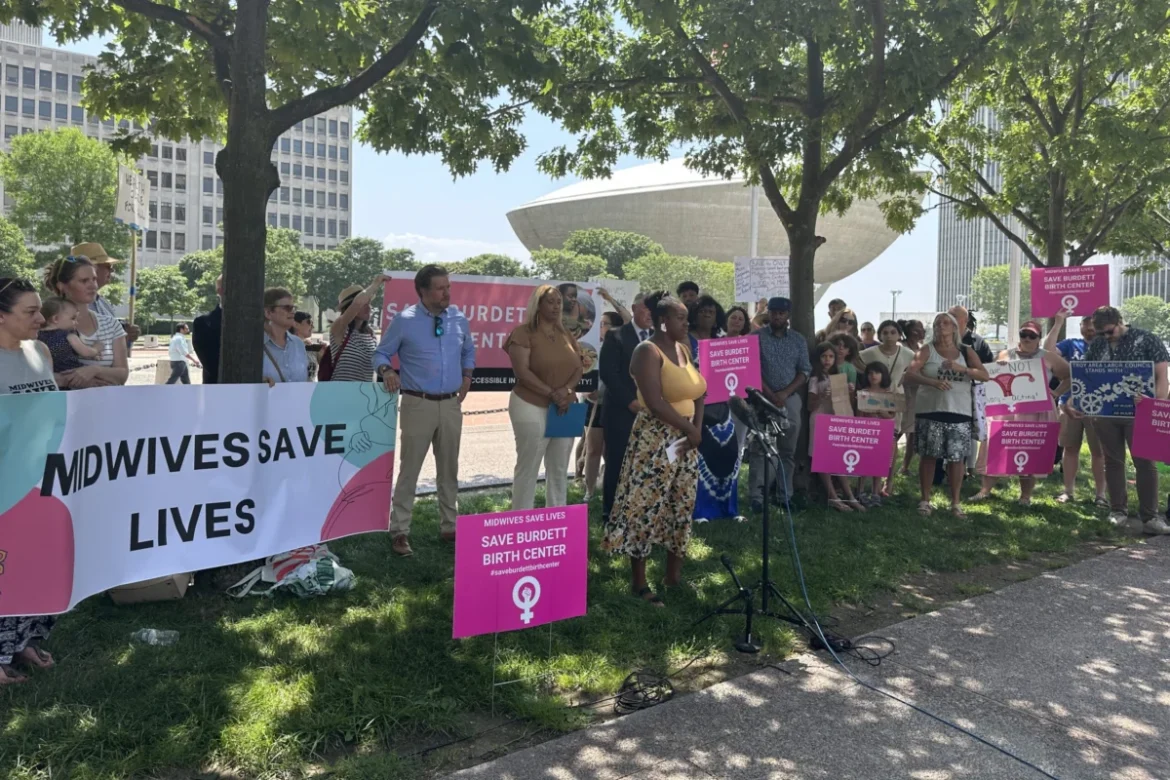
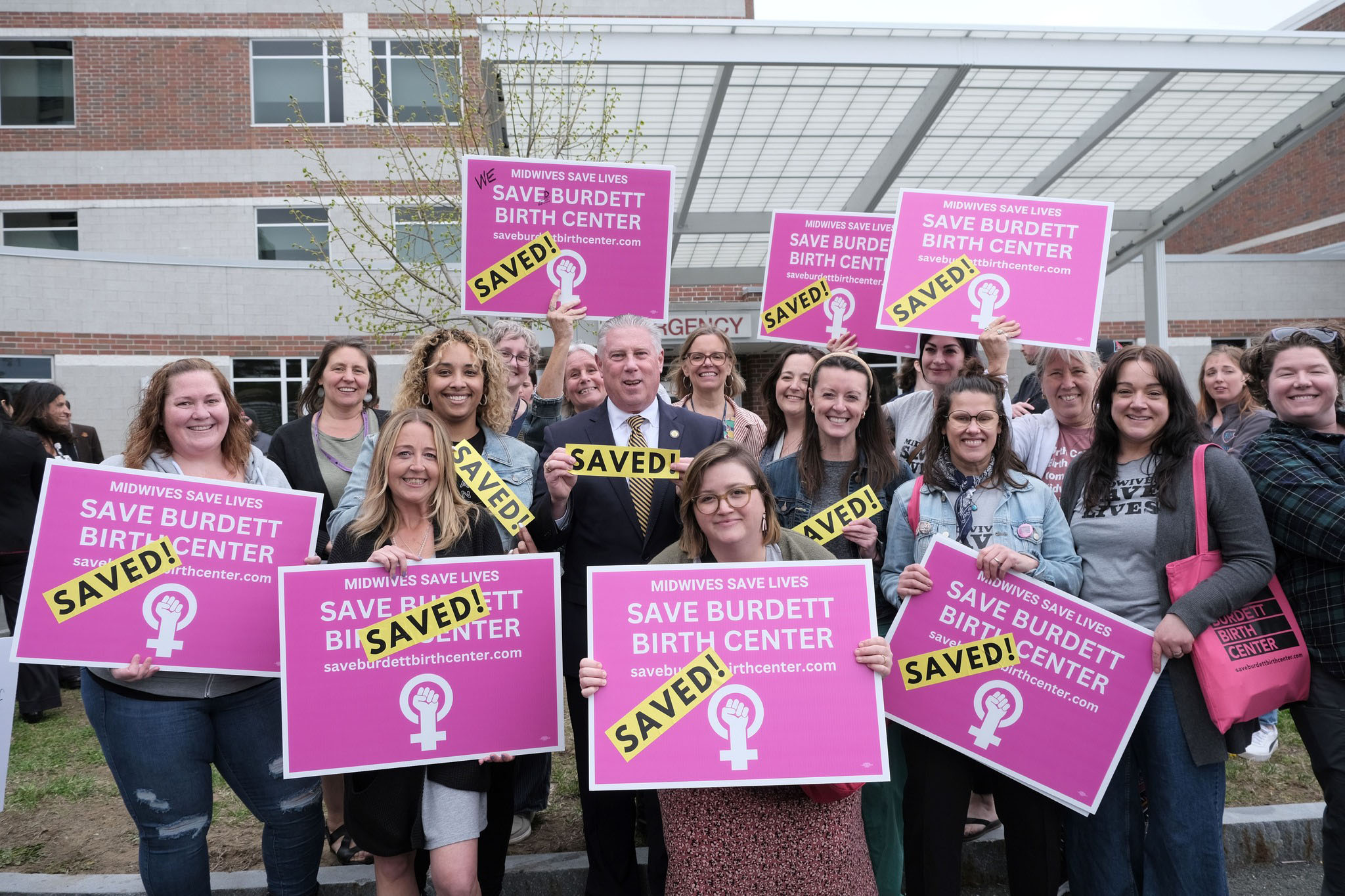
Within days, a coalition of midwives, mothers, labor and delivery nurses, and local activists convened an emergency rally at the downtown YWCA. The movement quickly gained momentum. Volunteers, spearheaded by doulas and birth educators, manufactured custom T-shirts and distributed iconic pink "Save Burdett" yard signs at the city’s bustling weekend farmers market.
Activists quickly mobilized to conduct an independent community impact assessment, exposing what they viewed as a negligent oversight by corporate leadership. The survey revealed a startling statistic: one in every four residents of Troy lacked access to a personal vehicle, meaning that forcing maternity patients to travel to Albany would introduce severe logistical barriers and genuine safety hazards.
Jessica Hayek, a doula, birth educator, and prominent campaign organizer, noted that Trinity Health fundamentally misunderstood the emotional and practical gravity of the institution. Operating from an executive office in the Midwest, corporate leaders failed to comprehend how deeply woven the birth center was into the social fabric of Troy. Although Hayek identifies as a liberal Democrat, she found herself aligned with conservative local leaders who were equally incensed by the corporate coldness of the decision.
Carmella Mantello, then serving as City Council president and later elected mayor of Troy, noted that the evolution of healthcare from a localized, community-driven service to a corporate enterprise had alienated patients across the political spectrum. Where patients once experienced personal relationships with doctors and nurses who could dedicate ample time to care delivery, they now encountered sterile, corporate environments driven by quarterly financial metrics.
Even the Roman Catholic Diocese of Albany weighed in, with Bishop Edward Scharfenberger publicly criticizing the planned closure. The bishop argued that dismantling a vital maternity ward directly contradicted the core tenets of Catholic healthcare doctrine, which places supreme value on protecting and supporting life and the families who bring it into the world.
The Bipartisan Crusade and Legislative Intervention
Despite mounting public outcry, Trinity Health executives stood firm for months, insisting that financial realities left them no alternative. The health system even initiated legal action against the state in an effort to clear administrative hurdles and expedite the closure.
As the legal and public relations battle intensified, powerful state-level figures stepped into the fray. New York Attorney General Letitia James launched a formal inquiry into the proposed shutdown, organizing a comprehensive daylong public hearing in Troy to give voice to affected patients and medical professionals.
Simultaneously, a bipartisan bloc of state legislators forged a legislative rescue plan. State Assemblyman John T. McDonald III, a Democrat representing Troy, bridged political divides by collaborating closely with Republican county executives and state senators. Together, this bipartisan alliance successfully secured a $5 million allocation in state funding designed specifically to stabilize the birth center’s finances and keep its doors open. McDonald emphasized that partisan labels became irrelevant when constituents made their needs unmistakably clear.
Faced with relentless public pressure, regulatory scrutiny, legislative opposition, and the secure injection of state operational funds, Trinity Health reversed its position nearly a year after the initial announcement, confirming that the Burdett Birth Center would remain operational.
Broader Implications for American Healthcare
Lois Uttley, a New York City-based healthcare researcher and patient advocate who has spent decades studying hospital consolidations, views the outcome in Troy as a watershed moment reflecting a broader, nationwide skepticism toward corporate healthcare conglomerates.
According to Uttley, major health systems routinely pitch mergers and acquisitions to local communities under the banner of enhanced quality, expanded access, and administrative efficiency. However, decades of empirical observation reveal that these promises frequently go unfulfilled, leaving smaller municipalities stripped of essential services while corporate entities consolidate power and capital. As hospitals continue to downsize and shutter regional departments, Uttley notes that communities are waking up to the reality of corporate healthcare strategies and pushing back with unprecedented vigor.
For lawmakers like McDonald, the successful preservation of the Burdett Birth Center offers a profound, scalable lesson for governance in a polarized nation. By laying down partisan weapons and extending a hand in cooperation, communities can surmount seemingly insurmountable corporate obstacles to protect the health, dignity, and future of their citizens.
