
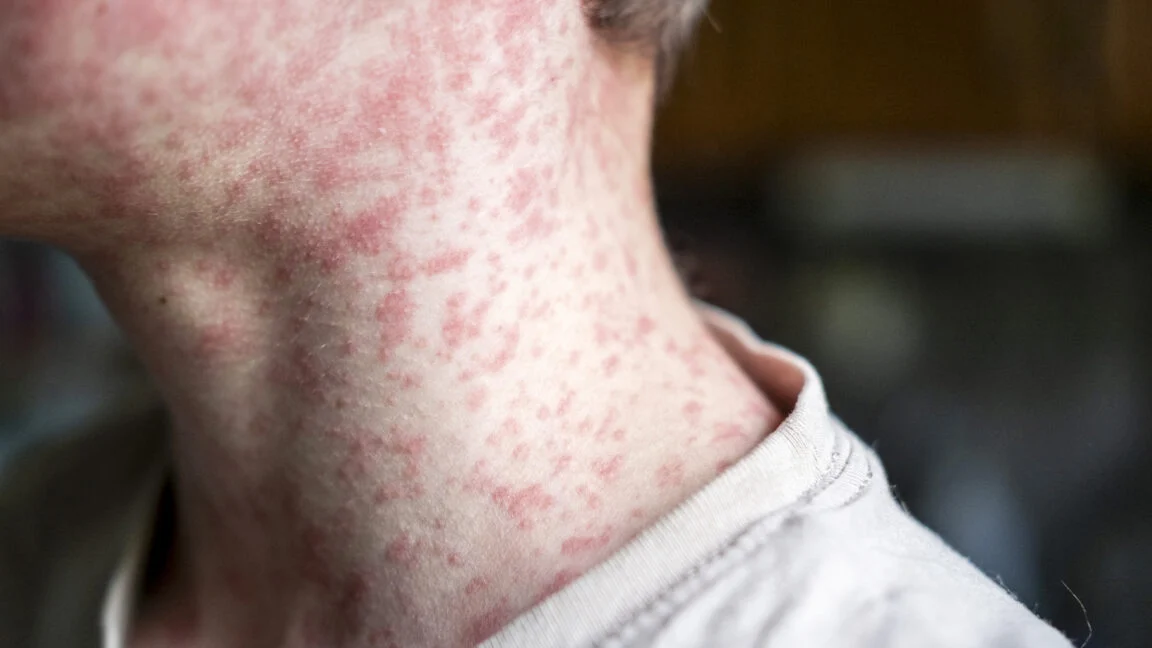
The Commonwealth of Pennsylvania is confronting its most severe public health crisis involving a preventable infectious disease in over thirty years, following confirmation by the Pennsylvania Department of Health that a fourth individual has succumbed to measles. State health officials verified Tuesday that an unvaccinated 18-year-old resident of Mifflin County is the latest fatality in an escalating epidemic that has gripped dozens of counties and strained local healthcare infrastructure.
According to official statements and municipal coroner reports, the teenager died from acute disseminated encephalomyelitis (ADEM), a rare but devastating neurological complication triggered by the measles virus. The tragedy brings the commonwealth’s death toll to four, highlighting the aggressive and sometimes fatal nature of a disease that was considered effectively eliminated in the United States prior to recent drops in routine childhood vaccination rates.
The ongoing crisis has placed public health agencies on high alert, prompting renewed urgency regarding vaccination campaigns, hospital capacity management, and community outreach. As state epidemiologists scramble to contain the relentless spread of the pathogen, medical professionals are reiterating the safety and efficacy of the measles, mumps, and rubella (MMR) vaccine, warning that public complacency and vaccine hesitancy are fueling the outbreak.
Chronology of the Outbreak and Fatalities
The trajectory of Pennsylvania’s current outbreak has been marked by a grim sequence of escalating severity over recent months. The latest confirmation from the Department of Health officially integrates two recent deaths into the state’s official metrics: the 18-year-old from Mifflin County and an unvaccinated 40-year-old woman from Jefferson County, whose death was initially reported by the county coroner over the preceding weekend.
These adult fatalities follow two deeply tragic pediatric deaths recorded earlier in the year in Lancaster County. The previous victims included a newborn boy and a six-week-old girl. Public health officials emphasized that both infants were far too young to receive the standard first dose of the MMR vaccine, which is typically administered to children between 12 and 15 months of age. Their deaths underscore the concept of community immunity, or herd immunity, wherein vulnerable populations—including infants, pregnant women, and immunocompromised individuals—rely on the vaccination of the surrounding populace to shield them from exposure.
In the case of the 18-year-old Mifflin County resident, Mifflin County Coroner Andrea L. Alcalde released a detailed statement following a comprehensive review of medical records and investigative data. Alcalde confirmed that the primary cause of death was acute disseminated encephalomyelitis. ADEM is characterized by a rapid, autoimmune-driven inflammatory response that strips away the myelin sheath, the protective lipid coating surrounding nerve fibers in the brain and spinal cord. While ADEM can occasionally follow other viral infections or immunizations, it is historically well-documented as a severe neurological complication of wild-type measles infections. Out of respect for the grieving family, local authorities have withheld further personal details regarding the deceased.
Current Epidemiological Data and Hospitalization Metrics
The human toll of the outbreak extends far beyond the four fatalities. According to the most recent data released by the Pennsylvania Department of Health, the commonwealth has documented a staggering 693 confirmed cases of measles across 38 distinct counties since the beginning of the year. The velocity of transmission remains high, with 99 new cases officially logged within a single seven-day window.
The severity of the virus is further reflected in hospitalization rates. To date, 133 individuals have required inpatient medical care for measles-related complications, ranging from severe dehydration and secondary bacterial pneumonia to acute encephalitis. This surge in admissions has placed a heavy burden on regional healthcare facilities, requiring isolation protocols, emergency staffing adjustments, and intensive contact-tracing efforts by local health departments.
Public Health Responses and Official Statements
In response to the mounting casualties and expanding geographic footprint of the outbreak, Pennsylvania Secretary of Health Dr. Debra Bogen issued a formal statement conveying condolences to the affected families while stressing the gravity of the public health emergency.
"My thoughts are with the two families who lost loved ones to this highly contagious virus, as Pennsylvania faces the worst measles outbreak in more than three decades," Dr. Bogen stated. "We remain committed to working with our partners across Pennsylvania to stem this outbreak and prevent more deaths. That means ensuring people have the facts about measles and access to the MMR vaccine—which kept measles outbreaks at bay for decades."
State health officials have deployed additional resources to affected counties, establishing temporary vaccination clinics, partnering with local school districts and community centers, and launching educational campaigns designed to counter misinformation surrounding immunization. Medical experts stress that the MMR vaccine remains the single most effective defense against the virus, boasting an efficacy rate of approximately 97 percent after two doses.
Understanding Measles and the Threat of Complications
Measles is caused by a highly contagious paramyxovirus that spreads primarily through airborne droplets when an infected person coughs or sneezes. The virus can remain suspended in the air and retain infectivity for up to two hours after an infected person leaves a room. An individual infected with measles can spread the virus to others up to four days before the characteristic rash appears and for four days afterward. In populations with low vaccination coverage, a single imported case can trigger explosive community-wide transmission due to the virus’s exceptionally high basic reproduction number ($R_0$), which estimates that one infected person can transmit the disease to between 12 and 18 susceptible individuals.
While many associate measles primarily with a high fever, cough, runny nose, red watery eyes, and a maculopapular rash, the virus can lead to severe, life-threatening complications. Approximately one in five people who contract measles will require hospitalization. Common complications include ear infections that can result in permanent hearing loss and severe respiratory infections such as pneumonia, which is the most common cause of death from measles in young children.
More severe complications involve the central nervous system. Acute encephalitis occurs in roughly one out of every 1,000 reported cases, frequently resulting in permanent brain damage or convulsions. Furthermore, a rare but fatal degenerative neurological condition known as subacute sclerosing panencephalitis (SSPE) can develop years after an initial measles infection, characterized by progressive cognitive decline, motor dysfunction, and death.
Broader Implications for Public Health and Vaccination Policy
The resurgence of measles in Pennsylvania and various other regions across the United States highlights a fragile landscape of public health immunity. Before the widespread licensure of the measles vaccine in 1963, the virus infected virtually all children by the time they reached adolescence, resulting in millions of cases and hundreds of deaths annually in the United States alone. The declaration of measles elimination in the U.S. in 2000 was heralded as a monumental triumph of modern medicine and public health administration.
However, in recent years, declining vaccination coverage rates driven by vaccine hesitancy, philosophical exemptions, and disruptions to routine healthcare delivery systems—exacerbated in part by the COVID-19 pandemic—have eroded population-level immunity. Public health analysts warn that when vaccination rates drop below the threshold required for herd immunity (generally estimated between 93 and 95 percent for measles), communities become acutely vulnerable to the reintroduction and rapid spread of vaccine-preventable diseases.
The Pennsylvania Department of Health has confirmed that the details surrounding the deaths of the Mifflin County teenager and the Jefferson County woman will be formally integrated into the state’s public health outbreak data dashboard during its next scheduled weekly update. In the interim, health authorities continue to urge all unvaccinated residents, healthcare providers, and community leaders to prioritize immunization, verifying their vaccination statuses and taking immediate precautions to curb the transmission of a virus that health officials had hoped had been relegated to history.
