
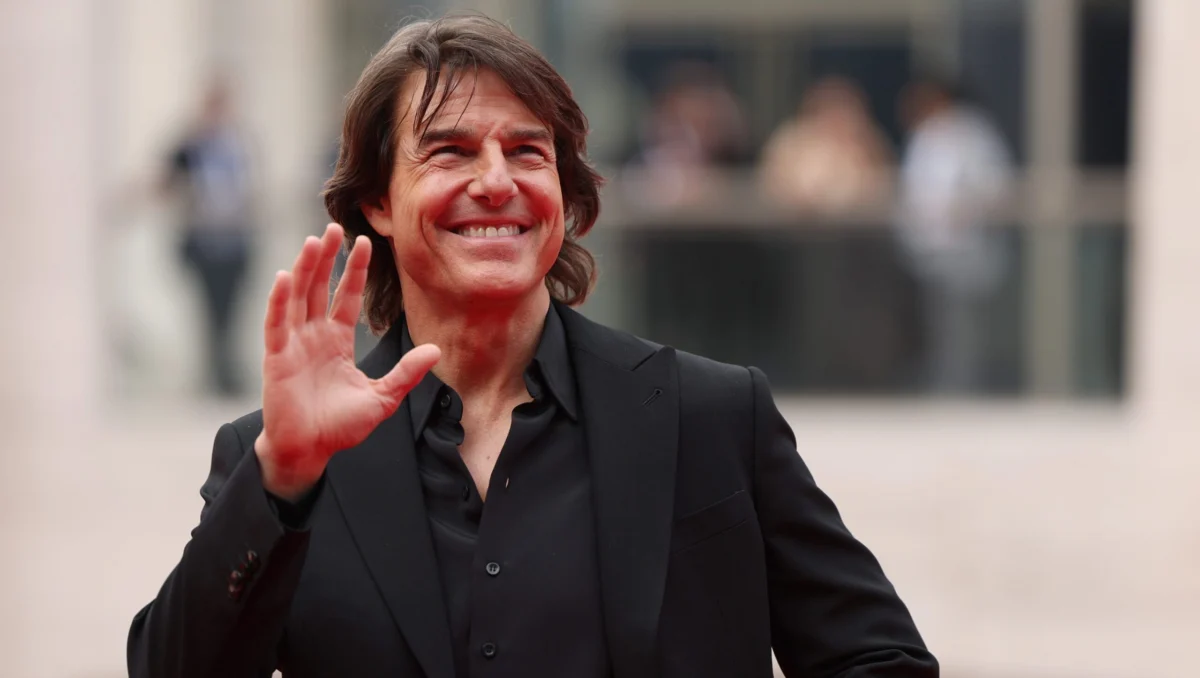
Tom Cruise earned spontaneous and sustained applause at a recent BAFTA: Life in Pictures event in London after delivering an impassioned, six-minute monologue regarding the enduring power of human artistry over the encroaching influence of artificial intelligence in filmmaking. The event, which served as a retrospective of the actor’s storied four-decade career, took an unexpected turn when host Edith Bowman prompted Cruise to address the "AI question"—a subject currently dominating the discourse in boardrooms and soundstages across Hollywood.
The actor, renowned for his commitment to practical stunts and high-stakes theatrical releases, leveraged the platform to articulate a philosophy centered on the irreplaceable nature of human labor and the emotional resonance of the cinematic experience. His response underscored a growing tension within the entertainment industry: the friction between technological efficiency and the soulful, often arduous, process of manual filmmaking.
The Human Element in a Digital Age
During the event, Cruise navigated the complexities of modern filmmaking with the precision of a veteran producer. When asked about the potential for AI to disrupt the medium he has spent his life refining, his response was immediate and focused on the inherent value of the human touch. "There is nothing like human," Cruise stated, setting the tone for a reflection that traversed the evolution of camera lens technology, the shifting landscape of distribution from cinemas to streaming, and the critical importance of maintaining a connection with the audience.
While Cruise avoided a direct critique of specific AI tools, he framed his argument around the demand for authenticity. He pointed to the recent "blockbuster summer" as empirical evidence that audiences are not looking for synthetic perfection, but rather for visceral, human-centered storytelling. By referencing the engagement of younger demographics, he challenged the narrative that modern audiences are indifferent to the traditional craftsmanship of the silver screen. "What you put attention on, you give life," he told the assembled BAFTA members, emphasizing that the preservation of film craft is not merely a nostalgic endeavor but a cultural necessity.
A Chronology of Advocacy
Cruise’s stance at the BAFTA event is consistent with his long-standing role as a guardian of the theatrical experience. His involvement in the discourse surrounding artificial intelligence reached a peak during the 2023 SAG-AFTRA labor negotiations. During that period, Cruise was reportedly active behind the scenes, advocating for robust protections against the unregulated use of digital likenesses and AI-generated content.
His advocacy during the strike was not merely performative; it was an extension of his career-long dedication to the "set-life" culture. Having collaborated with some of the most exacting directors in history—from Stanley Kubrick and Ridley Scott to Christopher McQuarrie and Alejandro González Iñárritu—Cruise has consistently prioritized the physical manifestation of art over digital shortcuts. His career trajectory, from the practical aviation stunts in the original Top Gun (1986) to the death-defying practical effects of the Mission: Impossible franchise, serves as a testament to his belief that the audience can distinguish between a calculated digital approximation and a genuine, high-stakes human performance.
The Shift Toward Digger and Artistic Risk
The BAFTA event also provided a platform to discuss his upcoming project, Digger, scheduled for an October 2 theatrical release. The film, directed by the visionary Alejandro González Iñárritu, represents a departure from the high-octane action vehicles Cruise is best known for. In discussing the project, Cruise revealed the depth of his commitment to the collaborative process. He recounted how he persuaded Iñárritu to read the script to him over the course of two nights, a process he described as essential for gauging the film’s emotional rhythm.
In Digger, Cruise portrays an oil baron who must confront the consequences of an environmental catastrophe he set in motion. Describing the film as "one of the most original and moving" scripts he has encountered, Cruise used the project as a case study for the necessity of human vision. The film’s focus on complex moral themes and practical, location-based storytelling serves as the antithesis to the AI-driven, algorithm-optimized content that many studio executives fear may become the industry standard.
Industry Data and the "Human Experience" Metric
Data from the past eighteen months supports Cruise’s assertion regarding the theatrical market. According to recent box office analytics from major industry trackers, films that emphasize "event-based" human spectacles—such as Oppenheimer and Top Gun: Maverick—have significantly outperformed more formulaic, CGI-heavy releases.
Industry analysts note that while AI offers cost-cutting potential in areas like post-production and visual effects, the "uncanny valley" effect remains a significant deterrent for audiences. Market research conducted by firms such as Nielsen and Comscore suggests that viewers are increasingly sensitive to the lack of "humanity" in content, often leading to lower engagement scores for films perceived as heavily synthetic. Cruise’s emphasis on the "human experience" aligns with these metrics, suggesting that the industry’s long-term survival may depend on doubling down on the very artisanal qualities that AI seeks to replace.
The Broader Implications for Filmmaking
The implications of Cruise’s monologue extend far beyond the walls of the BAFTA event. As the industry grapples with the transition to AI-assisted workflows, the discourse is shifting from whether these tools should be used, to how they should be regulated. The primary concern among guilds—including the WGA and SAG-AFTRA—remains the devaluation of human labor.
Cruise’s message acts as a rallying cry for the protection of specialized roles within the film industry: the cinematographers, the practical effects technicians, and the writers who rely on lived experience to ground their narratives. By elevating the conversation to the importance of "real things," Cruise is reinforcing the idea that cinema is a collaborative, tactile, and inherently human art form.
Furthermore, his influence is significant. As one of the few remaining global movie stars who can reliably command box office interest, Cruise’s endorsement of human-centric filmmaking carries weight with studio heads who are currently weighing the balance between technological cost-efficiency and brand longevity. If the industry moves too far toward automation, it risks alienating the very audience that seeks the communal, transformative power of a movie theater—a space that, as Cruise noted, is fundamentally rooted in the shared experience of watching something "real."
Looking Forward
As the release date for Digger approaches, the film is poised to be a bellwether for the industry. It stands as a bridge between the traditional auteur-driven cinema of the past and the challenges of the future. By focusing on deep character work and a director-led narrative, Digger aims to prove that there is still a robust market for human-centric storytelling.
In his concluding remarks at the BAFTA event, Cruise remained steadfast in his commitment to the craft. He warned against the complacency of relying on technology to dictate creative choices. Instead, he championed a vision of the future where technology serves as a tool for the artist, rather than a replacement for the creator. The sustained applause from the audience—comprised of peers, critics, and industry professionals—suggests that his message resonated not just as a defense of the past, but as a roadmap for the future of cinema.
For now, the industry watches and waits. As AI continues to evolve, the distinction between human craft and algorithmic generation will likely become the central defining debate of the next decade. Tom Cruise has firmly positioned himself on the side of the human, ensuring that the dialogue remains focused on the heart and soul of the movies, rather than the cold logic of the machine.

