
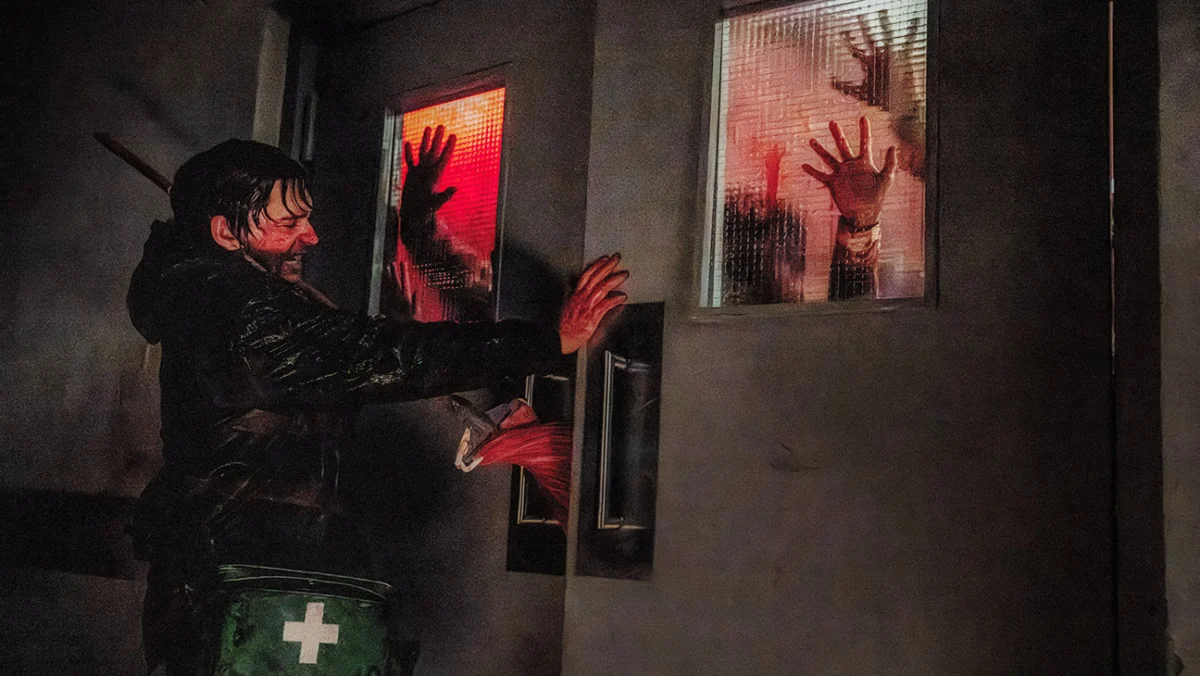
The cinematic landscape of the horror and thriller genres has experienced a seismic shift over the past several years, largely driven by the daring visions of writer-director Zach Cregger. Following the breakout success of his 2022 feature Barbarian, which established him as a premier modern voice in terror, Cregger has continued to push boundaries with risky narrative choices and unflinching storytelling. His latest endeavor, a reboot of the iconic Resident Evil franchise, has proven to be a massive commercial and critical triumph, pulling in a staggering $60 million during its opening weekend and securing the best reviews in the history of the video game adaptation series. At the center of this terrifying spectacle is actor Austin Abrams, whose harrowing performance as the medical courier Bryan anchors the film’s relentless descent into apocalyptic nightmare.
From Unsung Supporting Roles to Leading Man Status
Abrams, a veteran actor who began his career at the age of 13, has enjoyed a remarkable trajectory that has recently culminated in back-to-back major studio leading roles. In 2023, Abrams demonstrated fierce loyalty to Cregger by remaining committed to the ensemble of Weapons after sudden industry strikes threw initial casting into chaos. That professional gamble paid massive dividends. Abrams delivered a critically lauded performance as an unhoused thief in Weapons, which went on to achieve both box office success and Academy Award recognition, including a Best Supporting Actress win for Amy Madigan.

Capitalizing on that creative synergy, Cregger tapped Abrams to lead the Resident Evil reboot. The timing coincided with another major career milestone for the 30-year-old actor: the upcoming release of the survival thriller Whalefall, directed by fellow genre specialist and Cregger collaborator Brian Duffield, arriving in theaters on October 16. Between portraying a courier trapped in a rapidly escalating t-virus outbreak and a scuba diver swallowed whole by a sperm whale, Abrams has spent recent years navigating uniquely grueling, single-character crucibles on the silver screen. Despite the intense physical and emotional toll, Abrams remains remarkably grounded about his ascension to the top of major studio call sheets, viewing the milestone not as an ego trip, but as a continuation of his rigorous work ethic.
Chronology of a Descent: Breaking Down the Raccoon City Catastrophe
Cregger’s Resident Evil immediately subverts audience expectations by shifting the focus away from traditional tactical action heroes and onto an ordinary, flawed everyman. The narrative begins with Bryan juggling a high-stakes organ delivery in his medical courier vehicle while fielding a tense phone call from his girlfriend, Michelle, who has just shared news of an unexpected pregnancy. Rather than offering emotional maturity and support, Bryan panics, arguing for the preservation of their current status quo and revealing a deep-seated fear of growing up. He dodges the difficult face-to-face conversation by taking a last-minute delivery assignment heading directly toward Raccoon City General Hospital.
As Bryan drives, his phone call with Michelle deteriorates. The situation instantly escalates when his vehicle strikes a bloodied woman wandering the dark road in a sundress. A police officer arrives, pulls Bryan over, and takes responsibility for the injured pedestrian. Moments later, the officer’s SUV catastrophically flips over, revealing the horrifying truth: the pedestrian is infected with the t-virus, marking the inciting incident of the local outbreak.

Using the fallen officer’s firearm, Bryan manages to survive initial encounters with the infected woman and an aggressive, mutated guard dog. Seeking refuge inside a nearby farmhouse, he attempts to regroup and contact Michelle via landline. However, tragedy compounds upon tragedy when he is forced to kill the infected farmer and obliterate the reanimated pedestrian, only to witness their remains fuse into a singular, relentless amalgamation monster that pursues him relentlessly.
Bryan’s journey on foot leads him into a claustrophobic tunnel choked with abandoned vehicles. Inside an abandoned RV, he attempts to help a seemingly helpless young girl, unaware that she is on the verge of turning. After being bitten, he is forced to put her down before crossing paths with Umbrella Corporation operatives who reveal a catastrophic laboratory leak. They also disclose that Bryan’s delivery package contains the crucial "neutralizing base" required to synthesize a complete antidote at the hospital.
The Tragic Culmination and Subversion of Tropes
Arriving at Raccoon City General Hospital after a gauntlet of near-death scenarios, Bryan pauses in the parking garage to assess his rapidly spreading infection. Realizing his time is short, he records a heart-wrenching audio message for Michelle, expressing profound regret for his earlier callousness, affirming his love, and validating her potential as a mother. Despite this emotional breakthrough, network connectivity issues prevent the message from ever sending.

Bryan successfully delivers the crucial cure components to the 28th-floor laboratory just in time, but the bumbling Umbrella scientists fail to complete the formulation before the infection completely overtakes him. In a grim thematic twist, Bryan transforms into the very type of amalgamation monster that has hunted him throughout the night. The film concludes as a tragic origin story, reframing the countless monsters players traditionally mow down in the video game franchise as once-human victims caught in indiscriminate corporate catastrophe.
The film’s refusal to offer a Hollywood-style comforting resolution has drawn praise from both critics and Abrams himself. In an era where test screenings and audience scorecards frequently pressure studios into softening downer endings, Cregger and Sony Pictures permitted a stark, uncompromising conclusion. Michelle will never receive the voice memo; her final memory of Bryan remains his initial, immature resistance to fatherhood. This narrative choice highlights Cregger’s commitment to emotional authenticity over conventional crowd-pleasing tropes.
Behind the Scenes: Physical Tolls and Technical Challenges
Bringing the chaotic world of Resident Evil to life required immense physical endurance from its lead actor. Reflecting on the rigorous production schedule in Prague, Abrams noted the striking parallels between the physical demands of Resident Evil and Whalefall. While Whalefall presented the constant, skin-tight discomfort of wearing a wetsuit throughout lengthy shoots, Resident Evil demanded grueling night shoots, precise choreography, and relentless sprinting across snowy environments.

During one notable sequence on the "jumper street" set, Abrams narrowly avoided being struck by a swinging 150-pound blood bag. Although the near-miss generated significant buzz during promotional interviews, Abrams admitted that he was too immersed in the moment to feel rattled during filming, expressing enthusiasm for the visceral authenticity the close call brought to the final cut.
Furthermore, Abrams deliberately shaped his performance as the antithesis of the unflappable action hero, embracing natural human panic, vulnerability, and genuine terror. Rather than presenting a stoic protagonist who looks effortlessly cool under pressure, Abrams opted for reactions that mirror how an ordinary person would realistically respond to a zombie outbreak. This grounded approach extends to a humorous, meta-textual nod near the film’s climax, where Bryan triumphantly credits video games for his survival skills—a playful thematic defense of interactive media against historical criticisms regarding real-world violence.
Broader Impact and Industry Implications
The commercial and critical success of Cregger’s Resident Evil signals a notable maturation in how major intellectual properties are adapted for the screen. By prioritizing character-driven tragedy, psychological dread, and risky narrative subversions over generic action set-pieces, the production has elevated the horror genre’s standing within major studio portfolios.

For Austin Abrams, the project cements his transition into a bankable, versatile leading man capable of carrying high-concept studio features while maintaining the independent spirit that defined his early career. As Resident Evil continues its strong theatrical run nationwide, the film stands as a bold testament to the creative heights achievable when filmmakers are given the freedom to reject conventional formulas and fully embrace the tragic, unpredictable nature of storytelling.

