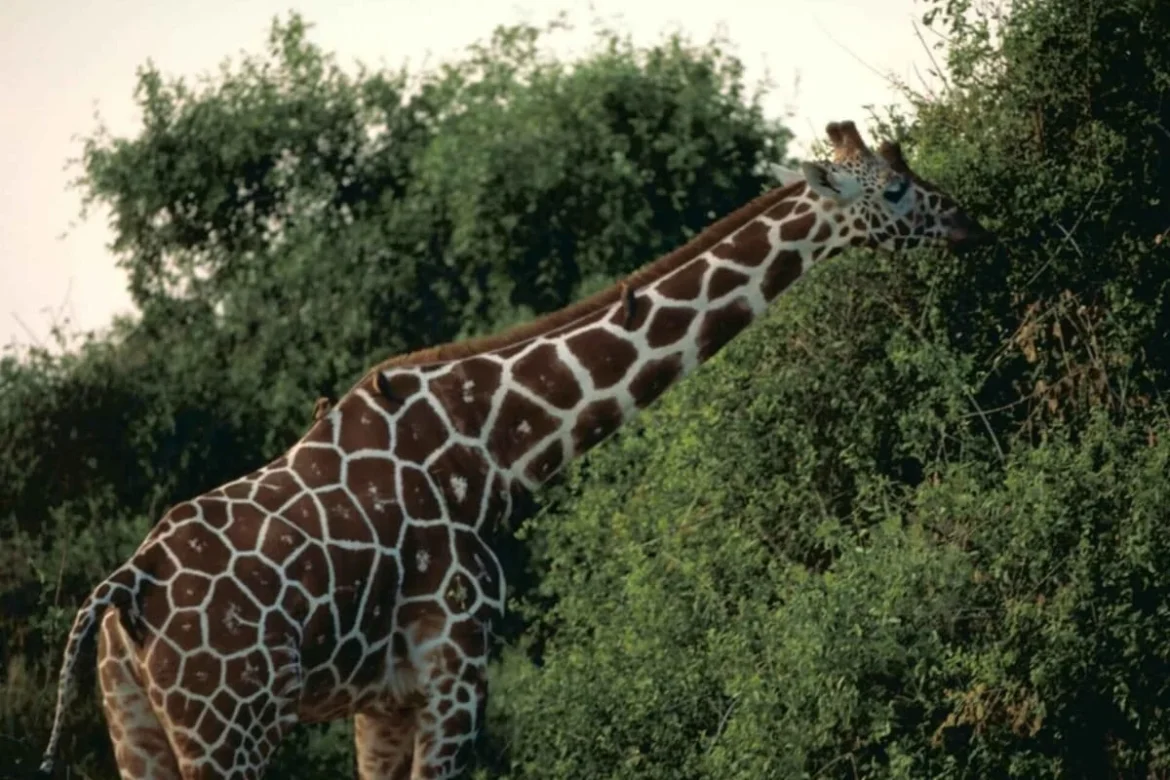
The reticulated giraffe, a majestic icon of the Horn of Africa, is currently facing a precarious future as its populations continue to dwindle across its primary range in Kenya. Once abundant across the savannahs and scrublands of East Africa, these animals are now classified as endangered, grappling with the dual pressures of habitat fragmentation and illegal hunting. However, a landmark study recently published in the journal Frontiers in Conservation Science offers a glimmer of hope. Researchers investigating the emerging dynamics of human-giraffe conflict (HGC) in northeastern Kenya have found that, despite the inevitable tensions that arise when wildlife and humans share limited resources, there remains a deep-seated and widespread local support for these animals. This revelation suggests that the path to saving the reticulated giraffe lies not just in traditional enforcement, but in fostering community-based coexistence strategies that address the root causes of friction, such as water scarcity and land use.
The current state of the reticulated giraffe (Giraffa reticulata) is a sobering reminder of the "silent extinction" facing many of Africa’s large mammals. According to the International Union for Conservation of Nature (IUCN), the global authority on the status of the natural world, there are fewer than 20,000 reticulated giraffes remaining in the wild. This represents a staggering 56% decline in their population over the last three decades. Unlike the more publicized plight of the African elephant or the black rhino, the decline of the giraffe has often occurred under the radar of international media, yet the drivers are just as relentless. In northeastern Kenya, particularly in Garissa County, the expansion of human settlements and the conversion of traditional grazing lands into agricultural plots have squeezed giraffes into smaller, more isolated pockets of habitat.
The Historical Context of the Bour-Algy Giraffe Sanctuary
Central to the recent research is the Bour-Algy Giraffe Sanctuary, a unique conservation area situated along the banks of the Tana River. The sanctuary’s history is a testament to grassroots environmentalism. Established in 1995 by a group of dedicated volunteers from the Bour-Algy village, the sanctuary was a proactive response by the local community to protect the giraffes that were increasingly seeking refuge near their settlements. For decades, this community-led initiative operated with little formal recognition or scientific oversight. While the villagers knew they were protecting a vital piece of their natural heritage, there was no documented understanding of how the broader local population perceived these animals or how the presence of the giraffes impacted the daily lives and livelihoods of the people living on the sanctuary’s periphery.
The Tana River serves as a critical lifeline for both the wildlife and the human inhabitants of this arid region. As the only permanent river in northeastern Kenya, it is a magnet for activity. For the giraffes, the riverine forests provide essential browse and water; for the local Somali community, the river is the primary source of water for livestock, domestic use, and irrigation for small-scale farming. This concentration of life along a single water source creates a natural laboratory for studying human-wildlife conflict. The researchers set out to bridge the gap in knowledge by conducting 400 comprehensive interviews with households surrounding the sanctuary, aiming to quantify the risks perceived by the community and identify potential avenues for long-term harmony.
Deconstructing the Nature of Human-Giraffe Conflict
The findings of the study, led by Abdullahi Ali, the first author and a prominent figure in regional conservation, challenge several common assumptions about human-wildlife conflict. While many conservation models focus on direct threats—such as predators attacking livestock or large mammals causing physical harm to humans—the conflict in Bour-Algy is characterized by its indirect nature. The research revealed a surprisingly high level of tolerance among the community. A majority of the respondents viewed giraffes as low-risk animals, and more than half of those interviewed reported that they had never experienced any damage to their land or property caused by giraffes.
However, the "conflict" that does exist is deeply tied to resource competition. Abdullahi Ali noted that the concerns raised by the community were largely centered on the competition for water and the encroachment of wildlife into areas designated for human activity. In an environment where every gallon of water is precious, the sight of a giraffe herd drinking from a communal water point can be a source of anxiety for a pastoralist worried about his cattle. Furthermore, the expansion of mango orchards and other agricultural ventures along the Tana River has introduced a new point of friction. Giraffes, naturally drawn to the lush, green leaves of fruit trees, occasionally raid these crops, leading to direct economic losses for farmers.
The data highlights a clear socio-economic divide in perceptions. Farmers, who are most vulnerable to crop damage, tend to hold more negative views of giraffes compared to other community members. Conversely, individuals engaged in pastoralism, trade, or government employment reported almost no issues with the animals. For the pastoralists, giraffes are often seen as fellow travelers of the bush, posing no threat to their goats or cows. This nuance is critical for conservationists, as it indicates that mitigation efforts must be targeted specifically at the farming community rather than the population at large.

Strategies for Coexistence: The Somali Giraffe Project
The research is not merely an academic exercise; it is being used to inform real-world interventions through the Somali Giraffe Project. This conservation group, which operates in the heart of the reticulated giraffe’s range, is already implementing strategies based on the study’s insights. One of the primary goals is to decouple the shared reliance on the Tana River by providing alternative water sources. By establishing dedicated water points for wildlife away from human settlements and livestock troughs, the project aims to reduce the frequency of encounters that lead to tension.
Education is the other pillar of the Somali Giraffe Project’s strategy. The organization has established the region’s first wildlife education center, a hub designed to foster a sense of pride and stewardship among the local youth, farmers, and elders. Through workshops and school programs, the center explains the ecological role of the giraffe—such as their role in seed dispersal and maintaining the health of the acacia woodlands—and provides practical advice on how to protect crops without harming the animals. By framing giraffe conservation as a component of regional pride and ecological health, the project seeks to solidify the "high tolerance" identified in the study into a permanent cultural value.
Monica Bond, a renowned giraffe biologist based in Tanzania who reviewed the study, emphasized its importance as a template for other regions. According to Bond, the study provides a vital model for quantifying conflict and understanding the specific requirements of local communities to live safely alongside wildlife. In many parts of Africa, conservation efforts fail because they are "top-down," ignoring the socio-economic realities of the people on the ground. The Bour-Algy model, by contrast, is "bottom-up," rooted in the experiences and needs of the villagers who have lived with giraffes for generations.
The Broader Impact and Global Implications
The plight of the reticulated giraffe is part of a larger, continental trend. While some populations of Southern giraffes in countries like South Africa and Namibia are stable or increasing due to private ranching and well-funded national parks, the subspecies of East and Central Africa are in a freefall. The reticulated giraffe is genetically distinct and possesses a striking coat pattern that makes it a favorite for eco-tourists, yet it remains one of the most vulnerable.
The success of the Bour-Algy Giraffe Sanctuary and the Somali Giraffe Project offers a blueprint for "community-based natural resource management" (CBNRM). This approach recognizes that the survival of endangered species depends on the goodwill of the people who share their landscape. If local communities see wildlife as a burden or a threat to their survival, conservation efforts are doomed to fail. However, if wildlife can be integrated into the local economy through tourism, or if the costs of living with wildlife are mitigated through improved infrastructure (like water points) and education, coexistence becomes a viable path.
Looking forward, the challenges remain significant. Climate change is intensifying the frequency and severity of droughts in northeastern Kenya, making water an even more contentious resource. Population growth will continue to drive the demand for agricultural land. However, the study’s finding that there is "widespread local support" for giraffes provides a strong foundation. It suggests that the people of Bour-Algy do not want to see the giraffes disappear; they simply want the tools and resources to manage the challenges that come with sharing the land.
In conclusion, the survival of the reticulated giraffe in Kenya is not just a biological challenge, but a social and economic one. The research conducted in Bour-Algy highlights that while habitat loss and hunting remain threats, the human-giraffe conflict is a manageable issue if addressed with empathy for local livelihoods. By focusing on resource management, targeted education, and community-led conservation, Kenya can ensure that the "tower of giraffes" remains a permanent fixture of its northern landscape. The lessons learned in this remote corner of the country may well hold the key to preventing the silent extinction of one of the world’s most extraordinary creatures. Through the continued efforts of researchers like Abdullahi Ali and the local volunteers of Bour-Algy, the narrative of the reticulated giraffe is shifting from one of inevitable decline to one of resilient coexistence.