
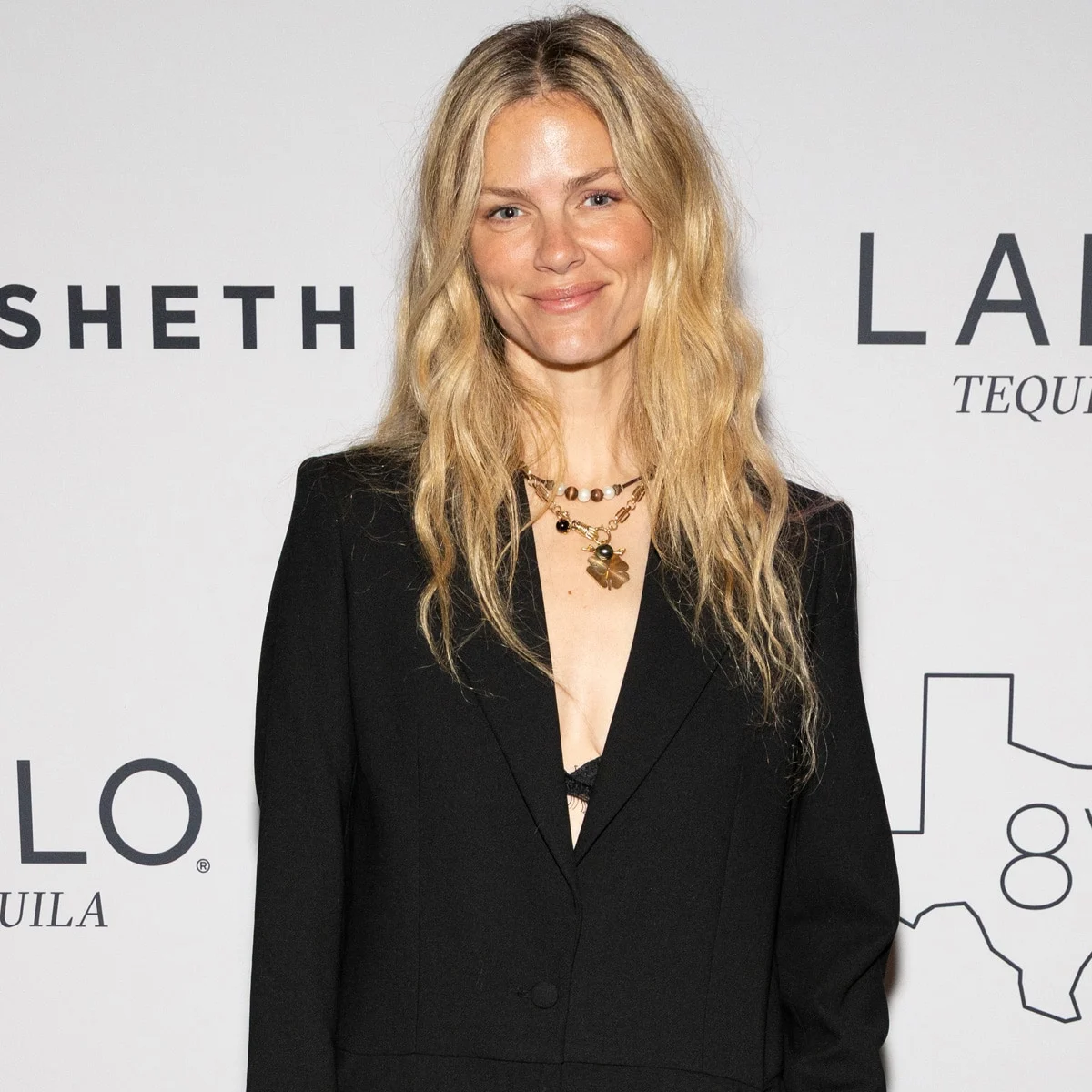
Brooklyn Decker, the celebrated model and Grace & Frankie actress, recently offered a rare and intimate glimpse into her family life to commemorate a significant milestone: the ninth birthday of her daughter, Stevie. Sharing the occasion with her husband, former professional tennis champion Andy Roddick, Decker utilized her social media platform to celebrate her daughter’s personality and growth, while simultaneously reinforcing the boundaries she and Roddick have established regarding their children’s presence in the public sphere.
The tribute, posted on November 27, highlighted the multifaceted nature of the nine-year-old. Decker described Stevie as a vibrant, energetic child who possesses a unique affinity for the arts, athletics, and nature. According to the actress, Stevie’s interests range from softball and performance art to sketching and painting. Beyond her creative pursuits, Decker emphasized her daughter’s social nature and the close-knit relationship she maintains with her older brother, 11-year-old Hank.
A Deliberate Approach to Digital Parenting
The decision to share this glimpse into their lives was not made lightly. Decker, who has long been a proponent of digital privacy for children of public figures, acknowledged that she rarely shares images or specific details about her children. This protective stance is rooted in a philosophy that prioritizes the autonomy of her children as they grow.
In a 2020 interview with Scary Mommy, Decker articulated the long-term rationale behind this strategy. She noted that every photograph or anecdote shared on the internet contributes to a "digital footprint" that could, years later, become part of a child’s permanent record, influencing future background checks or professional opportunities. By withholding the faces of Stevie and Hank in her social media posts, Decker and Roddick aim to provide their children with the agency to define their own public personas once they reach an age of maturity.
This methodology reflects a broader trend among modern celebrities, many of whom have moved away from the early 2010s practice of constant social media exposure. The implication of this shift is a growing recognition that the ubiquity of social media requires parents—especially those in the public eye—to act as curators of their children’s privacy until the children can assume that responsibility for themselves.
Chronology of Family Milestones
Brooklyn Decker and Andy Roddick, who were married in 2009, have navigated the challenges of balancing high-profile careers with a private family life for over a decade. Their transition into parenthood began with the birth of their son, Hank, in 2015. Two years later, the family welcomed Stevie in 2017.
Throughout these years, the couple has remained notably guarded. While Decker has frequently discussed the humorous and challenging realities of motherhood in various interviews and podcasts, she has consistently decoupled these anecdotes from visual representations of her children. This pattern of communication serves to maintain a separation between her professional identity and her private role as a parent. The recent birthday post serves as an exception to her general rule, underscored by the sentiment that "celebrating her last year of single digits feels pretty important."
The Complexity of Celebrity Parenting in the Digital Age
The challenge faced by public figures like Decker is balancing the desire to share personal milestones with the need to protect their children from the scrutiny of the internet. Statistics from the Pew Research Center indicate that the vast majority of parents today are conscious of the risks associated with "sharenting," or the habitual sharing of photos and information about children online. However, for celebrities, these risks are amplified by the potential for parasocial relationships and the permanent nature of public archiving.
Decker’s admission that it is "hard because you want to share every hilarious video and everything they say" highlights the psychological tension inherent in modern parenting. The struggle is between the natural human desire to document and celebrate one’s children and the professional requirement to protect them from the potential consequences of global visibility.
Broader Context: The "Mini-Me" Phenomenon
The public’s interest in the children of celebrities—often categorized under the "mini-me" phenomenon—remains a staple of entertainment media. Whether it is through the striking physical resemblances observed in families like the Crawfords or the professional paths followed by second-generation stars like the children of Clint Eastwood or Jude Law, audiences frequently project their own narratives onto these families.
However, as cultural attitudes toward privacy shift, there is an increasing respect for families who choose to deviate from the traditional model of public inclusion. The gallery of celebrity lookalikes often serves to underscore the passage of time and the influence of genetics, yet for parents like Decker and Roddick, the priority remains ensuring that these children are not defined by their parents’ fame before they have had the chance to define themselves.
Analysis of Implications
The choice to keep children out of the spotlight has several long-term implications for the children of high-profile individuals:
- Autonomy: By withholding personal information and visual identification, parents allow children to develop their own interests and identities without the pressure of a pre-existing public perception.
- Safety: Privacy-focused parenting mitigates risks related to unwanted attention, potential security threats, and the psychological burden of being a "public" child.
- Professional Reputation: As noted by Decker, the digital footprint is a critical component of modern life. By limiting the volume of available data, parents provide their children with a "clean slate" when they eventually enter the workforce or higher education.
Conclusion
As Stevie enters her final year of being a single-digit age, the tribute provided by Brooklyn Decker serves as a poignant reminder of the passage of time, while simultaneously standing as a testament to the intentionality behind the couple’s parenting. While the public may only see fleeting glimpses of their family life, the underlying message is one of profound appreciation for the "good ol’ days."
In an era where personal information is increasingly treated as a commodity, the commitment of Decker and Roddick to their children’s privacy offers a compelling case study in modern celebrity management. By prioritizing their children’s long-term digital welfare over short-term social media engagement, they are setting a precedent for how public figures can maintain a sense of normalcy in an increasingly connected world. As Decker looks forward to the "wild human" her daughter will grow into, it is clear that she is doing so with a firm commitment to ensuring that the path ahead is defined by Stevie’s own choices, rather than the expectations of the public.

