
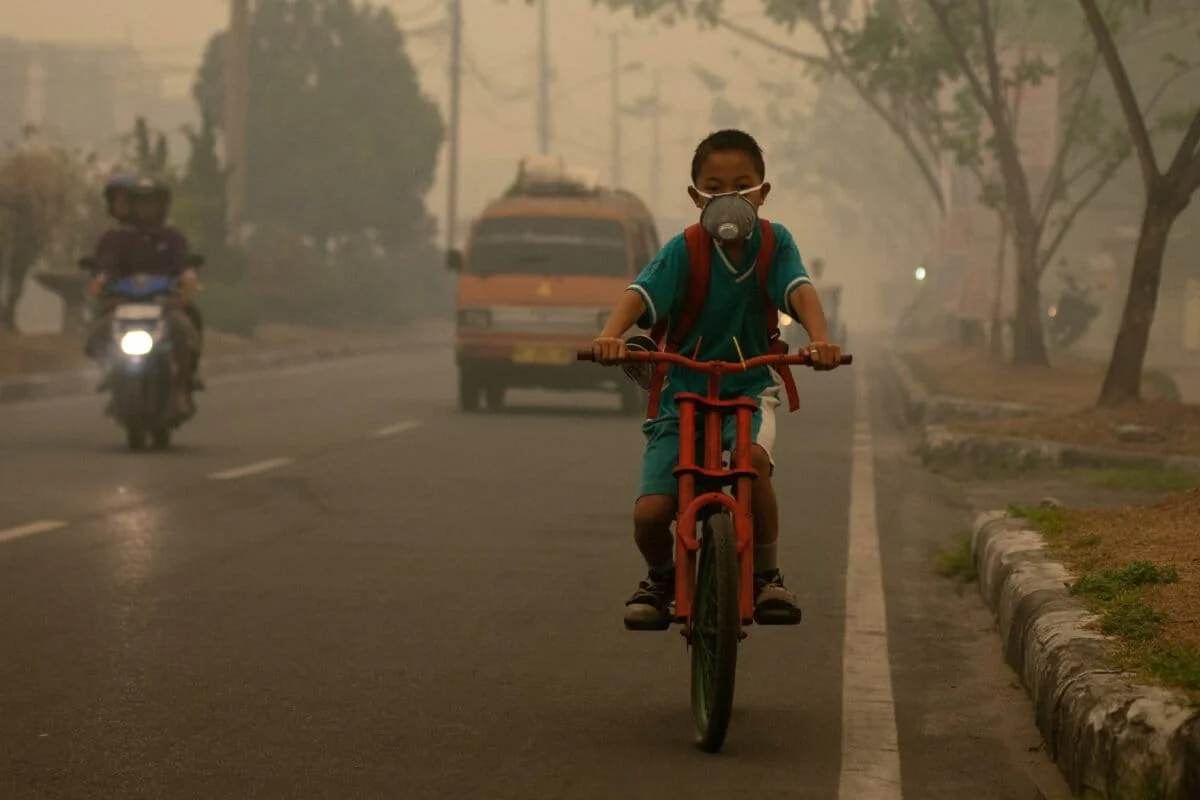
Indonesia is confronting an alarming start to the 2026 fire season, with early data indicating a significant escalation in land and forest fires months before the traditional dry season peak. Environmental experts and government agencies are sounding the alarm as burned areas have already reached staggering levels, coinciding with climate forecasts that suggest the potential emergence of a "Godzilla" El Niño later this year. By the end of February 2026, the Ministry of Environment and Forestry reported that 32,637 hectares (approximately 80,650 acres) of land had already been razed by fire. This figure represents an area more than three times the size of Paris and is twenty times higher than the burned area recorded during the same period in 2025.
The early surge in fire activity has triggered fears that Indonesia may be entering one of its most destructive environmental cycles in a decade. Scientists warn that these early hotspots are a harbinger of a more intense fire season, particularly as the climate system prepares for the possible return of El Niño, a phenomenon characterized by the warming of sea surface temperatures in the equatorial Pacific Ocean. When El Niño occurs, it disrupts global weather patterns, typically bringing prolonged drought and suppressed rainfall to Southeast Asia, which in turn creates tinderbox conditions across the Indonesian archipelago.
The Threat of a Godzilla El Niño
The term "Godzilla El Niño," while non-scientific, has been adopted by various Indonesian agencies to describe an unusually strong and pervasive El Niño event. This terminology gained prominence during the 2015 crisis, which remains one of the most catastrophic fire years in recent history. Current global forecasts are divided on the eventual intensity of the 2026 event, but the risks remain high. Indonesia’s Meteorological, Climatological, and Geophysical Agency (BMKG) has estimated a 50% to 80% probability of a weak to moderate El Niño developing in the second half of 2026.

However, international data provides a more sobering outlook. The U.S. National Oceanic and Atmospheric Administration (NOAA) has left open the possibility of a "very strong" event, projecting a 25% chance of a super-intensity cycle and a 50% chance of a "strong" El Niño. These projections are based on ocean warming trends of at least 1.5° Celsius (2.7° Fahrenheit) above historical averages. Beyond the immediate threat of fires, a strong El Niño could push global temperatures to record-breaking levels by 2027 due to the lagged warming effect the phenomenon exerts on the global climate system.
Historically, Indonesia’s fire patterns follow a predictable seasonal trajectory, beginning in midyear and reaching a peak between September and October. A study recently published in the journal PLOS ONE highlights that the most severe fire years in Indonesia almost always coincide with climate anomalies, specifically the combination of El Niño and a positive Indian Ocean Dipole (IOD). The emergence of similar indicators in early 2026 suggests that the country is at a critical crossroads regarding its disaster preparedness.
Peatlands and the Hotspot Crisis
The most significant concern for environmentalists is the concentration of fires within Indonesia’s vast peatland ecosystems. Monitoring by the independent watchdog Pantau Gambut has detected 23,546 hotspots in peatland areas since January 2026. Peatlands are carbon-rich wetlands that store up to 20 times more carbon than traditional mineral soils. When these areas are drained for agriculture or plantations, they become highly flammable. Once ignited, peat fires are notoriously difficult to extinguish, often smoldering underground for weeks and releasing massive volumes of carbon dioxide and methane into the atmosphere.
Data from March 2026 showed a dramatic acceleration in fire activity, with Pantau Gambut identifying 12,942 hotspots across peat ecosystems in that month alone—nearly tripling the 5,114 hotspots recorded in February. Government data utilizing NASA’s Terra and Aqua MODIS satellites confirms this upward trend. As of mid-April, high-confidence hotspots nationwide were nearly three times higher than the previous year’s levels.

The environmental impact of these fires is twofold: they contribute significantly to Indonesia’s greenhouse gas emissions, undermining national climate goals, and they destroy unique biodiversity. The 2015 fire season, which many fear 2026 might replicate, resulted in the burning of 2.6 million hectares of land and released an estimated 1.6 billion metric tons of carbon dioxide equivalent—more than the annual emissions of the entire German economy.
Corporate Accountability and Oversight Gaps
A critical component of the 2026 fire surge involves the role of corporate land management. Investigations by Pantau Gambut revealed that a substantial number of hotspots are located within existing corporate concessions. Specifically, 6,192 hotspots were identified within oil palm plantations, while 1,334 were found in timber concessions.
This data has reignited a debate over the efficacy of current land management regulations and the accountability of permit holders. Activists argue that the presence of fires within these zones suggests that legal permits do not necessarily translate to fire-safe practices. Putra Saptian, a campaigner for Pantau Gambut, emphasized that the burden of restoration should not fall on the public. "Supervision of peat ecosystem-based restoration must be strengthened to ensure that permit holders’ restoration obligations cover all ecological impacts caused, both within and beyond their concession boundaries," Saptian stated. The goal is to prevent recurring fiscal losses for the state, which often bears the cost of fire suppression and disaster relief.
Government Response and Transboundary Haze Prevention
The Indonesian government has moved to a state of high alert, particularly to prevent the diplomatic fallout associated with transboundary haze. In previous severe fire years, thick smoke from Sumatra and Kalimantan has drifted across the Malacca Strait, affecting air quality in Malaysia and Singapore and leading to regional tensions within ASEAN.

Deputy Forestry Minister Rohmat Marzuki recently announced that fire control efforts are being prioritized in border regions, including Riau, the Riau Islands, and West Kalimantan. These areas are being subjected to intensive hotspot monitoring, frequent patrols, and the activation of early warning systems. Environment Minister Hanif Faisol Nurofiq has also called for a unified front, urging stricter law enforcement against individuals and corporations found responsible for illegal land clearing.
"Forest fires are among the largest contributors to greenhouse gas emissions, causing environmental damage, chronic health impacts, and trillions of rupiah in economic losses," Minister Nurofiq stated during a recent coordination meeting. The government is also exploring weather modification technology, such as cloud seeding, to induce rainfall in fire-prone provinces before the drought intensifies.
Public Health and Economic Consequences
The human cost of the early 2026 fire season is already being felt in provinces like Riau. In Pekanbaru, the provincial capital, haze has reduced visibility at the main airport to just 1.2 kilometers (0.75 miles). Residents have reported a surge in acute respiratory infections (ARI), a common consequence of inhaling fine particulate matter (PM2.5) from wood and peat smoke.
During the 2015 "Godzilla" event, more than half a million people across the region suffered from respiratory ailments. Health Ministry spokesperson Aji Muhawarman warned that the 2026 season could bring additional health risks. "Increases in temperature and environmental changes can also trigger the spread of vector-borne diseases such as dengue and malaria," he noted, explaining that drought conditions often lead to stagnant water sources that become breeding grounds for mosquitoes. Furthermore, the degradation of water quality during prolonged dry spells increases the risk of waterborne diseases like cholera and typhoid.

The economic impact is equally daunting. Beyond the immediate costs of firefighting, the haze disrupts aviation, tourism, and outdoor labor. The World Bank estimated that the 2015 fires cost Indonesia $16.1 billion, equivalent to 1.9% of its GDP that year.
Threats to Food Security
As the country braces for a potential "Godzilla" El Niño, experts are also warning of a looming food security crisis. Agriculture is highly sensitive to the rainfall disruptions caused by El Niño. Erma Yulihastin, a researcher at the National Research and Innovation Agency (BRIN), noted that drought conditions could severely impact rice-producing regions, particularly along the northern coast of Java.
Historical data supports these concerns. The 1997-1998 El Niño reduced Indonesian rice production by 6%, while the 2024 event caused a shortfall of approximately 2.3 million tons in the first four months of the year—a 17.5% year-over-year decline. Musdalifah, a food campaigner at the NGO WALHI, pointed out that Indonesia’s vulnerability is exacerbated by the conversion of traditional agricultural land into large-scale industrial plantations.
"When El Niño occurs, drought conditions become more extreme, leading to clean water crises, crop failures, and food insecurity," Musdalifah said. While the National Food Agency (Bapanas) has stated that rice reserves are being prepared, advocates emphasize that food security is a matter of both supply and accessibility for lower-income communities who are hardest hit by rising commodity prices during climate shocks.

Conclusion and Outlook
The 2026 fire season represents a significant test for Indonesia’s environmental governance and disaster management capabilities. The combination of early record-breaking burned areas and the looming specter of a major El Niño event creates a high-stakes environment for the nation. While the government has improved its monitoring and response infrastructure since the 2015 crisis, the sheer scale of the current data suggests that even more robust measures may be required.
The coming months will be decisive. As the dry season approaches its peak in September, the international community will be watching closely to see if Indonesia can contain the "Godzilla" within its borders or if the region will once again be shrouded in the toxic veil of the haze. For the residents of Riau, Kalimantan, and Jambi, the priority remains survival and health in the face of an increasingly volatile climate.

