
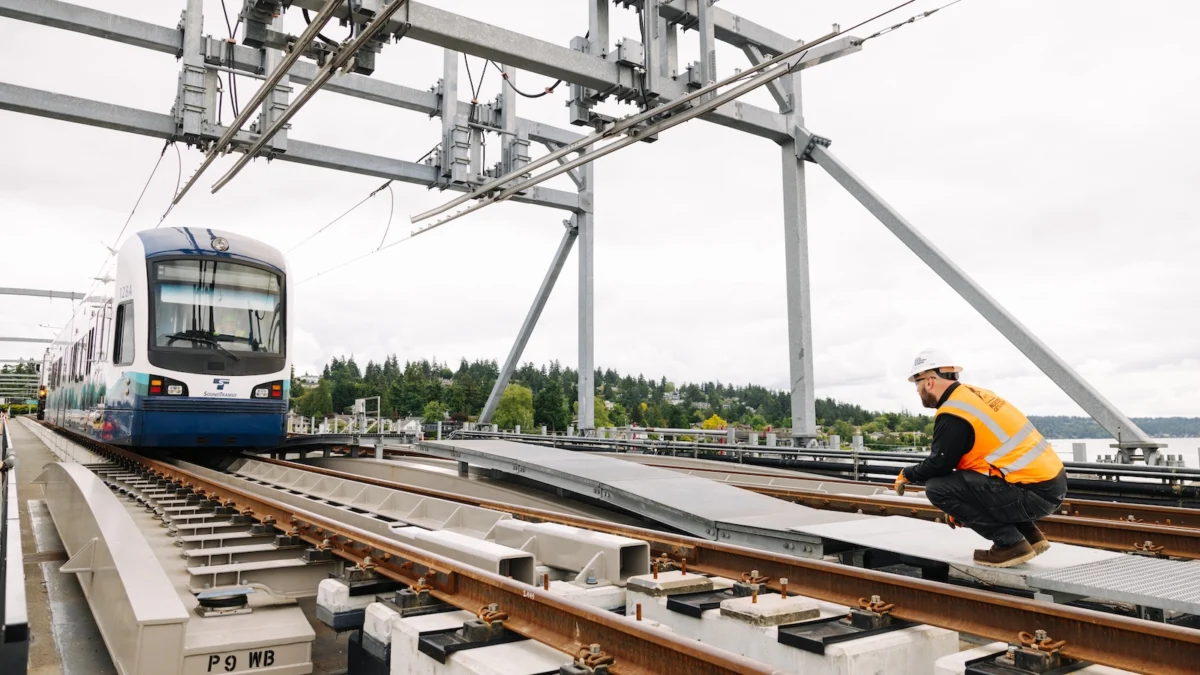
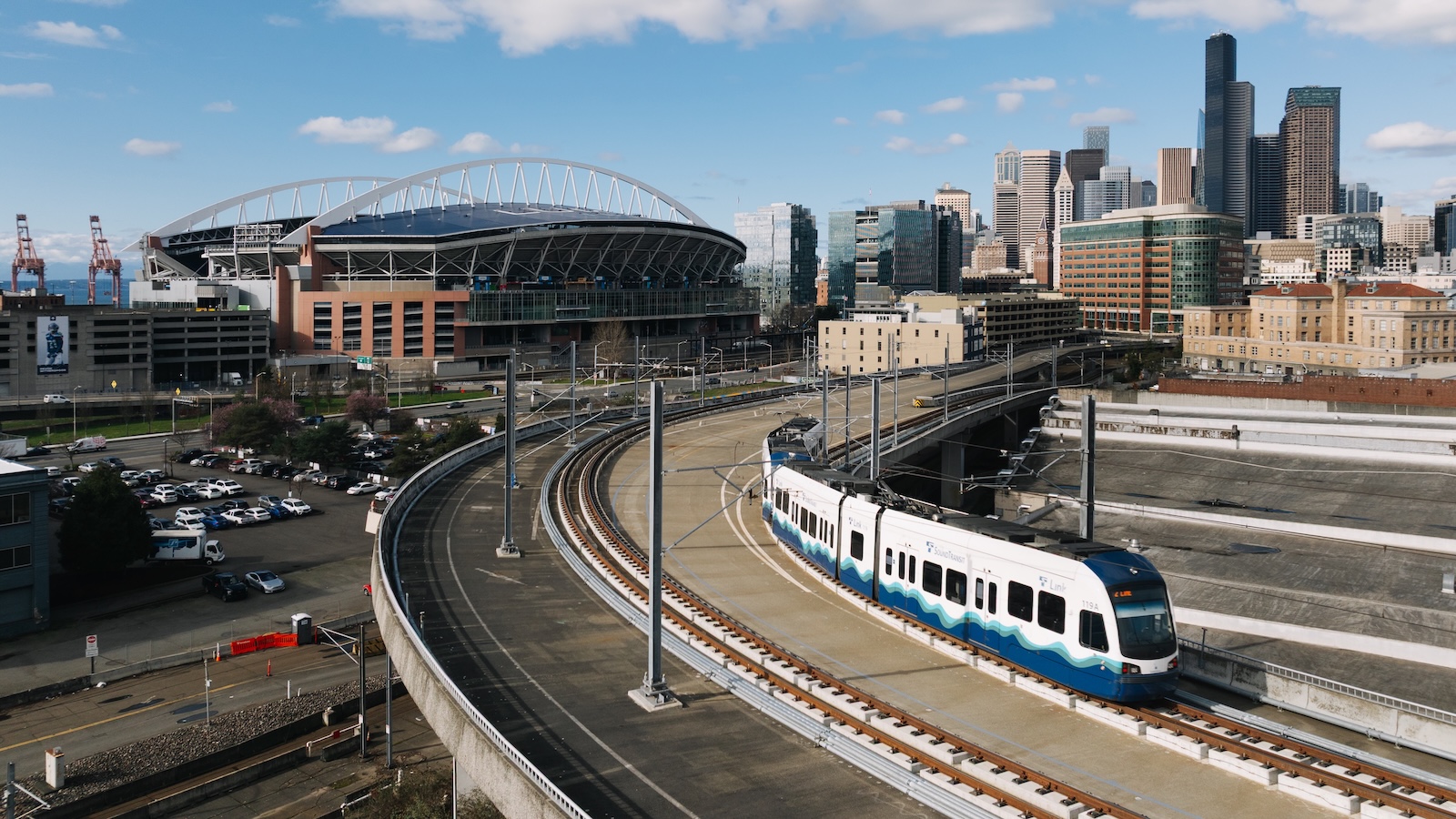
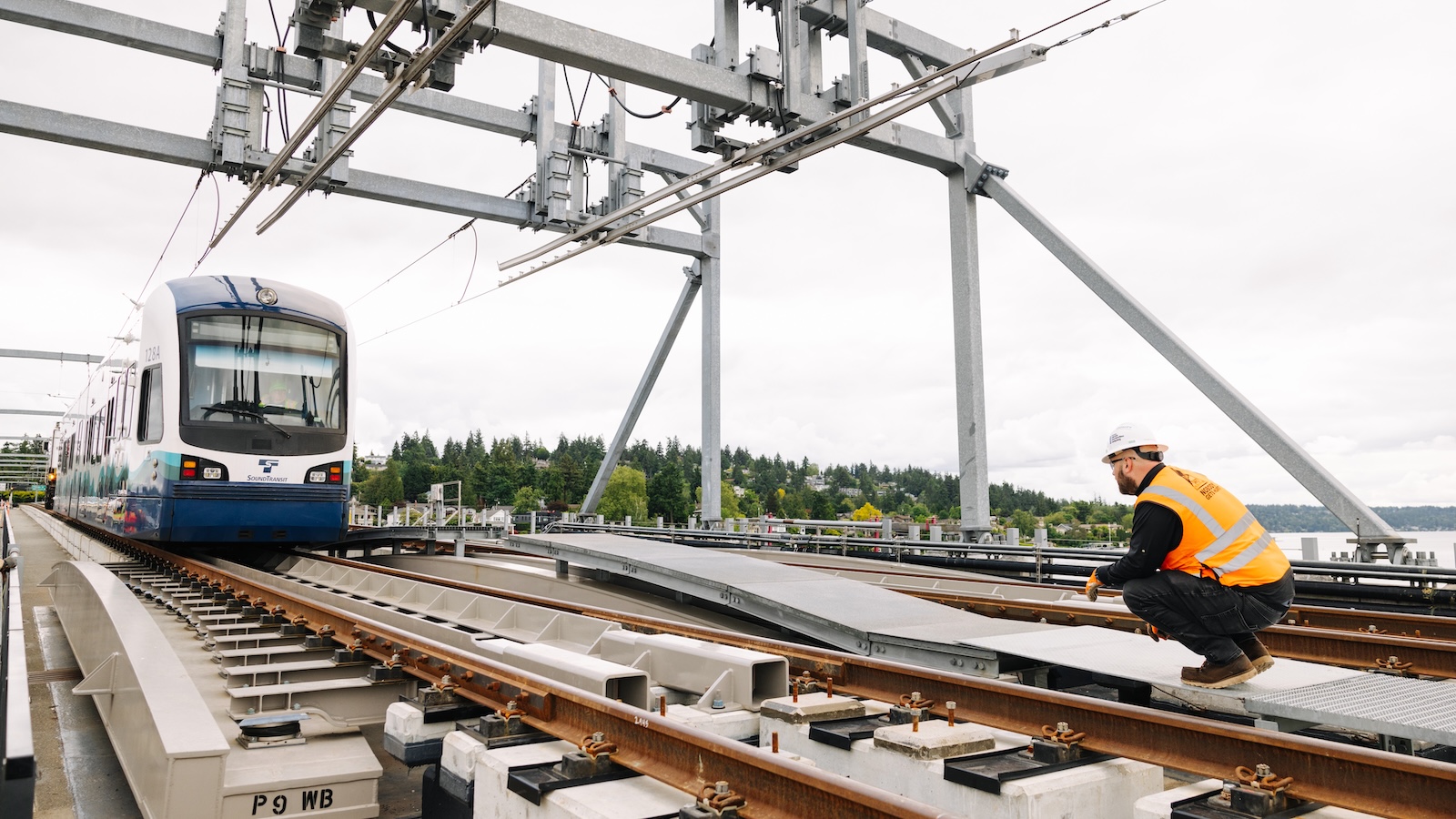
The debut of Seattle’s Crosslake Connection light rail line this spring marked more than just a local infrastructure milestone; it signaled the beginning of a massive, multi-city sprint toward the 2026 FIFA World Cup. On March 28, more than 200,000 passengers flooded the new system, a ridership figure surpassed in Sound Transit’s history only by the massive parade following the Seahawks’ Super Bowl XLVIII victory. As trains now glide across Lake Washington on what is recognized as the world’s first electric rail line to span a floating bridge, the city of Seattle is demonstrating how mega-events can be leveraged to solidify decades of transit planning.
Linking the urban core of Seattle with the growing tech hubs of Bellevue and Redmond, the Crosslake Connection has effectively doubled the frequency of stops in the heart of the "Emerald City." This infrastructure will be the primary artery for the tens of thousands of international fans expected to descend upon Lumen Field for six World Cup matches scheduled between June 15 and July 6, 2026. According to Kirk Hovenkotter, executive director of the Transportation Choices Coalition, the city’s ability to secure host status was directly tied to its long-term commitment to mass mobility.
A Legacy of Growth: From 1994 Snubs to 2026 Ambitions
The current enthusiasm for Seattle’s transit readiness stands in stark contrast to the region’s experience in the early 1990s. When the United States first hosted the World Cup in 1994, Seattle submitted an ambitious bid to host matches at Husky Stadium. However, the city was ultimately snubbed, a decision many attributed at the time to inadequate transportation infrastructure and a lack of high-capacity transit links between the stadium and the broader metropolitan area.
In the 32 years since that rejection, the Seattle metropolitan area has undergone a demographic and physical transformation. The population has surged from roughly 2.5 million in 1994 to more than 4 million today. This growth necessitated a shift in urban planning, leading to the voter-approved Sound Move transit package in 1996. That initial investment laid the groundwork for the 2008 launch of the region’s light rail system.
The timeline of Seattle’s transit evolution reveals a strategic, multi-decade approach:
- 1996: Voters approve Sound Move, establishing the Sound Transit agency.
- 2008: Light rail service officially launches in Seattle.
- 2022: FIFA selects Seattle as one of 16 host cities for the 2026 tournament.
- 2024: The Crosslake Connection opens, meeting a self-imposed deadline tied to the tournament.
"Our region hasn’t been preparing for the World Cup for 18 months," Hovenkotter noted. "It’s been preparing for 18 years." While the $1 billion Crosslake Connection was funded by a 2008 ballot measure—long before the host city selection—the looming presence of the World Cup acted as an essential catalyst for finishing a project that had faced a three-year delay due to construction and technical hurdles.
The World Cup as a Catalyst for National Infrastructure
Seattle is not alone in its race against the 2026 clock. Eleven U.S. cities, along with five in Canada and Mexico, are preparing for a tournament that FIFA expects will draw more than five million attendees. For many of these American hubs, the World Cup is being utilized as a "hard deadline" to push delayed projects over the finish line or to secure funding for system-wide overhauls.
In a country historically characterized by its reliance on the personal automobile and a fragmented approach to mass transit, the World Cup represents an unusual point of leverage. Transit agencies are using the global spotlight to justify expenditures that might otherwise face political stagnation. This comes at a critical juncture as rail and bus systems nationwide continue to navigate the post-pandemic landscape, characterized by shifting ridership patterns and aging rolling stock.
Atlanta’s Comprehensive Mobility Overhaul
Two thousand miles to the southeast, the Metropolitan Atlanta Rapid Transit Authority (MARTA) is undergoing its most significant transformation since the 1996 Summer Olympics. Atlanta, like Seattle, was excluded from the 1994 World Cup roster but successfully leveraged the Olympics to add seven miles of rail to its network. Today, MARTA manages 48 miles of track and a bus network spanning 1,500 miles, serving over five million passengers monthly.
Ahead of 2026, MARTA has launched a complete redesign of its bus network—the first such effort in four decades. While the redesign reduced the total number of bus lines from 113 to 81, the agency reports that the new "high-frequency" model has tripled the number of residents living within a quarter-mile of a bus that arrives every 15 minutes.
Furthermore, MARTA is investing in its rail fleet. Starting in June 2024, the agency will begin rolling out 224 new train cars to replace equipment that has been in service since the 1980s. These new cars feature more spacious, open-gangway interiors, increasing passenger capacity per four-car train by 13 percent to 752 riders. This expansion is vital for Mercedes-Benz Stadium, which is serviced by four nearby rail stations.
Rhonda Allen, MARTA’s deputy general manager, acknowledged the tournament’s role in prioritizing these upgrades. "Folks around here figured out if I want to get my projects some priority… I need to say, ‘I want to do this for the World Cup,’" she said.
Regional Connectivity and the "Fan Fest" Effect
The infrastructure push extends beyond the immediate vicinity of the stadiums. In Washington State, the legislature has funded new intercity bus routes connecting the rapidly growing city of Pasco with Spokane, the latter of which is slated to host the Egyptian national team during their training sessions. Sound Transit has also expanded its airport bus service to 24-hour operations, a move advocates hope will become permanent.
In Kansas City, the Streetcar Authority extended its southern service by 3.5 miles and added a northern extension in May 2024. Although the streetcar does not reach Arrowhead Stadium directly, it serves as the primary link for "Fan Fest" events in the city’s downtown core. Shuttle buses will bridge the gap between the streetcar terminus and the stadium. Tom Gerend, executive director of the Kansas City Streetcar Authority, emphasized that the city’s bid relied heavily on this growing transit connectivity.
Financial Hurdles and the "Wedding Analogy"
Despite the optimism, the path to 2026 is fraught with financial and logistical challenges. Unlike many other global sporting events, FIFA does not contribute to the transportation costs of host cities. Furthermore, federal support has been relatively modest; the U.S. Department of Transportation allocated $100 million in March 2024 to be split among host cities—averaging just $10 million per municipality.
This funding gap has forced agencies to implement creative, and sometimes controversial, pricing strategies. In the Northeast:
- Massachusetts Bay Transit Authority (MBTA): Round-trip tickets to Gillette Stadium for World Cup matches are expected to cost $80.
- NJ Transit: Round-trip tickets for matches at MetLife Stadium are projected at $98.
Critics also worry about the "wedding analogy" proposed by Simon Kuper, author of World Cup Fever. Kuper suggests that host cities often treat these events like a home wedding—painting the walls and fixing the toilets for the guests while ignoring the long-term needs of the residents. "You risk overinvesting in the route to the stadium and not in what makes residents’ lives better every day," Kuper warned.
In Atlanta, Bakari Height of the transit advocacy group MARTA Army expressed skepticism regarding the recent bus redesign, noting that while frequency increased for some, routes were cut for others. He questioned whether the system, which has seen minimal station expansion since the 1990s, is truly prepared for the unprecedented crowds of 2026.
Long-Term Implications: Testing the "Mega-Event" Model
The ultimate success of these investments will be measured by their utility after the final whistle blows in July 2026. Experts like Balsam Nehme of Sidara Collaborative argue that the priority must remain "long-term system-level thinking." By using the World Cup to test new ideas—such as 24-hour bus service, microtransit zones, and high-capacity rail cars—cities can gather data on how to manage peak demand and improve daily reliability.
In Seattle, the focus remains on communication and accessibility. Drawing on lessons from the 2018 Special Olympics USA Games, where a targeted messaging campaign reduced planned car rentals among participants from 78 percent to just 7 percent, Sound Transit is implementing multilingual signage and expanded digital outreach.
As the 2026 World Cup approaches, the U.S. is effectively conducting a massive experiment in urban mobility. If successful, the legacy of the tournament will not be found in the scorecards, but in the permanent rail lines, redesigned bus routes, and modernized fleets that continue to serve millions of Americans long after the world’s eyes have turned elsewhere. For cities like Seattle and Atlanta, the goal is clear: ensure that the infrastructure built for the world becomes an indispensable part of the local fabric.

