
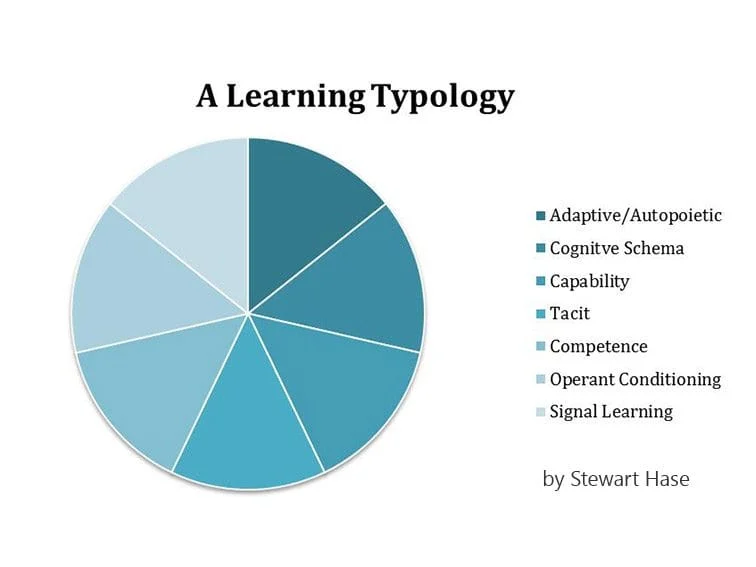
The traditional landscape of educational psychology is undergoing a significant paradigm shift as experts move away from outcome-based metrics toward a more holistic understanding of the human brain. Stewart Hase, a prominent figure in the Heutagogy of Community Practice, has introduced a comprehensive learning typology designed to challenge the prevailing definitions of how knowledge is acquired and integrated. This new framework suggests that current educational models, which focus primarily on performance and behavioral change, fail to account for the complex neurological processes revealed by modern science. By categorizing learning into seven distinct levels—ranging from basic signal responses to complex autopoietic adaptation—Hase provides a roadmap for educators and organizations to design experiences that align with the actual mechanics of the human mind.
The Evolution of Learning Definitions and the Shift Toward Neuroscience
For decades, the academic world has relied on two primary definitions of learning. The first, a general dictionary approach, views learning as the simple acquisition of knowledge. The second, rooted in 20th-century psychology, defines learning as a measurable change in behavior resulting from experience. However, Hase argues that these definitions are increasingly inadequate. The rise of neuroscience has provided a window into the brain’s internal architecture, showing that learning is not merely a reaction to external stimuli but a sophisticated process of self-organization and neural pathway construction.
Historically, the study of learning was dominated by researchers like Robert Gagné, who sought to categorize different types of learning outcomes. While Gagné was an outlier in his attempt to look at the internal conditions of learning, much of the subsequent educational theory remained focused on "what the learner can do" after the fact. Hase’s typology seeks to flip this script, focusing instead on what is occurring within the mind during the experience itself. This shift from qualitative anecdotal evidence to neurological design allows for a more precise approach to pedagogy and "heutagogy"—a term coined by Hase and Chris Kenyon in 2000 to describe self-determined learning.
A Chronology of Educational Theory and the Emergence of Heutagogy
To understand the context of this seven-tier typology, it is necessary to examine the timeline of educational philosophy over the last century:
- 1950s–1960s (The Behaviorist Era): Dominated by B.F. Skinner and Ivan Pavlov, learning was viewed as a series of conditioned responses. This era gave birth to the concepts of operant and classical conditioning, which still form the baseline of Hase’s typology.
- 1970s–1980s (The Constructivist Movement): Led by Jean Piaget and Lev Vygotsky, the focus shifted to how individuals "construct" knowledge based on their experiences and social interactions. This laid the groundwork for understanding cognitive schema.
- 1990s (The Rise of Capability): Researchers like Cairns and Stephenson began to differentiate between "competence" (knowing how to do a job) and "capability" (knowing how to learn and adapt in unfamiliar territory).
- 2000–Present (The Heutagogical Turn): Hase and Kenyon introduced heutagogy, emphasizing the learner’s autonomy and the importance of "double-loop learning." This era integrates neuroscience, recognizing that the brain is a non-linear, self-organizing system.
The Seven-Tier Typology: A Detailed Breakdown
Hase’s typology is structured not as a hierarchy where one level is "better" than another, but as a map of different neurological operations. Each level serves a specific purpose in human survival, professional development, and personal growth.
1. Autopoietic and Adaptive Learning
At the highest level of complexity is autopoietic learning. Derived from the Greek words for "self-creation," this level involves deep learning where the brain makes complex connections between disparate pieces of information in the face of a need to adapt. This process involves "bifurcation"—a shift in perspective that allows an individual to experiment and attempt something entirely new. In this state, knowledge transcends data and becomes wisdom. Organizations like Apple or Google, and historical sites of innovation like Thomas Edison’s Menlo Park laboratory, are cited as environments that foster this high-level, adaptive feedback loop.
2. Shifts in Cognitive Schema
Cognitive schema represent the fundamental values, attitudes, and beliefs that drive human behavior. These are often resistant to change because they are deeply linked to the emotional centers of the brain. A shift in schema is a high-order experience, often triggered by emotionally charged events or powerful experiential learning. When a schema shifts, the old neural pathways are essentially overwritten. This is frequently seen in leadership development where a "micro-manager" undergoes a profound realization that leads to a permanent change in their management style.
3. Capability Development
Capability is defined by the ability to apply learning in both familiar and novel situations. Unlike simple competence, capability involves a high degree of self-efficacy and the ability to collaborate. In this tier, context is the primary driver of learning. By placing individuals in novel environments, they are forced to think analytically and use their skills in authentic ways to solve problems. This level emphasizes the "learning commons"—a shared space for relational and vicarious learning.
4. Tacit Learning
Tacit learning occurs when high-level competencies become so internalized that they are performed unconsciously. This is the hallmark of the "expert practitioner." While the actions are performed without overt thought, the underlying logic can often be extracted through external questioning. This level is achieved through the continuous refinement of skills in increasingly complex environments.
5. Competence
The most common focus of formal education, competence consists of the acquisition of specific knowledge and skills. In a modern, networked world, obtaining competence is easier than ever due to the availability of information. Most individuals now acquire competence through informal processes on an "as-needed" basis, rather than through rigid, long-term educational structures.
6. Operant Conditioning
This is a foundational, often unconscious form of learning where behaviors are reinforced by rewards or recognition. In both social and professional settings, operant conditioning helps humans develop habits and life skills essential for survival. This can also occur vicariously, as individuals observe the rewards others receive for certain behaviors.
7. Signal Learning
The simplest and most primitive form of learning, signal learning is also known as classical conditioning. It involves unconscious associations between stimuli and responses. Hase provides the example of a childhood aversion to honey developed during an illness. While simple, signal learning is a powerful tool used in modern advertising to elicit emotional responses to brands or products without the consumer’s conscious awareness.
Supporting Data: The Neuroscience of the Seven Tiers
The validity of Hase’s typology is supported by emerging data in the field of neurobiology. Research into "neuroplasticity" confirms that the brain is capable of creating new synaptic connections throughout a person’s life, which supports the "Adaptive" and "Schema Shift" levels of the typology.
Furthermore, data from corporate Learning and Development (L&D) sectors suggests a growing gap between "competence" and "capability." A 2023 industry report indicated that while 85% of employees felt they had the "competence" to perform their current roles, only 30% felt they had the "capability" to adapt to the disruptions caused by Artificial Intelligence. This supports Hase’s assertion that education must move beyond the fifth tier (Competence) to ensure long-term survival in a changing economy.
Reactions from the Educational and Corporate Sectors
The introduction of this typology has sparked reactions across various sectors. Dr. Elena Rossi, an educational psychologist, noted that "Hase’s framework provides a much-needed bridge between the clinical world of neuroscience and the practical world of the classroom. It moves the conversation away from ‘test scores’ and toward ‘cognitive agility.’"
In the corporate world, Chief Learning Officers (CLOs) are beginning to use these tiers to evaluate the effectiveness of training programs. "We’ve spent too much time on Tier 5 (Competence) and Tier 6 (Operant Conditioning) through reward-based training," said Marcus Thorne, a consultant for Fortune 500 companies. "The real value in the modern workforce lies in Tier 1 and Tier 3. We need people who can self-organize in chaotic environments."
Broader Implications and Analysis
The implications of Hase’s typology extend far beyond the classroom. By recognizing that learning is a multi-tiered neurological process, society can better address issues ranging from mental health to economic productivity.
For instance, the understanding of "Cognitive Schema" (Tier 2) suggests that many social conflicts are not the result of a lack of information (Tier 5), but rather deeply ingrained neural pathways that override logic. Addressing these issues requires experiential and emotional engagement rather than just "fact-checking."
Furthermore, as AI continues to automate tasks associated with "Competence" (Tier 5), the human advantage will increasingly rely on "Autopoietic and Adaptive Learning" (Tier 1). The ability to find problems, rather than just solve them, and to innovate in the face of survival threats, will become the primary metric of educational success.
In conclusion, Stewart Hase’s typology offers a robust framework for the future of learning. By acknowledging the primitive necessity of conditioning while aspiring toward the heights of autopoietic wisdom, this model provides a comprehensive view of the human experience. It challenges educators to design for the mind, rather than for the test, ensuring that the next generation of learners is not just competent, but truly capable.

