
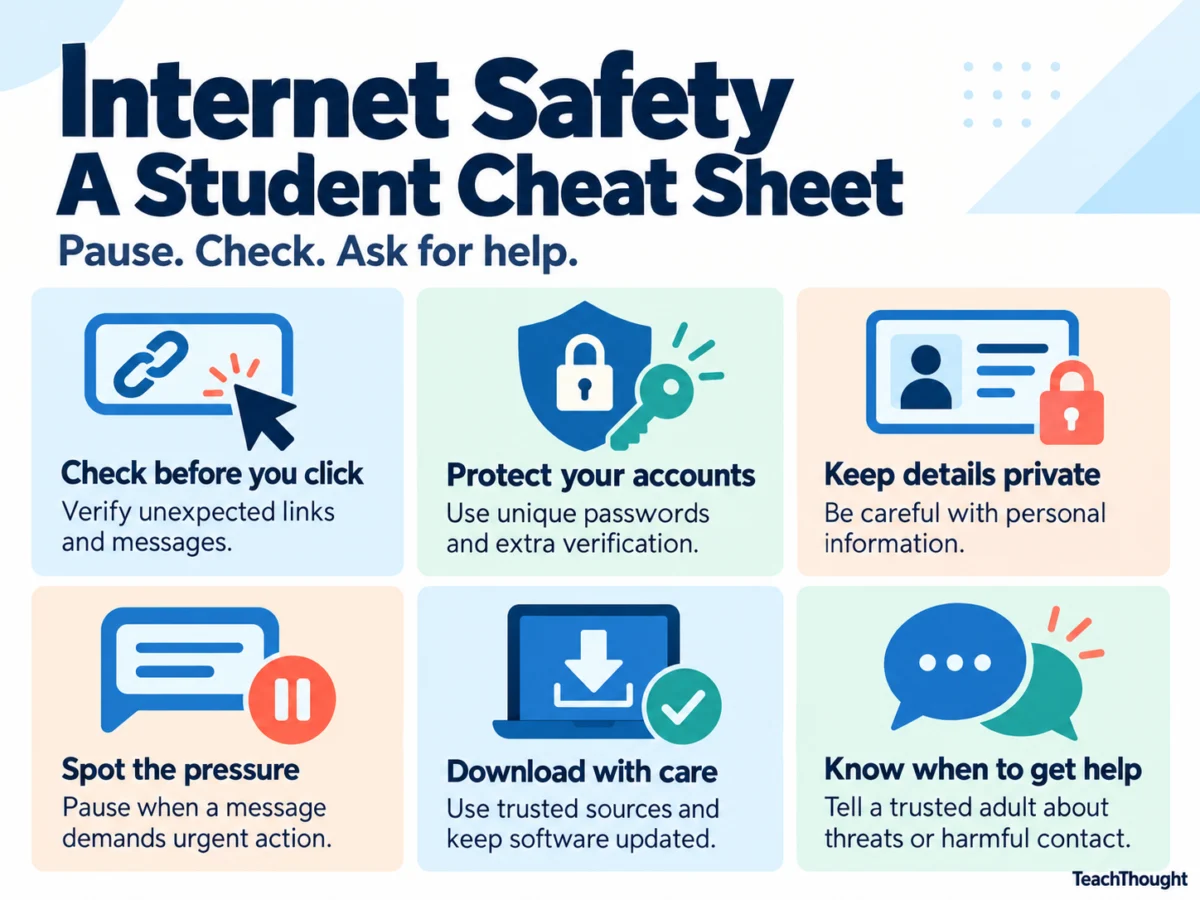
The contemporary educational landscape is inextricably linked to the digital sphere, where students navigate an intricate web of school accounts, multiplayer gaming environments, social platforms, and artificial intelligence tools on a daily basis. Internet safety has evolved far beyond the simplistic warnings of the early internet era; it is now defined as the critical ability to recognize a risky situation, execute a safer choice, and secure help when digital interactions go awry. Modern educators and cybersecurity experts emphasize that technological fluency does not equate to behavioral discernment. Knowing how to operate an application does not inherently provide a student with the judgment required to determine when a digital peer, a direct message, or an automated request can be trusted. Consequently, school districts worldwide are overhauling their digital literacy curricula to transition from abstract policy enforcement to proactive, decision-based education that aligns with comprehensive digital citizenship standards.
The historical evolution of internet safety education reflects the rapidly shifting paradigms of cyberspace. Two decades ago, institutional strategies focused primarily on rigid content filtering and blanket prohibitions against sharing identifying details. However, as classrooms integrated cloud computing, collaborative software, and generative artificial intelligence, these perimeter-based defenses proved insufficient. The proliferation of mobile devices and remote learning initiatives during the early 2020s accelerated this transition, pushing digital interactions directly into domestic spaces and blurring the boundaries between academic networks and personal social media ecosystems. According to recent educational technology reports, over 90 percent of K-12 students interact with online platforms for academic purposes daily, exposing them to an unprecedented volume of targeted phishing campaigns, sophisticated social engineering, and peer-to-peer harassment that transcends traditional school hours.
To address these evolving threats, educational authorities and cybersecurity agencies have established a structured timeline of digital threat vectors that students typically encounter as they mature. In early elementary education, risks generally manifest as accidental exposure to inappropriate content or the inadvertent clicking of malicious pop-up windows during web-based research. By middle school, the threat landscape shifts significantly toward social manipulation, including cyberbullying within group chats, peer pressure to bypass platform age restrictions, and the initial exposure to deceptive profile accounts. In high school, students encounter high-stakes cyber threats, such as sophisticated phishing attacks, credential harvesting, unauthorized account takeovers, and advanced forms of digital coercion, including sextortion and the malicious use of generative artificial intelligence to produce manipulated media.
At the core of modern safety frameworks is the critical evaluation of inbound digital requests, regardless of their perceived origin. Cybersecurity data indicates that phishing attempts targeting educational institutions have surged by more than 40 percent over the past three years. Attackers routinely spoof the email addresses, profile pictures, and brand logos of trusted entities, including teachers, school administrators, popular gaming platforms, and educational service providers. Standard safety protocols dictate that students must learn to scrutinize the action requested by a message rather than blindly trusting the sender’s display name. When a prompt demands immediate action, urgent password resets, verification codes, or file downloads, the standard institutional recommendation is to bypass the communication entirely and access the service through an independent bookmark or official application. Classroom simulations frequently test these principles, asking students to evaluate urgent notifications regarding account closures without clicking embedded hyperlinks.
Account security represents a foundational pillar of institutional cyber hygiene. Organizations such as the Cybersecurity and Infrastructure Security Agency consistently emphasize that strong, unique passwords and multifactor authentication are non-negotiable safeguards against unauthorized access. Educational institutions are increasingly deploying password managers to help students maintain complex credentials across multiple platforms without resorting to insecure reuse habits. Furthermore, digital citizenship curricula stress that sharing passwords does not constitute a valid metric of friendship or trust among peers. When account compromises do occur, established institutional protocols outline clear pathways for recovery, directing students to report incidents immediately to school IT personnel rather than attempting to resolve security breaches through informal peer channels or by interacting further with the malicious actor.
Personal data privacy in the modern classroom requires a nuanced approach that moves past the obsolete adage of never sharing information online, which fails to account for legitimate educational software requirements. Instead, contemporary frameworks train students to evaluate data minimization: determining whether a specific service genuinely requires the requested information to fulfill its stated function. Educators are advised to audit all digital tools introduced into the curriculum, ensuring that third-party applications demand the absolute minimum amount of personally identifiable information necessary for academic participation. Practical exercises involve analyzing hypothetical scenarios where mobile games request home addresses, study applications ask for unnecessary device permissions, or online quizzes probe for details that could compromise security question answers.
The psychosocial dimensions of digital interaction present complex challenges, particularly regarding manipulation, coercive pressure, and online harassment. Unsafe contact rarely begins with overt hostility; instead, malicious actors frequently employ flattery, digital gifts, in-game currency, or manufactured urgency to cultivate a false sense of intimacy before escalating their demands. For older student demographics, educational programs developed in collaboration with agencies like the National Center for Missing & Exploited Children explicitly address severe threats such as financial or image-based extortion. These initiatives emphasize that victims must seek immediate adult intervention, even if they previously engaged voluntarily with the perpetrator, while strictly prohibiting the secondary distribution or retention of illicit imagery as evidence within the student body.
Harassment within peer groups often magnifies through the mechanics of modern communication platforms. Group chats can rapidly transform isolated disagreements into sustained campaigns of cyberbullying when participants forward humiliating screenshots, participate in pile-ons, or broadcast location data. To mitigate these risks, digital citizenship frameworks instruct students to avoid retaliatory posting, utilize built-in reporting mechanisms, and involve trusted adults rather than attempting to arbitrate digital conflicts independently. Institutional safeguarding procedures mandate that while blocking unwanted contact is a useful initial measure, it must be accompanied by comprehensive documentation of usernames, timestamps, and message links preserved by administrators rather than students, ensuring compliance with child protection laws and internal district policies.
The integration of software downloads, browser extensions, and artificial intelligence tools introduces another layer of operational vulnerability. Students frequently encounter prompts for game modifications, study aids, or system updates that request sweeping permissions to access device microphones, webcams, local file systems, or location data. Institutional policies strictly prohibit students from bypassing device security controls to install unverified software for academic or recreational purposes. When evaluating AI integrations, educators focus heavily on the ethical implications of generative technologies, including the unauthorized creation and dissemination of manipulated imagery depicting classmates. Official guidance from safety commissioners underscores that students targeted by synthetic media require immediate institutional support and validation, independent of formal forensic verification processes.
To operationalize these concepts, educational researchers advocate for scenario-based training methodologies that replace passive lectures with active decision-making exercises. By utilizing fictionalized messaging prompts, permission request dialogues, and group-chat dilemmas in brief, five-minute classroom discussions, educators allow students to identify risk factors, formulate appropriate responses, and identify internal or external support networks without disclosing sensitive personal experiences. Ultimately, comprehensive internet safety is not achieved through fear-based compliance, but through the systematic development of critical thinking, robust technical safeguards, and an institutional culture where students are fully equipped to recognize digital hazards and seek reliable assistance without hesitation.

