
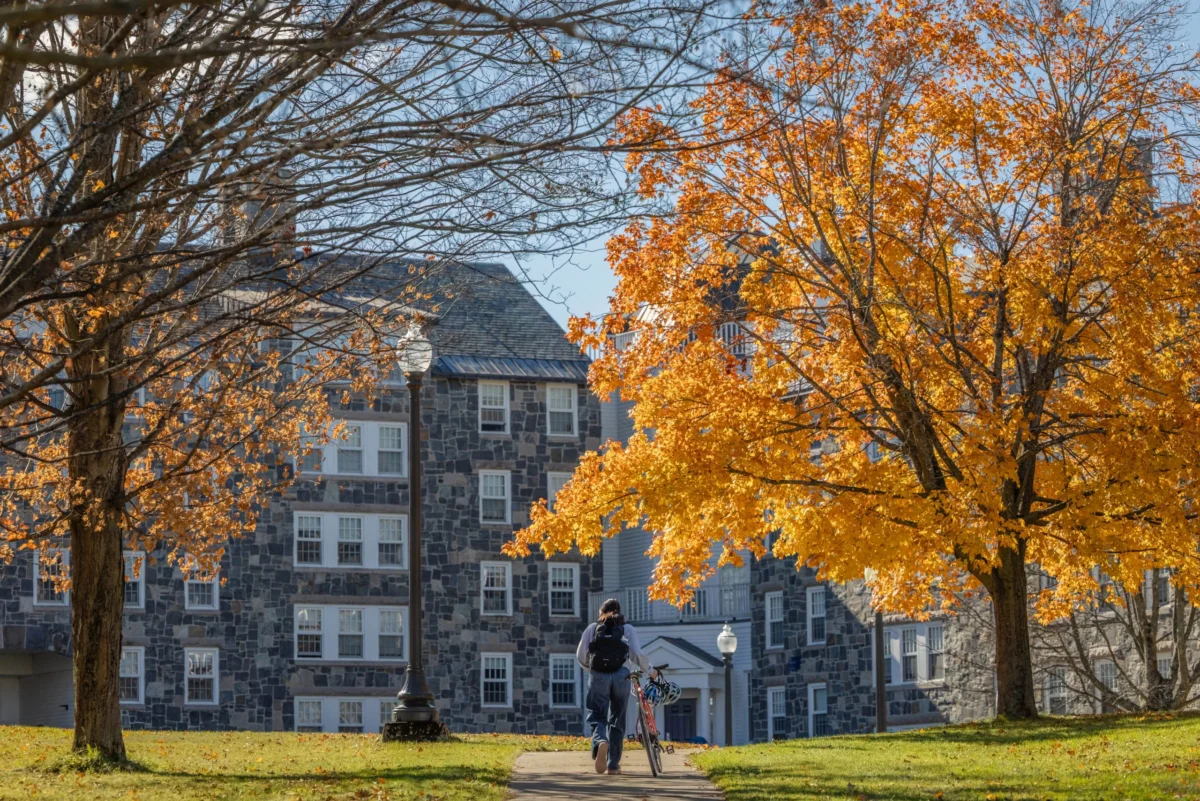
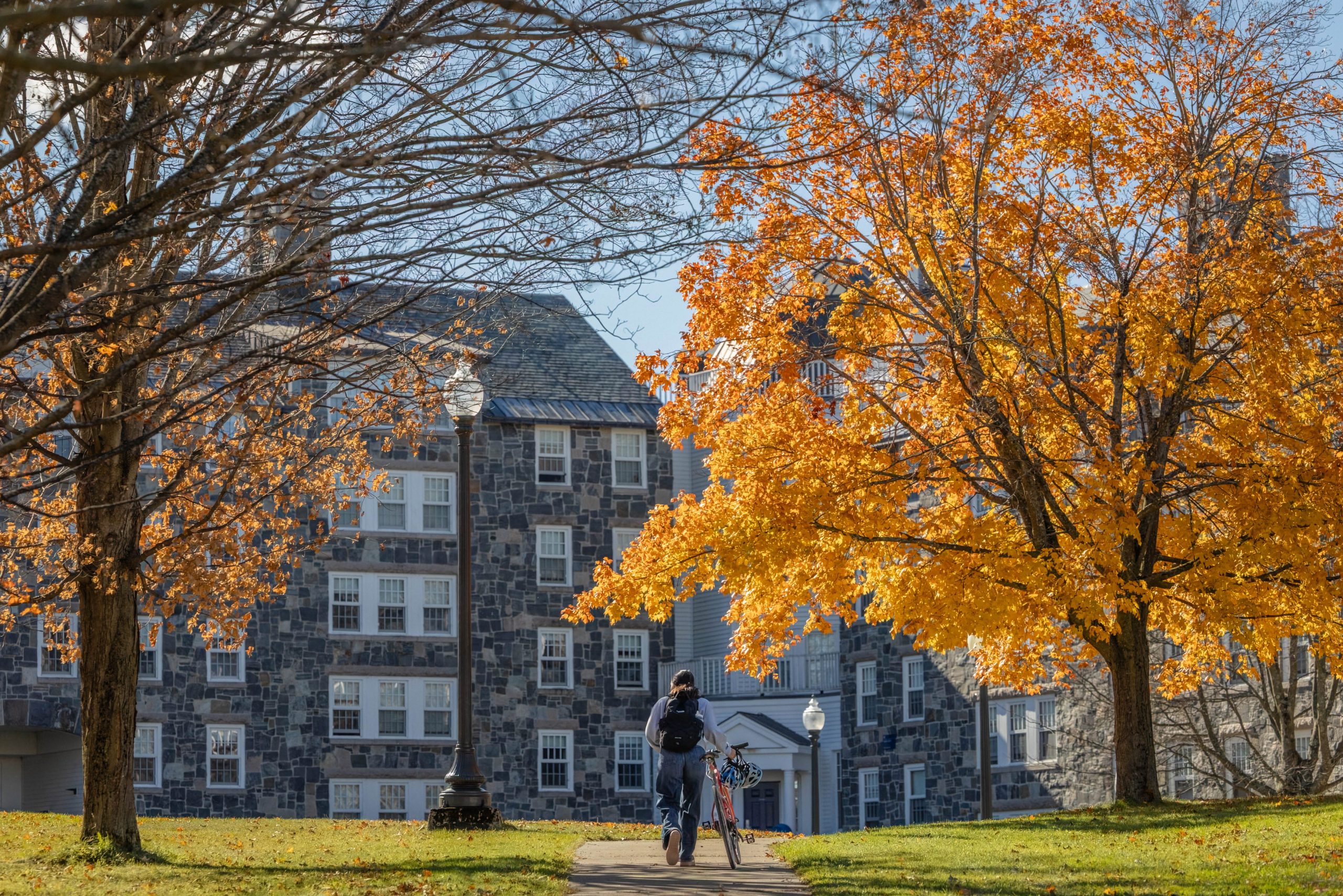
The picturesque, limestone-clad campus of Middlebury College, nestled in the heart of a quintessential New England village, serves as the backdrop for a quiet revolution in higher education. With its manicured lawns, exclusive 9-to-1 student-faculty ratio, and a curriculum that encourages students to pursue global research—from foraging in Malaysia to high-tech internships—Middlebury presents an image of prestige that has long been synonymous with high costs. However, in an era where the public perception of college affordability has reached a breaking point, Middlebury, alongside a growing coalition of elite institutions, is attempting to dismantle the traditional "sticker price" model that has long alienated prospective students and their families.
Middlebury College recently announced a definitive policy shift: beginning next year, the institution will offer tuition-free education to undergraduate students whose families earn an annual household income of $175,000 or less. This policy, while appearing to be a massive financial overhaul, represents a calculated strategic pivot designed to simplify a complex, often exclusionary, financial aid system. Middlebury is not an outlier; it is the latest entrant in a rapidly expanding list of prestigious schools, including Princeton, Harvard, MIT, and the University of Chicago, that are moving toward income-based tuition guarantees.
The Anatomy of the Pricing Crisis
To understand why institutions are rushing to adopt these policies, one must look at the widening chasm between the "sticker price" of higher education and the actual cost paid by the average household. At many private, nonprofit universities, the published annual tuition and fees have climbed toward the $100,000 mark. At Middlebury, the current listed rate is $97,386.
However, this figure is largely a vestige of an older economic model. In practice, very few families pay the full listed price. Instead, universities employ a complex system of discounting—often marketed as "scholarships" or "grants"—to manage enrollment and attract specific student demographics. This system has become a source of profound public distrust. According to data from the Strada Education Foundation, nearly 70 percent of parents and students find the financial aid process to be opaque, confusing, or completely impenetrable.
Economists and higher education experts have long warned that this lack of transparency is self-destructive. Phillip Levine, an economist at Wellesley College and author of Hidden Tuition: An Insider’s Guide to College Pricing and Financial Aid, argues that the current system is fundamentally flawed. "When families see these high sticker prices, they see a barrier, not an invitation," Levine notes. "The irony is that at most of these elite institutions, the education was already essentially free for the families now being targeted by these new policies. The change isn’t necessarily about lowering the total cost; it is about lowering the psychological barrier to entry."

A Chronology of the Tuition-Free Movement
The shift toward guaranteed tuition thresholds is a relatively recent phenomenon that has accelerated in the last 24 months as colleges struggle to reverse declining public confidence.
- 2024-2025: Universities such as Carnegie Mellon and Brandeis pioneered lower-income thresholds ($75,000) to address specific accessibility gaps.
- 2025: Major research universities, including Harvard, MIT, and Princeton, solidified their commitments, with thresholds reaching as high as $250,000 in some cases.
- 2026: A wave of institutions—including Middlebury, Davidson, and Swarthmore—formalized their $175,000 to $200,000 income caps, responding to the persistent inflationary pressure on middle-class families.
- Late 2026: Universities began deploying advanced, user-friendly net price calculators, such as the one recently launched by the University of Pennsylvania, to provide families with a clear, pre-application cost estimate.
The Psychological and Economic Impact
The implications of this movement extend far beyond the immediate financial relief for a subset of students. At Middlebury, officials estimate that the new policy will directly impact 35 to 50 students per incoming class—a relatively small number in a cohort of roughly 630. Yet, the symbolic value of the policy is immense.
Nicole Curvin, dean of admissions and vice president of strategic enrollment at Middlebury, points out that the move is a direct response to the modern anxiety permeating prospective student households. "The economy is volatile, and families are deeply concerned about the future—everything from the rise of AI to global instability," Curvin says. "Affordability is the single most important question we are asked. By establishing a clear, income-based ceiling, we remove the guesswork."

This sentiment is echoed by parents. Liz Mark, who visited Middlebury with her daughter, likened the current college pricing system to the medical billing industry. "You don’t know what a procedure costs until you’re already in the system, and even then, it’s all pre-approvals and paperwork," she said. By providing a clear promise, schools like Middlebury are attempting to convert the "sticker price" fear into a more manageable, transparent conversation.
The Limitations of the "Free" Label
Despite the positive reception of these policies, critics and financial aid experts urge caution. These guarantees typically cover tuition only. They do not account for the significant "hidden" costs of attendance, including room and board, books, technology fees, and transportation. At Middlebury, these additional costs total over $24,000 annually.
Furthermore, these policies are often restricted by assets. Most calculations assume that families possess "typical" assets—such as a primary residence and standard retirement savings. Families with atypical financial situations, such as those holding significant equity in small businesses or farms, may still find themselves caught in the fine print of the financial aid office.

Moreover, there is a clear divide between well-endowed institutions and those with fewer resources. While Harvard and Yale can comfortably absorb the cost of tuition waivers for families earning up to $200,000, regional private colleges must be more surgical. Institutions like Earlham College in Indiana have limited their tuition-free programs to in-state students, while others, like Marist College in New York, have focused on capping the total cost of attendance rather than just the tuition portion.
Rebuilding the Social Contract
The broader impact of these policies is an attempt to repair the "social contract" of higher education. As Ian Baucom, president of Middlebury, recently noted, the vision of American higher education is rooted in the idea that the country’s most prestigious institutions are accessible to the brightest minds, regardless of background. When the physical appearance of a campus—the historic buildings and vast, manicured grounds—signals "exclusivity," it risks silencing qualified applicants before they even apply.
"The social contract of American life depends upon the idea that everyone can come into the fullness of what it means to live and think and study and work here," Baucom said. "That contract is currently fracturing. We want to be as simple and clear as possible: we are open to families of all sorts."

Looking Ahead: A Shift Toward Transparency
The trend toward transparent pricing is likely to continue as colleges compete for a shrinking pool of high school graduates. The "demographic cliff"—a period of declining birth rates that will significantly reduce the number of college-aged students in the coming years—is forcing institutions to reconsider their value proposition.
For students and parents, this means the era of the "sticker price" may finally be coming to an end. However, the onus remains on families to do their due diligence. While a university might advertise "tuition-free," the actual, total cost of attendance remains a variable that depends on a student’s specific financial profile, the school’s endowment, and the state-specific programs available.
Ultimately, the move by Middlebury and its peers is a tacit admission that the old way of doing business is no longer tenable. By shifting from a model of complex, opaque discounting to one of clear, income-defined guarantees, these institutions are not just changing their financial aid letters; they are attempting to rebuild the trust necessary for the long-term survival of the American collegiate experience. Whether these measures will successfully widen the gates of elite education or merely serve as a marketing tool in a hyper-competitive market remains to be seen, but one thing is certain: the conversation around college costs has been permanently altered.

