
Recent midterm and off-year electoral cycles have fundamentally reshaped the American political geography, delivering sweeping victories for the Democratic Party across both chambers of Congress and numerous statehouses nationwide. While national discourse has largely centered on voter frustrations regarding inflation, economic volatility, and broader governance concerns, the reverberations of these electoral shifts are poised to dramatically alter K-12 education policy. As a new generation of Democratic governors and legislative leaders steps into office, education policy analysts, advocacy groups, and policymakers are forced to re-evaluate long-standing partisan orthodoxy surrounding school choice, academic accountability, and public funding models.
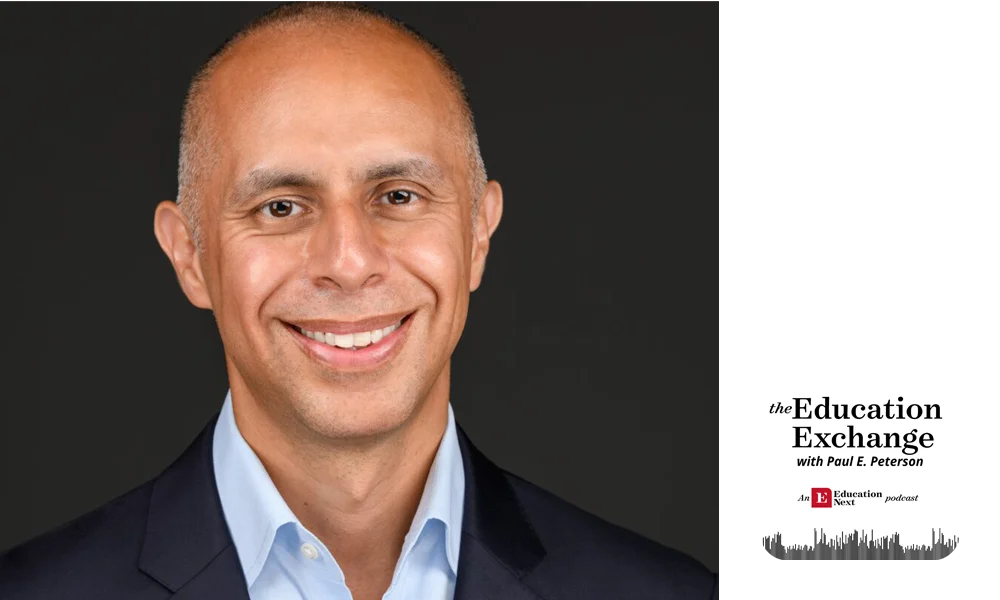
To unpack these complex dynamics, Paul Peterson, director of the Program on Education Policy and Governance at Harvard University, recently hosted Jorge Elorza, Chief Executive Officer of Democrats for Education Reform (DFER) and former mayor of Providence, Rhode Island, on the Education Exchange podcast. Their discussion offered a comprehensive look at how a resurgent Democratic Party plans to navigate the intersection of progressive values, executive leadership, and school reform in an era defined by profound political realignment.
Analyzing the Electoral Wave: A Repudiation of Status Quo Politics
The electoral outcomes on November 2nd demonstrated a significant consolidation of power for Democrats, who captured majorities in the Senate and House of Representatives alongside critical state and local offices. Evaluating the underlying motivations of the electorate, Elorza characterizes the results primarily as a decisive repudiation of former President Donald Trump and an expression of deep-seated public anxiety over inflation, housing costs, government corruption, and civil rights concerns.
However, Elorza also credits the Democratic Party with organizational maturation. Unlike previous election cycles dominated by stringent ideological purity tests, the recent midterms showcased a broader "big tent" approach. Candidates adapted their policy platforms to fit the unique regional demographics of their constituencies, proving that geographic heterogeneity within the party is vital for winning competitive races across diverse states.
Despite the magnitude of the victory, education policy experts caution against overinterpreting voter mandates. Education historically functions as a secondary issue at the ballot box, frequently overshadowed by immediate pocketbook concerns such as the cost of living, gas prices, and economic security. Consequently, the electoral landslide cannot be interpreted as a direct endorsement of a unified Democratic education platform. Instead, it presents a unique governance challenge and opportunity, particularly as dozens of newly elected Democratic governors assume executive control in states with established school choice programs.
The State-Level Crucible: Governors as Policy Drivers
While public attention naturally gravitated toward Washington, D.C., the most profound transformations in K-12 education will occur at the state level. The recent election cycle introduced a wave of newly elected Democratic governors—with up to 14 new executives taking office once contests in Alaska and Kansas are fully resolved.
This generational shift introduces a fascinating policy paradox. Many of these incoming Democratic governors will inherit states where Republican legislatures previously enacted flexible funding mechanisms, universal Education Savings Accounts (ESAs), and tax-credit scholarship programs. States such as Georgia, Ohio, and Iowa now feature Democratic executive leadership operating alongside expansive school choice infrastructures.
Elorza argues that outright repealing these popular choice programs is practically unfeasible, particularly given the lack of legislative supermajorities and the practical realities of divided government in places like Texas. Instead, the challenge for the left will be determining how progressive values can be integrated into existing choice frameworks. Rather than defending an unyielding status quo, forward-thinking Democrats are expected to focus on introducing rigorous academic accountability guardrails and ensuring that flexible funding tools serve disadvantaged student populations effectively.
Rethinking Federal Tax Credits and Fiscal Pragmatism
A central flashpoint in contemporary education debate is the federal education tax credit program established under previous legislative packages. While traditional progressive factions and major labor unions have fiercely opposed tax-credit scholarships, political realities suggest the program is secure for the immediate future. Without a veto-proof majority in Congress and with a resistant administration in the White House, legislative repeal remains a mathematical impossibility.
This legislative gridlock encourages a pragmatic reassessment among Democratic executives. A growing faction within the party advocates for participating in federal tax-credit programs rather than voluntarily forfeiting billions of dollars in educational funding back to the federal treasury. By opting into these systems, states can capture vital resources to support local students. As public awareness of these programs grows, political analysts suggest it will become increasingly difficult for governors to justify leaving federal educational dollars on the table simply to satisfy rigid partisan doctrines.
Furthermore, the debate over school finance extends to broader taxation and resource allocation. As state budgets face pressures from declining enrollment and rising operational costs, incoming governors must decide whether to pursue traditional funding increases, demand strict fiscal accountability, or tie new investments to measurable student achievement metrics.
Breaking a Decade-Long Policy Vacuum on K-12 Education
For the past ten years—arguably since the final years of the Obama administration in 2015—the national Democratic Party has largely abdicated a proactive, visionary K-12 education agenda, directing its primary focus toward pre-kindergarten expansion and free college initiatives. This prolonged silence created a significant policy vacuum.
However, compounding academic crises, declining proficiency rates, and widening achievement gaps have made ignoring K-12 education untenable. Elorza notes that the incoming class of governors enters office without rigid preconceptions, presenting an unprecedented opening for reform-minded advocates to dislodge an unacceptable status quo. Organizations like DFER are positioning themselves to accelerate the learning curve for these new executives, ensuring they possess a firm grasp of foundational reforms, such as evidence-based reading instruction ("science of reading"), modern accountability frameworks, and strategic budget analysis.
The ultimate objective is to cultivate executive leadership that transcends short-term political expediency. Navigating education reform historically carries asymmetric political risks: pushing structural changes alienates powerful labor infrastructure, such as teachers’ unions, while the political payoffs of improved student outcomes remain uncertain. Overcoming this inertia requires governors driven by personal conviction rather than fluctuating political winds.
Realigning Demographics and the Future of Political Coalitions
Beyond institutional policy, the recent elections underscored a broader political realignment, particularly among Latino voters and younger demographics. Historically strong supporters of public schooling, Latino communities are increasingly demonstrating fluid voting patterns in response to broader economic and cultural shifts. This phenomenon mirrors global political trends characterized by rising populist movements on both the left and the right, reflecting widespread public dissatisfaction with stagnant political establishments.
As voters increasingly demand systemic change rather than defense of the status quo, both major political parties are compelled to articulate compelling, contrasting visions for the future. For the Democratic Party, capturing this moment requires moving beyond defensive postures and building a robust, forward-looking K-12 agenda well in advance of future legislative cycles. By wedding progressive social equity goals with modern, flexible operational strategies, the party has an opportunity to redefine its relationship with American public education for the coming decade.

