
America’s critical digital infrastructure experienced an unprecedented string of high-profile technological failures over a turbulent five-day period, disrupting everything from corporate communications and global air travel to human resources workflows and everyday consumer banking. This cascade of system crashes has reignited national debates regarding the robustness, resilience, and inherent vulnerabilities of the interconnected software and hardware systems that underpin modern society.
The disruption began in mid-November, affecting millions of citizens who rely on digital tools for work, travel, and financial management. While industry experts and government officials have repeatedly confirmed that these isolated incidents were technical anomalies rather than coordinated cyberattacks or state-sponsored intrusions, the sheer scale of the downtime has laid bare the fragility of corporate and public sector networks. As systems struggle to keep pace with growing data volumes, increasing traffic, and aging physical infrastructure, consumers and enterprises alike are left questioning how a localized bug or hardware upgrade can trigger nationwide paralysis.
Chronology of the Disruptions: A Cascading Failure
The week of technological turmoil unfolded through a rapid succession of systemic breakdowns across various sectors, creating a domino effect that impacted millions of users globally and domestically.
November 12: Microsoft 365 Global Email and Collaboration Collapse
The crisis commenced on Thursday, November 12, when a widespread outage struck Microsoft 365, crippling core productivity applications such as Outlook and Teams. The disruption left hundreds of millions of users worldwide struggling to send and receive emails, attend virtual meetings, and access cloud-stored documents. The outage lasted for nearly 24 hours, with full service recovery not achieved until Friday morning.
According to Microsoft’s preliminary incident report, the failure stemmed from a combination of factors. Charles Lamanna, a Microsoft executive, pointed to a previously undetected software defect that was fatally exacerbated by a sudden surge in network traffic coupled with reduced server capacity. Although Microsoft 365 boasts a user base exceeding 430 million individuals globally, the company noted that this figure represents total accounts rather than the exact number of impacted users, though the footprint of the disruption was undeniably massive.
November 13: Nationwide FAA Ground Stop Halts Air Travel
Barely as the Microsoft situation began to stabilize, the Federal Aviation Administration (FAA) ordered an unprecedented nationwide ground stop on all departing flights on Friday, November 13. The emergency halt was triggered by severe technical malfunctions that destabilized critical aircraft communications and radar feeds across the United States.
The disruption began at approximately 3:30 p.m. Eastern Time, freezing departures for nearly five hours before air traffic controllers safely resumed operations at 8:15 p.m. Transportation Secretary Sean Duffy later explained during a press briefing that the crisis originated during infrastructure modernization work conducted by private contractor L3Harris Technologies Inc. Technicians were in the process of replacing aging copper wiring with modern fiber-optic cables within the air traffic control network when a system overload occurred, leading to intermittent communication gaps and radar blind spots.
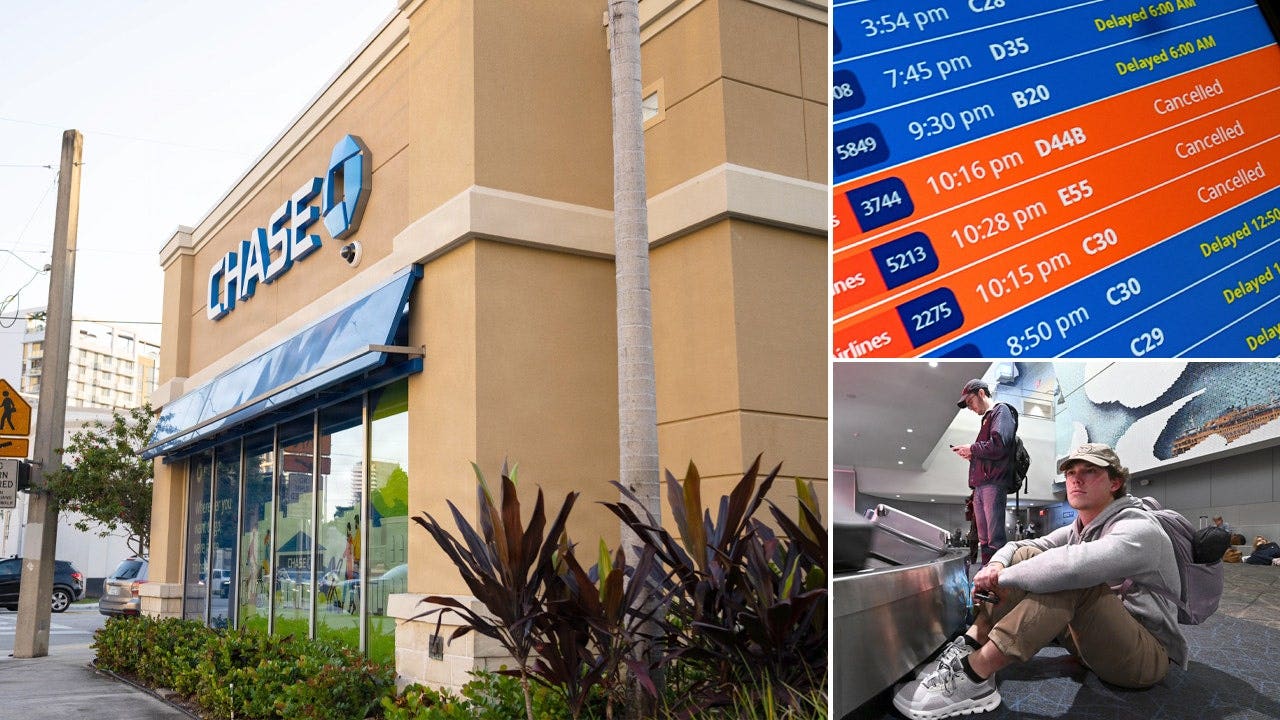
While every airborne aircraft was safely guided to its destination and no cyberattack was detected, the fallout for the aviation sector was immense. Major airlines and regional operators canceled approximately 12,462 flights on Friday alone—including 9,082 scheduled by major carriers—though officials noted that cascading scheduling issues contributed to the final tally. The ground stop also disrupted college football schedules, professional sports travel for NBA and NHL teams, and holiday travel plans for tens of thousands of passengers.
November 13: Workday HR and Payroll Platform Lockout
Coinciding with the aviation chaos on Friday, November 13, human resources and enterprise software provider Workday suffered a major system outage that locked employees out of essential administrative platforms. Workday serves as the foundational backbone for payroll, benefits administration, and human resources management across roughly 11,500 major organizations, including retail giants like Walmart and Target, corporate entities such as Netflix and Southwest Airlines, financial institutions like PNC Bank, and critical government bodies, including NASA’s Jet Propulsion Laboratory.

Downdetector, an online outage-monitoring platform, recorded a sharp spike of nearly 3,000 user complaints shortly after 5 p.m. Eastern Time on Friday. Affected workers were greeted by error messages stating that the service was temporarily unavailable. Workday issued a swift apology, confirming a severe service interruption and deploying engineering teams to restore platform functionality over the weekend.
November 16: Major U.S. Financial Institutions Face Online Banking Glitches
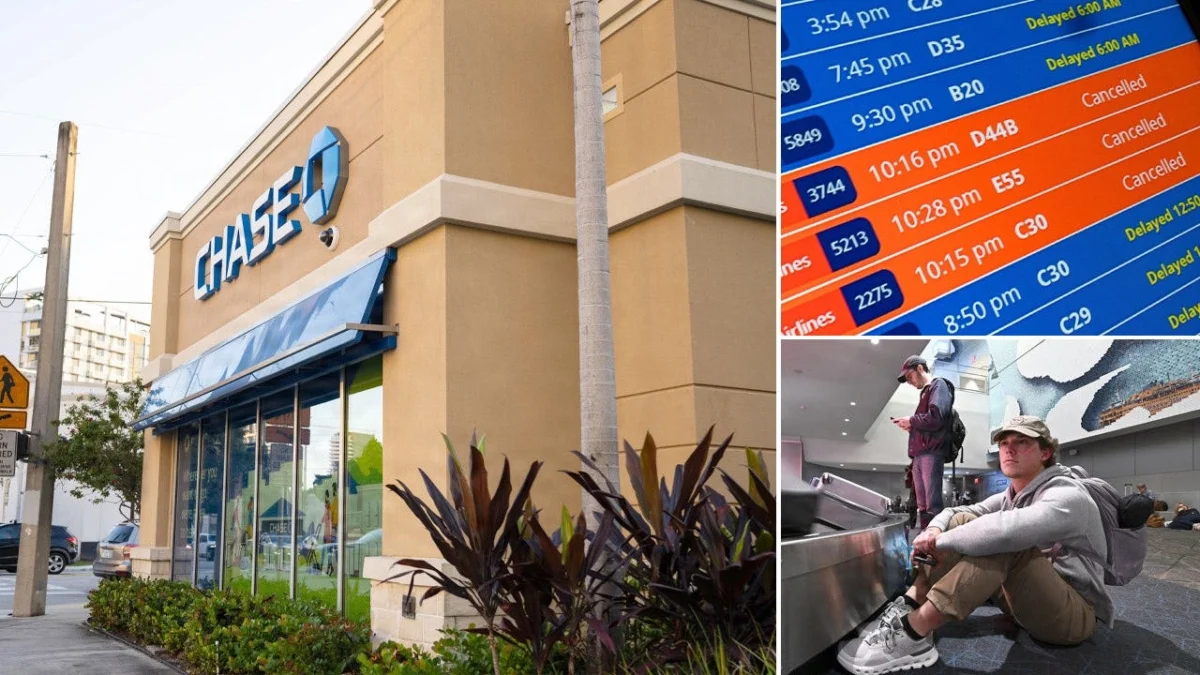
The five-day wave of technological failures concluded on Monday, November 16, when customers attempting to access online and mobile banking services at several major financial institutions—including Chase, Bank of America, and Wells Fargo—encountered severe difficulties. Users reported delayed transaction processing, zero balances, and intermittent access errors on their mobile apps and desktop portals.
Chase representatives addressed the public quickly, assuring account holders that funds remained secure despite the technical glitch slowing down certain transaction verifications. "Due to a technical issue, some transactions are taking longer than usual to complete, but customers still have access to their accounts and funds. We are working to resolve this as quickly as possible," a Chase spokesperson told the press. A source close to the bank reiterated that the disruption was rooted in internal software bugs rather than malicious hacking. Similarly, Wells Fargo placed informational banners on its digital platforms on Monday afternoon, asking customers to try again later as engineers worked to mend the system errors.
Meanwhile, third-party payment platforms like Zelle confirmed that their core infrastructure was fully operational, though warning users that upstream delays at participating banks and credit unions might temporarily hold up peer-to-peer transfers.
Official Responses and Accountability
The rapid succession of infrastructure failures prompted swift reactions from government officials, corporate executives, and industry watchdogs.

During his address at the Department of Transportation headquarters, Transportation Secretary Sean Duffy expressed frustration regarding the FAA’s reliance on third-party contractors during critical infrastructure upgrades. Directing criticism at L3Harris Technologies, Duffy remarked, "Our contractor didn’t meet the moment, or the equipment didn’t meet the moment," emphasizing that federal investigators were actively examining whether router failures or human error during the copper-to-fiber transition caused the catastrophic overload.
Political figures from across the aisle scrutinized the broader state of public infrastructure. The incident also reignited debates on Capitol Hill regarding public-private partnerships, contractor oversight, and the urgent need to modernize federal air traffic control architecture.
In the private sector, executive leadership at Microsoft, Workday, and the affected financial institutions moved rapidly to reassure stakeholders. Transparency reports and public briefings stressed that root-cause analyses were underway to prevent repeat incidents. Cybersecurity agencies, including the Cybersecurity and Infrastructure Security Agency (CISA), monitored the events closely, repeatedly confirming that none of the incidents were tied to foreign cyber interference or ransomware campaigns.
Broader Impact and Industry Implications
The five-day technology crisis has underscored critical vulnerabilities in the architecture of modern digital systems. As businesses, government agencies, and financial institutions accelerate their transition to cloud-based operations and integrated software ecosystems, the concentration of critical services among a handful of key providers—such as Microsoft and Workday—creates systemic single points of failure.
When a single software defect or server capacity bottleneck can disrupt hundreds of millions of corporate communications, ground an entire national aviation network, and freeze consumer banking access within a matter of hours, the economic and societal costs become staggering. Beyond immediate losses in productivity, flight cancellations, and delayed commerce, these recurring failures erode public trust in the digital infrastructure upon which everyday life depends.

Industry analysts suggest that the events of mid-November will prompt a fundamental reassessment of IT resilience strategies. Organizations are expected to increase investments in redundancy, diversify their software vendor ecosystems, and implement rigorous stress-testing protocols for infrastructure updates. As policymakers weigh tighter regulatory frameworks for software providers and federal contractors, the imperative for robust, fail-safe digital architecture has never been clearer.

