
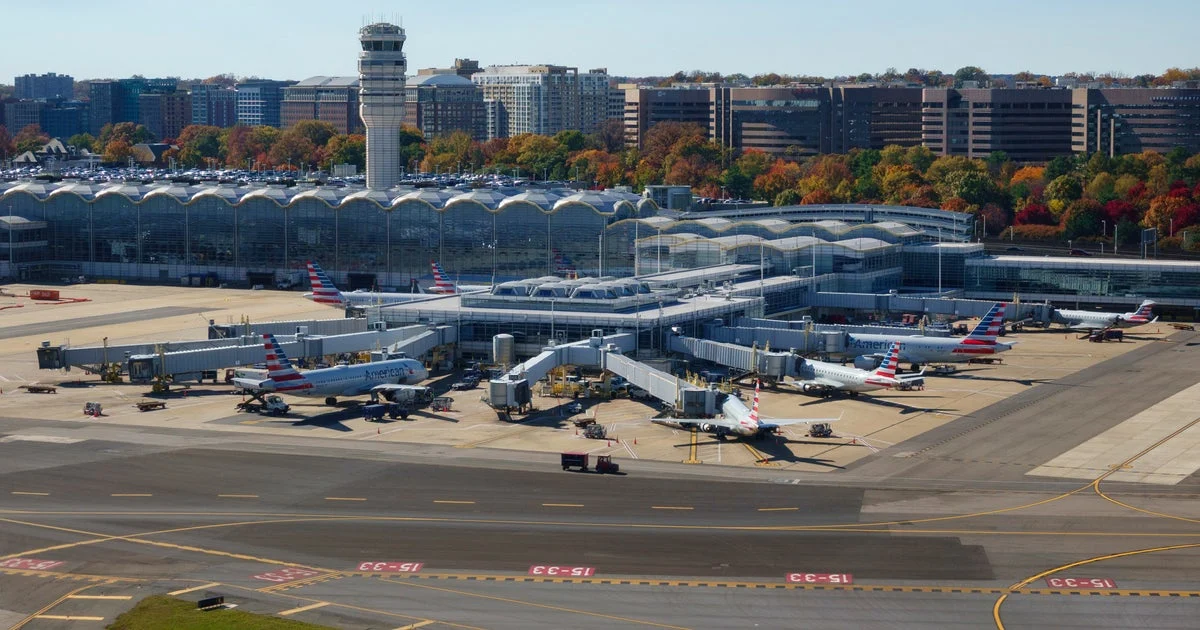
As of late Friday, the Federal Aviation Administration (FAA) confirmed that a widespread communication issue had impacted all Air Route Traffic Control Centers. This technical failure essentially severed the reliable link between controllers and pilots, forcing the agency to take the extreme measure of grounding the entirety of the U.S. domestic aviation fleet to prevent potential mid-air incidents.
Chronology of the Operational Shutdown
The crisis began with isolated reports of equipment malfunctions at major aviation hubs in the Midwest. Shortly before the nationwide directive was issued, both O’Hare International and Midway International airports in Chicago reported localized ground stops stemming from an equipment outage. However, what initially appeared to be a regional technical glitch rapidly escalated into a systemic failure, necessitating an order from the Federal Aviation Command Center to cease all departing traffic across the country.
By mid-afternoon, the National Airspace System Status website reflected a sea of red, indicating delays and ground stops at virtually every major metropolitan airport, including Hartsfield-Jackson in Atlanta, Logan in Boston, Los Angeles International (LAX), and New York’s primary terminals. According to data provided by the flight tracking platform FlightRadar24, approximately 3,100 aircraft were actively airborne and bound for U.S. destinations when the mandate was issued.
Government Response and Security Assessment
Transportation Secretary Sean Duffy took to social media to confirm the scope of the incident, stating that FAA technicians were working urgently to isolate the root cause. While the sudden halt of the national airspace triggered immediate concerns regarding the security of the United States, officials were quick to dampen speculation of foul play.
Homeland Security Secretary Markwayne Mullin held a briefing outside the White House to address the public’s apprehension. "There is no indication, we had no reason to believe, that as of right now, that this was a threat to the United States," Secretary Mullin stated. "This was a telecommunication outage throughout the FAA. Out of an abundance of caution, we have grounded all the flights."
Mullin emphasized that the priority remained the safe landing of the thousands of planes already in the air. He noted that federal agencies were operating in lockstep to manage the remaining airborne traffic on a case-by-case basis, ensuring that pilots maintained enough connectivity to reach their destinations without compromising safety protocols.
Technical Insights and Operational Challenges
Two law enforcement sources familiar with the investigation told CBS News that the outage appears to be rooted in the complex radio frequency architecture that facilitates communication between pilots and air traffic controllers. When this infrastructure becomes unstable, the ability of controllers to provide updated vectoring, altitude changes, and landing clearances is severely compromised.
Robert Sumwalt, a former chair of the National Transportation Safety Board (NTSB) and an expert in transportation safety, described the event as fundamentally unprecedented. Drawing on his 24-year tenure as an airline pilot, Sumwalt compared the magnitude of the disruption to the immediate aftermath of the September 11 attacks, noting that while the industry has faced localized outages in the past, a total, simultaneous, nationwide halt is a rare and alarming development.
"This is absolutely unbelievable that this could happen in this day and age," Sumwalt said. "We have redundant systems, we have fail-safes, and yet we are seeing a total collapse of the communication backbone of our national airspace."
Economic and Logistical Fallout
The impact of the ground stop was immediate and widespread. By the evening hours, flight tracking services such as FlightAware reported that the tally of affected flights had climbed to over 10,000 delays and more than 2,000 cancellations. The ripple effect of such a disruption is expected to last for several days, as airlines struggle to reposition aircraft and crews that have been displaced from their original schedules.
Major airlines, including American, United, Delta, and Southwest, were forced to issue waivers for passengers, acknowledging that the logjam of grounded planes would create significant downstream congestion. For travelers, the situation meant extended waits in terminals and uncertainty regarding rescheduled departures, as the FAA prioritizes safety checks before restoring full capacity to the national airspace.
Historical Context: A System Under Stress
The aviation industry is no stranger to technical hurdles, but today’s incident invites inevitable comparisons to the January 2023 outage. During that event, a failure in the Notice to Air Missions (NOTAM) system—which provides pilots with essential, real-time safety information—led to a nationwide ground stop that lasted several hours. While that incident was confined to a specific software failure, today’s crisis appears to be more deeply embedded in the telecommunication infrastructure, potentially complicating the recovery process.
Experts argue that these incidents underscore a growing vulnerability in the nation’s aging aviation infrastructure. As the FAA continues to modernize its systems, the reliance on interconnected digital networks has introduced new points of failure that were not present in the analog era of aviation.
Implications for Future Oversight
The implications of this incident are likely to be far-reaching, with intense scrutiny expected from congressional committees in the coming weeks. Lawmakers are already signaling their intent to demand a full accounting of why a telecommunication outage could cascade into a total shutdown of the U.S. skies.
The investigation will likely focus on three primary areas:
- Redundancy Protocols: Why the backup communication systems failed to maintain operational stability during the primary outage.
- Infrastructure Resilience: An assessment of the current state of FAA hardware and whether the aging telecommunications framework is capable of supporting the high volume of modern air traffic.
- Emergency Response Efficiency: An analysis of the decision-making process that led to the ground stop and whether the communication flow between the FAA and the airlines was optimized to handle the mass grounding.
As of the latest update, the FAA continues to manage the phased restoration of services. The agency has reiterated that safety remains the absolute prerequisite for any return to normal operations. For the millions of passengers whose travel plans were upended on Friday, the immediate focus remains on when the system will be deemed stable enough to safely resume full flight operations.
Federal authorities have pledged to provide continuous updates through the FAA’s National Airspace System Status website. Until the technical investigation is concluded and the communication links are fully verified, the national airspace will continue to operate under restricted conditions, prioritizing the safety of those already in the air and the integrity of the critical infrastructure that keeps the nation’s skies secure.

