
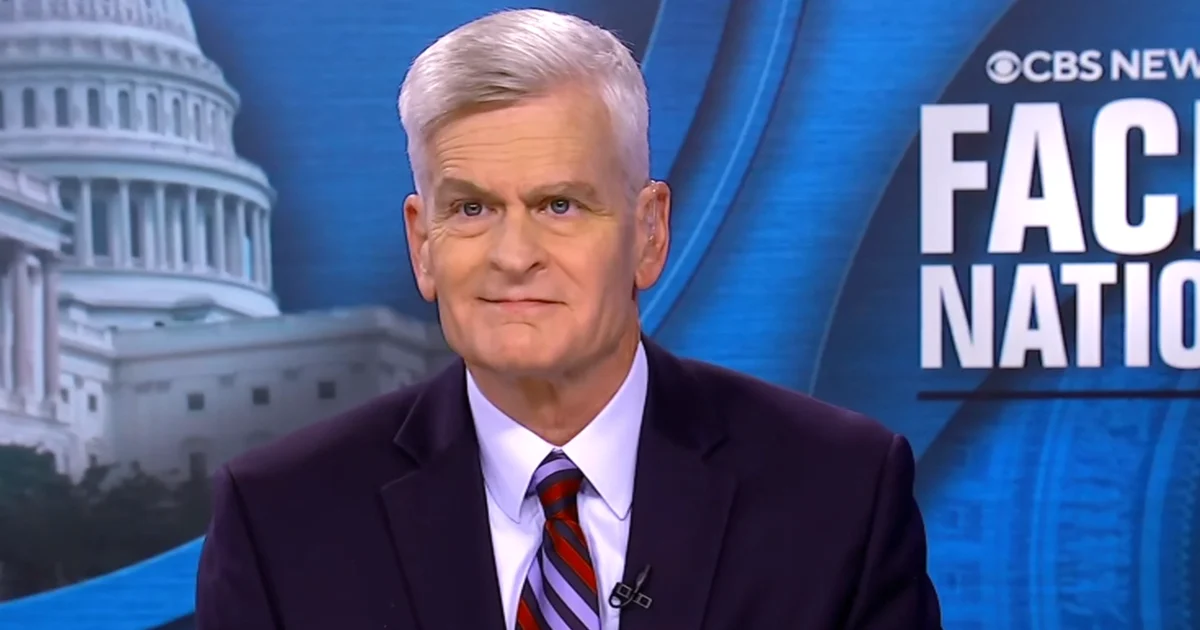
The tenure of Robert F. Kennedy Jr. as the Secretary of Health and Human Services (HHS) has reached a precarious inflection point, marked by an increasingly public and vitriolic dispute with senior Republican leadership. On Sunday, outgoing Senator Bill Cassidy of Louisiana, a physician and the ranking member of the Senate Committee on Health, Education, Labor and Pensions, leveled a blistering critique against the Secretary, characterizing his leadership as a "series of failures" that has jeopardized American public health outcomes.
Cassidy’s remarks, delivered during an appearance on "Face the Nation," underscore a growing rift within the conservative movement regarding the efficacy of the "Make America Healthy Again" (MAHA) agenda. The Senator, who is concluding his tenure in the upper chamber following an unsuccessful reelection bid, pointed to three specific metrics of failure: rising healthcare costs, the loss of the nation’s measles elimination status, and the lack of substantive regulatory progress on the prevalence of ultra-processed foods.
A Chronology of Declining Confidence
The relationship between Senator Cassidy and Secretary Kennedy began under the premise of cautious cooperation. During the confirmation process last year, Kennedy’s path to leading the massive federal health bureaucracy was far from certain. His appointment was secured only after he offered what Cassidy described at the time as "serious commitments" regarding policy transparency and a collaborative approach to public health.
However, the "collaborative working relationship" anticipated by the Senate committee has largely failed to materialize. Throughout the past year, tensions simmered behind closed doors, periodically boiling over into public view. The discord peaked following the November 9th remarks by Kennedy, in which he asserted that the Senate no longer held leverage over his department’s operations. Kennedy cited the incoming political landscape—specifically the shift in Senate control and the appointment of Stephen Miller as President Trump’s chief of staff—as evidence that his agenda would no longer be hindered by legislative oversight.
"The Senate no longer has any leverage over me. And that’s a big deal," Kennedy stated during a recent address. "I don’t think anything is going to get in our way now."
Cassidy interpreted these comments not as a policy victory, but as a defensive maneuver. "He is obviously trying to provide cover for failure," the Senator remarked, noting that the Secretary’s shift in rhetoric aligns with the lack of tangible results on his core campaign-style promises.
Public Health Data and the Loss of Elimination Status
At the heart of the criticism is the recent public health setback regarding measles. The United States, which had maintained measles elimination status—defined as the absence of continuous disease transmission for 12 months—for over two decades, has recently seen that status rescinded.
Medical experts have long warned that declining vaccination rates in specific regions create pockets of vulnerability. Cassidy highlighted the severity of this shift, emphasizing that the implications extend beyond statistics. "You could be the person that brings death to another," Cassidy said, stressing the danger posed to immunocompromised individuals, pregnant women, and infants too young to receive the standard immunization series.
The Senator’s argument focuses on the fundamental responsibility of the HHS Secretary to manage these public health pillars. By failing to "pound" the message of vaccine safety and necessity, Cassidy argues that the administration has allowed a preventable crisis to take root. This development has become a central point of contention, with critics arguing that the Secretary’s skepticism toward traditional public health institutions has directly contributed to the erosion of long-standing health protections.
The Stalled Agenda on Processed Foods
Beyond communicable diseases, a major component of the MAHA movement was the promise to address the role of ultra-processed foods in the American diet. This platform was a primary motivator for the "MAHA moms"—a constituency of parents who were instrumental in pushing for Kennedy’s appointment.
Senator Cassidy noted that many of these individuals had reached out to his office during the confirmation debate, urging him to support Kennedy based on the expectation of meaningful reform. The current consensus among those critics is that progress has been "minimal." Despite the high-profile nature of the initiative, the legislative and regulatory framework to curb the consumption of additives and ultra-processed items has yet to see significant movement. The lack of progress on this front has left a void, with supporters feeling that the political capital expended to confirm Kennedy has not yielded the promised nutritional health outcomes.
Legislative Hurdles: The FDA Confirmation
The internal friction is currently being tested by the pending nomination of Dr. Heidi Overton for the position of FDA Commissioner. As the head of the Senate Committee on Health, Education, Labor and Pensions, Cassidy holds the keys to the committee’s agenda.
The confirmation process for Dr. Overton has been characterized by intense deliberation. Cassidy confirmed that he has been "working the phones" to gauge the viability of the nomination, speaking with both the nominee and his fellow committee members. When asked if the nomination would successfully advance out of committee, the Senator remained non-committal. "I still have questions, and so I cannot tell you the outcome of that vote right now," he stated.
This uncertainty reflects the broader difficulty the current administration is facing in maintaining internal party discipline. With the GOP set to transition to a new majority status in the coming year, the leverage dynamics that Kennedy boasted about are being viewed by some Republicans as a liability rather than an asset.
Implications for the Executive Legacy
Cassidy’s warnings reach beyond the immediate policy failures, touching upon the long-term historical assessment of the President’s administration. The Senator argued that the persistent rise in healthcare costs and the deterioration of core public health metrics will ultimately "taint the president’s legacy."
The political stakes are high. As the nation pivots toward the next cycle, the appetite for the status quo in healthcare is reportedly low, based on midterm voter feedback. Cassidy’s critique serves as an invitation for the President to pivot, suggesting that if the administration wants to achieve something "positive," a change in leadership or direction at HHS may be necessary.
Regarding the discussion of impeachment—a topic that has surfaced in various political circles—Cassidy offered a measured, if cynical, perspective. "You can impeach, I guess, over a ham sandwich, so they’ll have to decide what to do on that," he said, effectively dismissing the procedural noise to focus the debate back on the President’s decision-making.
Analysis: A Shift in Political Strategy
The confrontation highlights a broader shift in the Republican approach to the Department of Health and Human Services. For years, the GOP platform centered on deregulation and the reduction of federal oversight. However, the current tension suggests that even within the party, there is a divergence on how to balance anti-establishment sentiment with the government’s duty to maintain foundational public health security.
The "series of failures" cited by Cassidy suggests that the strategy of appointing an outsider to reform the "deep state" health bureaucracy has resulted in a loss of the very systems that define modern healthcare safety. As the Senate prepares for a new session, the focus on HHS will likely intensify. The question remains whether the administration will attempt to recalibrate its approach to appease moderate voices like Cassidy’s or continue to lean into the populist, anti-institutional rhetoric that defined its initial ascent.
Ultimately, the clash between Cassidy and Kennedy is emblematic of a larger struggle for the soul of conservative healthcare policy. Whether the administration can survive these internal fractures while managing complex public health crises like the resurgence of measles will determine the success or failure of its broader health agenda. For now, the administration faces a period of cooling support, with key legislative allies signaling that the period of unfettered patience is at an end.

