
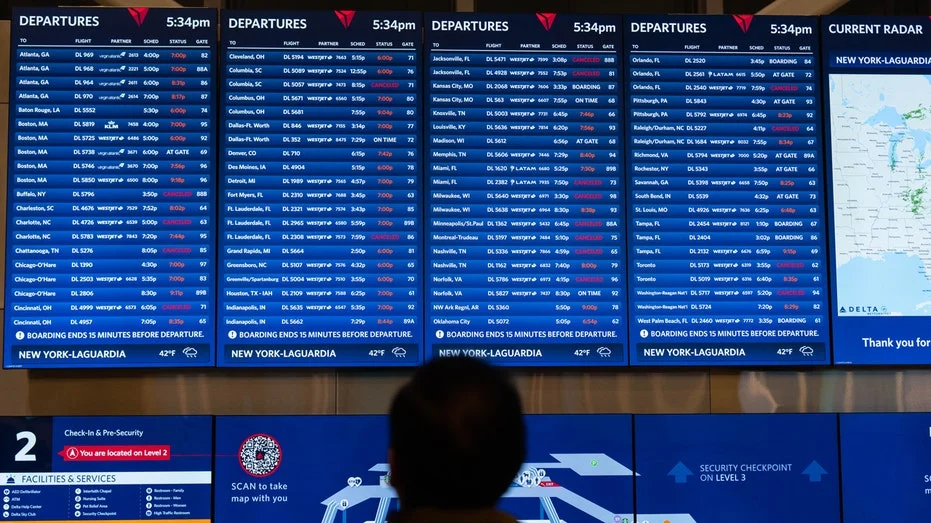
The American aviation industry faced a historic disruption this past weekend as a critical communications failure forced the Federal Aviation Administration (FAA) to issue a rare, nationwide ground stop for all departing flights. The shutdown, which began on Friday, November 13, 2026, lasted more than four hours and created a cascade of logistical challenges that left thousands of passengers stranded, disrupted professional sports schedules, and forced a frantic federal effort to secure the nation’s airspace.
The incident marks the most significant interruption to domestic air travel in a quarter-century, raising urgent questions regarding the resilience of aging infrastructure within the U.S. National Airspace System. As officials work to identify the precise technical culprit, the event has reignited a fierce debate in Washington over the necessity of increased funding for air traffic control modernization.
The Chronology of the Shutdown
The crisis began at approximately 3:36 p.m. ET on Friday when FAA officials detected alarming signs of instability within radar data and primary communication channels. These systems are the lifeblood of aviation safety, responsible for guiding aircraft as they approach busy airports and traverse the complex network of routes between control centers.
By 3:54 p.m. ET, the situation had deteriorated to a point where safety could no longer be guaranteed. The FAA took the unprecedented step of halting all domestic departures, grounding thousands of flights already on the tarmac and preventing others from pushing back. At the time of the order, an estimated 3,500 aircraft were already airborne; pilots and controllers were forced to execute emergency protocols to ensure these planes could land safely despite the degradation of real-time guidance tools.

Transportation Secretary Sean Duffy later clarified that the agency had not experienced a total loss of radar or telecommunications. Instead, the data being fed to controllers had become unreliable and inconsistent. In the high-stakes environment of air traffic management, "inconsistent" data is equivalent to no data at all, leaving officials with no choice but to initiate the nationwide freeze.
The ground stop remained in effect until 8:15 p.m. ET, when the FAA finally authorized a resumption of departures. However, the transition to normalcy was far from instantaneous. The "start-stop" nature of airline logistics meant that even after the order was lifted, crews had exceeded their legal flight-time limits, and aircraft were physically misplaced, leading to a ripple effect of cancellations that extended well into the following Monday.
Root Cause Analysis: The Router Crisis

As the weekend progressed, investigators narrowed their focus to a series of technical failures tied to a routine infrastructure project. Secretary Duffy revealed that a contractor, L3Harris, had been in the process of replacing antiquated copper telecommunications lines with modern fiber-optic connections at a remote FAA facility.
During the installation process, a specific router began malfunctioning, triggering a "broadcast storm"—an event where the device generated more than 1,000 connection attempts every few seconds. This surge overwhelmed adjacent network infrastructure, effectively clogging the digital arteries of the air traffic control system.
Engineers are currently conducting forensic analysis on routers recovered from El Dorado, Arkansas, and Amarillo, Texas. Preliminary findings suggest that a piece of hardware installed just three weeks prior in Amarillo may have been the catalyst for the failure. While federal agencies were quick to rule out a malicious cyberattack or foreign interference, the technical nature of the collapse has prompted a broader review of how such mission-critical maintenance is performed. Secretary Duffy acknowledged the severity of the failure, stating, "Our contractor didn’t meet the moment or the equipment didn’t meet the moment."

Federal Response and Security Implications
The speed of the FAA’s decision to ground the fleet was met with a swift, high-level response from the White House. President Donald Trump convened an emergency call with leaders from the FBI, the Cybersecurity and Infrastructure Security Agency (CISA), and various intelligence community partners.
While the initial fear was that the disruption might be the result of a coordinated cyber-offensive, intelligence officials confirmed there were no indicators of hostile activity. Steven Cheung, the White House Director of Communications, touted the administration’s rapid coordination as a "Herculean effort" that prevented the situation from escalating into a prolonged national crisis.

Homeland Security Secretary Markwayne Mullin issued a public appeal for calm on Friday evening, emphasizing that the public had no reason to fear for the safety of loved ones in the air. Despite the lack of a "nefarious actor," the incident highlighted the vulnerability of the current system, which relies on a patchwork of legacy hardware that is increasingly difficult to integrate with modern software solutions.
Broader Impact: Stranded Teams and Economic Fallout
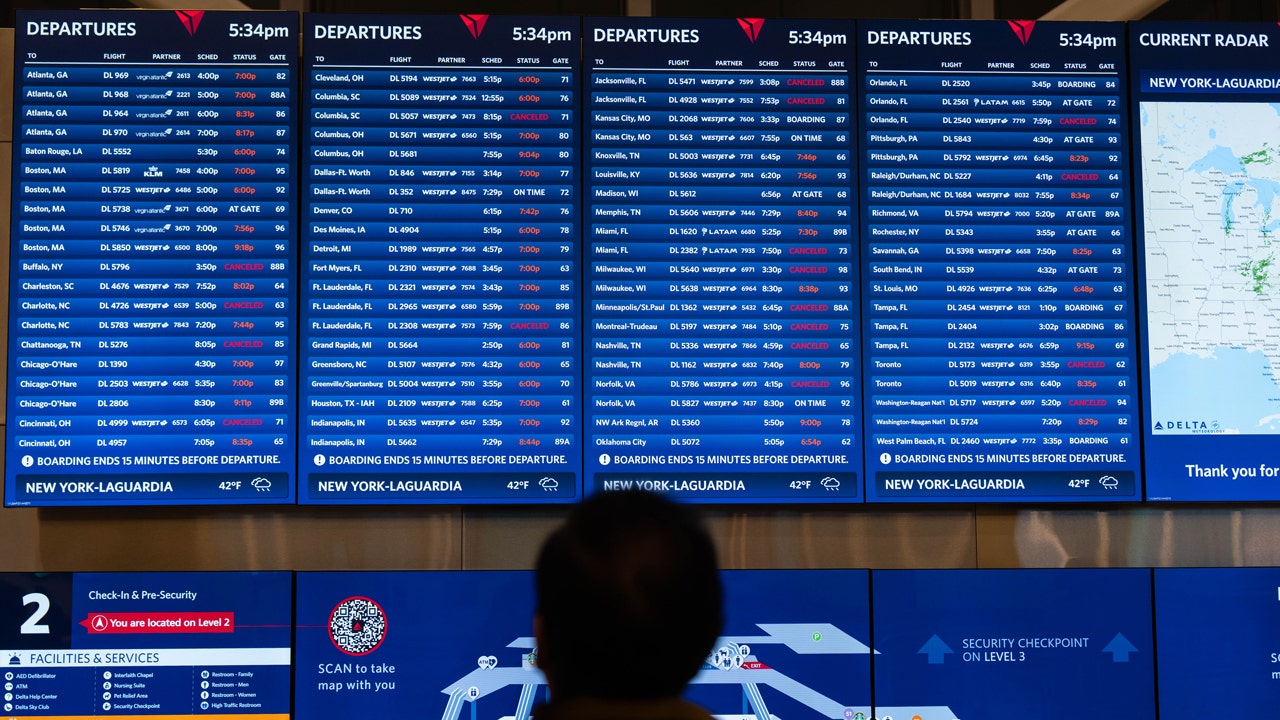
The human toll of the grounding was reflected in the chaos at major hubs like Chicago O’Hare, LaGuardia, and Dallas-Fort Worth. By Sunday afternoon, flight tracking service FlightAware reported that 5,280 flights had been delayed and over 1,700 had been canceled.

The impact was felt particularly hard by the sports world, which was in the midst of a critical weekend. Multiple college football programs, including Texas, Tennessee, and Ole Miss, were left stranded on runways or forced to return to team facilities. The logistical nightmare forced the Big 12 and SEC to scramble, with some games being rescheduled for as late as Sunday. In one instance, the Oklahoma-Ole Miss matchup was moved to Sunday at 1 p.m. ET, with Oklahoma officials noting they were effectively forced into the scheduling change under the threat of a forfeit.
Professional teams, including the Brooklyn Nets, Memphis Grizzlies, and San Jose Sharks, were similarly impacted. For these organizations, the ground stop was not just a travel inconvenience but a disruption to competitive integrity, highlighting the fragility of modern sports schedules in the face of infrastructure failure.
A Call to Action for Modernization

The weekend’s events have galvanized industry leaders to demand a long-term solution. United Airlines CEO Scott Kirby, speaking on behalf of the aviation sector, called the outage a "call to action." Kirby, who maintained direct contact with the Transportation Department throughout the crisis, argued that the industry can no longer afford to "patch" a system that is fundamentally outdated.
While Congress has previously allocated $12.5 billion for specific FAA upgrades—including new radar systems and electronic flight strips—Secretary Duffy noted that these funds were not designated for the overarching telecommunications backbone that failed. The realization that the nation’s primary aviation network is susceptible to a simple router malfunction has shifted the political narrative in Washington.
Lawmakers from both sides of the aisle are now under pressure to revisit the federal budget for aviation infrastructure. Experts warn that unless there is a concerted effort to overhaul the legacy systems that still underpin much of the FAA’s operation, the risk of a similar, perhaps even longer, outage remains a persistent threat.

As the recovery phase concludes, the focus will turn to the congressional oversight hearings expected in the coming weeks. The FAA must answer for its oversight of contractors and its failure to anticipate the cascading effects of a single point of failure within its network. For now, the flying public is left to deal with the aftermath, as airlines attempt to restore confidence in a system that proved—if only for a few hours—how quickly the modern world can be brought to a standstill.

