
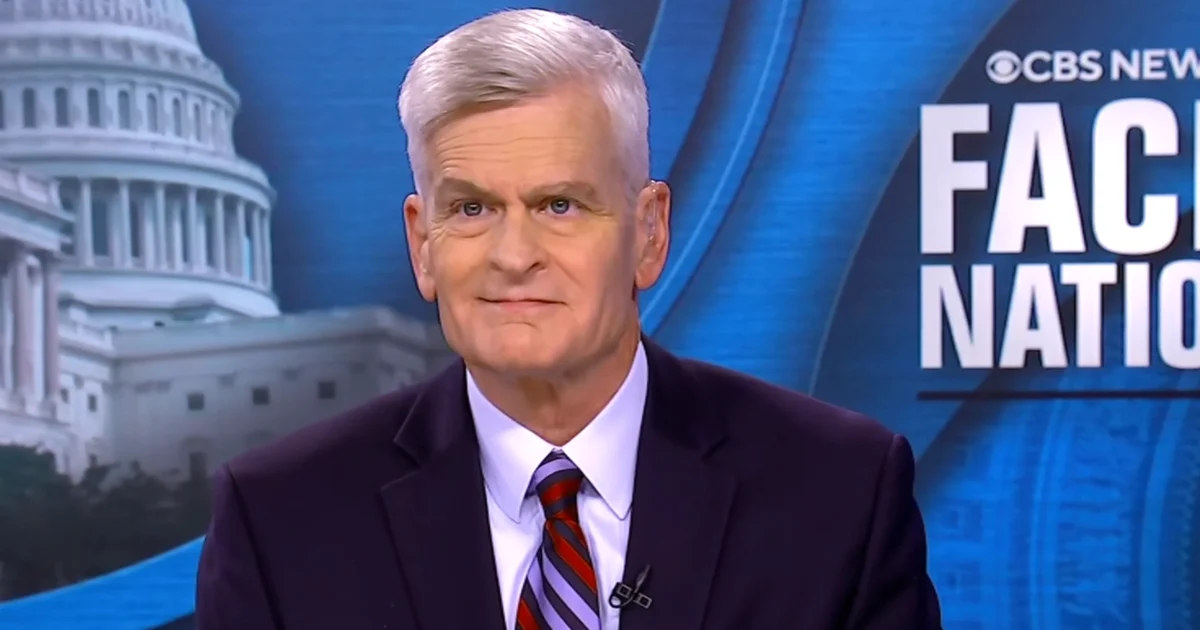
Republican Senator Bill Cassidy of Louisiana appeared on CBS News’ Face with Margaret Brennan on November 15, 2026, delivering sharp criticisms regarding the current trajectory of public health and federal leadership under Health and Human Services (HHS) Secretary Robert F. Kennedy Jr. Speaking in his capacity as a senior lawmaker and physician, Cassidy addressed a confluence of pressing legislative and public health crises, highlighted by the official loss of the United States’ measles-elimination status, mounting healthcare expenses, and the looming confirmation battle over the Food and Drug Administration (FDA) commissioner nominee.
The wide-ranging interview underscored mounting tensions within the legislative branch as lawmakers navigate a compressed congressional calendar, looming fiscal deadlines, and profound structural vulnerabilities within the nation’s social safety net programs, including Social Security and Medicare.
Public Health Crisis: Measles Resurgence and Vaccine Oversight
The conversation opened with a stark public health revelation: KFF and federal health monitors officially confirmed that the United States has lost its coveted status as a country where measles is eliminated. This regression carries severe consequences, particularly for infants under the age of one who are too young to receive the standard measles, mumps, and rubella (MMR) vaccine, as well as for immunocompromised populations, including pregnant women and cancer patients undergoing chemotherapy.
Cassidy, a practicing physician before entering politics, emphasized the collective societal responsibility tied to vaccination. He noted that unvaccinated individuals pose a direct threat to vulnerable populations incapable of defending themselves against preventable infectious diseases.
When questioned about the adequacy of public health communication from federal authorities, Cassidy expressed frustration with the visibility and messaging coming from the executive branch. He asserted that a proactive administration should utilize every available platform to underscore the dangers of vaccine hesitancy and community transmission. Although Cassidy maintained that he remains in regular communication with Centers for Disease Control and Prevention (CDC) leadership—noting recent administrative efforts to repair broken public-facing online locators for flu shots—he conceded that institutional infrastructure requires substantial repair.
Fallout With HHS Secretary Robert F. Kennedy Jr.
The interview intensified as Brennan pressed Cassidy on the strained relationship between Capitol Hill and HHS Secretary Robert F. Kennedy Jr. Earlier in the week, Secretary Kennedy publicly downplayed the legislative leverage of the Senate, suggesting that shifting congressional majorities and broader political realignment had rendered him immune to traditional congressional oversight.
Cassidy did not mince words in his response, characterizing Kennedy’s remarks as a transparent attempt to deflect accountability for a series of policy failures. The Louisiana Republican pointed out that the core constituency supporting Kennedy’s appointment—often referred to as "MAHA moms" (Make America Healthy Again)—had anticipated tangible regulatory action targeting ultra-processed foods. According to Cassidy, progress on that front has been virtually non-existent, compounding the frustration felt by supporters who expected aggressive nutritional reforms.
Furthermore, Cassidy tied Kennedy’s tenure directly to the resurgence of preventable diseases like measles and the broader economic distress facing American families. Pointing to skyrocketing healthcare premiums, small businesses dropping employee coverage, and unmanageable patient deductibles, Cassidy stated unequivocally that if he held the presidency, he would seek alternative leadership at HHS to restore administrative competence and public accountability.
Despite mounting calls from congressional Democrats and select incoming lawmakers for Kennedy’s resignation or formal impeachment proceedings, Cassidy maintained that the ultimate responsibility rests with the executive branch. He warned that persistent failures in healthcare affordability and disease containment threaten to leave an indelible, negative imprint on the administration’s historical legacy.
The FDA Nomination Battle and Administrative Stability
As the Senate races against the clock during a truncated legislative session, the upper chamber faces a contentious confirmation vote for Dr. Heidi Overton, the president’s nominee to lead the FDA. The nomination has exposed deep ideological fractures within the Republican caucus.
Senators such as Susan Collins of Maine and Lisa Murkowski of Alaska have voiced serious reservations regarding the agency’s historical approach to flavored e-cigarettes, nicotine regulation, and the preservation of scientific independence in approving critical pharmaceuticals, including mifepristone. Furthermore, Dr. Overton’s previous policy contributions during earlier childhood vaccination policy reviews have drawn intense scrutiny.
Cassidy acknowledged the complex calculus facing the Committee on Health, Education, Labor, and Pensions. While acknowledging that Dr. Overton may not represent an idealized consensus candidate for every stakeholder, Cassidy highlighted the counter-balancing risk of leaving the regulatory agency under a revolving door of short-term acting directors who remain acutely susceptible to direct political interference from the HHS secretary. As bipartisan consultations continue behind closed doors, Cassidy indicated that the final vote would hinge on a delicate balance between institutional stability and regulatory oversight.
Legislative Gridlock and the Looming Social Security Deficit
Beyond healthcare administration, lawmakers face a formidable legislative backlog with only twenty working days remaining before the conclusion of the congressional term. Alongside critical must-pass measures, including federal appropriations and national defense funding that carry the ongoing threat of a government shutdown, Cassidy expressed profound frustration over the gridlock surrounding structural entitlement reform.
Cassidy highlighted long-term solvency projections indicating that both Social Security and Medicare face systemic insolvency within the decade. Although he secured personal commitments from Senate leadership and the executive branch to advance comprehensive bipartisan legislative frameworks, partisan resistance has effectively stalled meaningful action.
The senator singled out Senate Finance Committee Ranking Member Ron Wyden for refusing to engage constructively on structural reform proposals. Cassidy’s proposed legislative model involves establishing an independent investment fund separate from the traditional Social Security trust fund, allowing allocated capital to grow within broader equity markets over decades to offset future deficits. Critics, however, have raised concerns regarding the integration of public funds into the stock market.
Cassidy countered these objections by noting historical precedents, pointing out that similar bipartisan investment structures were previously enacted for the federal railroad retirement system under the George W. Bush administration and have since yielded overwhelmingly positive financial results. Expressing deep dismay over the political reluctance to tackle complex fiscal challenges, Cassidy warned that continued inaction amounts to a profound dereliction of governance, leaving future generations to bear the cost of deferred responsibility.
As the Senate prepares for high-stakes confirmation votes and fiscal negotiations ahead of the winter recess, the broader implications of Cassidy’s warnings signal an increasingly turbulent landscape for American public health, federal oversight, and long-term fiscal policy.

