

The internal power structure of the House Republican Conference is undergoing a period of profound transition following the recent midterm election results, which saw the party lose its majority to the Democratic caucus. Amidst this shift, House Majority Leader Steve Scalise (R-La.), the most tenured and arguably most recognizable figure in the current GOP leadership, has declined to confirm whether he will serve his full upcoming term in the 120th Congress. The uncertainty regarding his future on Capitol Hill follows a decisive internal vote in which Representative Jim Jordan (R-Ohio) was elected to serve as the new House Minority Leader.
The leadership transition represents a pivotal moment for a party currently grappling with the aftermath of a "blue wave" that stripped them of the legislative control they held for the 119th Congress. For Scalise, who has served as a central pillar of the Republican legislative apparatus since 2014, the decision to remain as a rank-and-file member or pursue a path toward retirement is one that holds significant weight for the party’s institutional memory and future strategic direction.
A Career Defined by Legislative Resilience
Steve Scalise’s political trajectory has been marked by both rapid advancement and extraordinary personal adversity. First elected to represent Louisiana’s 1st Congressional District in 2008, Scalise quickly ascended the ranks due to his ability to bridge the gap between the establishment wing of the party and its increasingly influential conservative flank. By 2014, he had secured the position of House Majority Whip, serving under then-Speaker John Boehner.
His tenure in leadership was defined by a steady hand during periods of internal party volatility. He remained a constant in the whip’s office through the speakerships of Boehner and Paul Ryan, even as the ideological gravity of the Republican Party shifted toward the populist influence of Donald Trump.

Perhaps the most defining moment of his career occurred in 2017, when he was shot during a morning practice for the annual Congressional Baseball Game. The assassination attempt, which left him with life-threatening injuries and necessitated multiple surgeries, resulted in a long, arduous recovery. Rather than retreating from public life, the incident significantly elevated his national profile, turning him into a symbol of resilience for the conservative movement. Supporters and political allies often point to his survival as a testament to his character, a sentiment frequently echoed by former President Trump during the period of his recovery.
The Dynamics of the Recent Leadership Vote
The decision by the House Republican Conference to select Jim Jordan as Minority Leader—defeating Scalise by a margin of 106 to 73—signals a clear desire within the rank-and-file to move in a more combative, populist direction as they transition into the minority. Jordan, a founding member of the House Freedom Caucus, has long been a vocal advocate for aggressive oversight and ideological purity within the party.
The vote, conducted behind closed doors on Tuesday, serves as a referendum on the leadership style that characterized the previous two years. While Scalise maintained the confidence of many traditionalist members, the loss suggests a broader frustration with the legislative outcomes of the current majority. For Scalise, the loss was definitive, prompting immediate questions about his willingness to accept a diminished role.
When asked on Wednesday if he would commit to staying for the entirety of the 120th Congress, Scalise remained non-committal. "There’s no decision on what’s next," he stated. "I’ve got to get through these next few weeks, and then we have a lot of decisions to make about what’s life going to look like in the minority. But I sure still have a great passion for this country."
Legislative Priorities and the Lame Duck Session
Despite the uncertainty regarding his future, Scalise has emphasized that his primary focus remains the "lame duck" period. With a little under seven weeks remaining before the new Congress is sworn in on January 3, 2027, the current leadership is pushing to finalize several key legislative items.
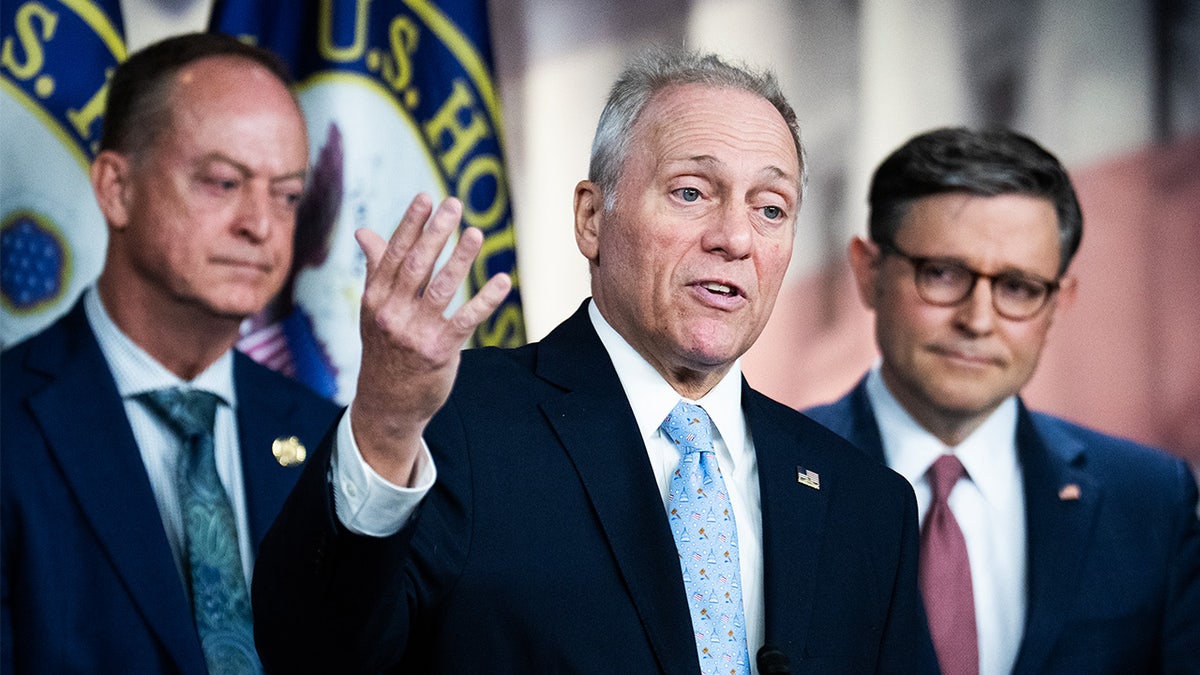
"There’s a lot more for us to do," Scalise noted during a press briefing. "We have a few weeks left in the lame duck session and, frankly, a few big, big issues ahead. I want to see us do as much as we possibly can while we still have this majority."
His insistence on maintaining focus during this transition period highlights the logistical challenges of a change in power. With the House set to flip to Democratic control, the GOP is currently tasked with finishing appropriations work, addressing potential defense authorization hurdles, and setting the stage for their future role as the opposition party.
Historical Context and Political Implications
The departure of a leader as senior as Scalise from the top tier of power is a significant blow to the continuity of the House GOP. Since 2023, Scalise has occupied the role of Majority Leader, a position he assumed after the party recaptured the House under Kevin McCarthy. When McCarthy was ousted following a revolt by the party’s right flank over government spending, Scalise made a bid for the Speakership. While that attempt was unsuccessful, he remained in leadership, providing a bridge to the speakership of Mike Johnson.
Political analysts suggest that Scalise’s potential departure would leave a vacuum in institutional knowledge. As the party moves into the minority, the role of the Minority Leader becomes primarily focused on message discipline, fundraising, and preparing for the next midterm cycle. By choosing Jordan, the caucus has opted for an ideological warrior over an institutional operator. This choice suggests that the House GOP intends to spend the next two years acting as a legislative check on the incoming Democratic majority, prioritizing investigations and public messaging over bipartisan compromise.
Analysis: What Lies Ahead for the GOP
The shift in leadership is more than just a change in personnel; it reflects an evolution of the party’s identity. The defeat of Scalise by Jordan serves as an indicator that the internal tension between the party’s traditional governance wing and its insurgent conservative wing has been resolved in favor of the latter.

For Scalise, the transition from being a primary architect of the party’s legislative agenda to a potential rank-and-file member represents a profound shift in daily life. He has acknowledged that the demands of leadership come at a high cost, noting that these roles "take you away from your family, from other things that you enjoy doing back home." He remarked that he will "have a little more free time" regardless of his final decision, suggesting that he is at peace with the reality that his time in the upper echelons of power has likely concluded.
Conclusion: The Future of the 120th Congress
As the nation prepares for the 120th Congress, all eyes will be on the final weeks of the current session. The legislative output of this period will serve as the final chapter for the current GOP leadership team. Whether Steve Scalise decides to remain as a senior statesman or chooses to exit the political stage, his legacy as a central figure in the House of Representatives remains secure.
The Republican Party is now entering a new, untested chapter. With Jim Jordan at the helm, the caucus is expected to adopt a more confrontational approach to the legislative process. The ability of the GOP to unify under this new leadership, while simultaneously managing the departure of stalwarts like Scalise, will ultimately determine the efficacy of their opposition in the coming years. For now, the party remains focused on the closing days of its majority, attempting to solidify its record before the transfer of power on January 3, 2027.

