
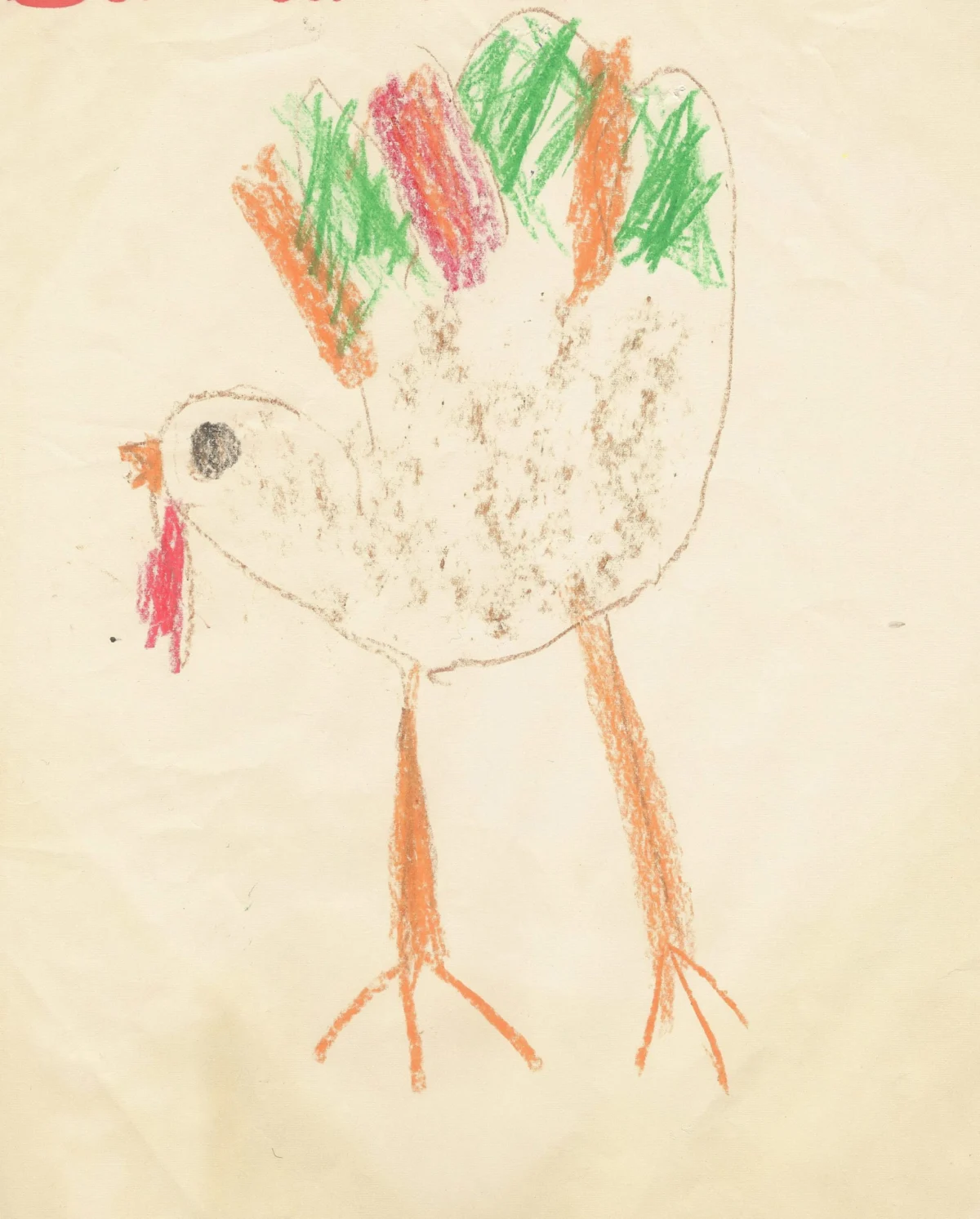
For generations of American students, the month of November has been marked by a ubiquitous classroom ritual: tracing one’s hand on construction paper, attaching a wobbly googly eye, and coloring fingers to mimic feathers. While often presented as a playful holiday activity, this ubiquitous "hand turkey" project serves as a poignant symbol of a broader, more systemic issue within the American public education system. Behind the glue sticks and crayon shavings lies a legacy of arts instruction that has historically prioritized compliance and product-based output over the cultivation of genuine creative agency.
The Evolution of Arts Education in the United States
The integration of visual arts and music into the American public school curriculum dates back to the 19th century, yet these subjects have long occupied a precarious position. For much of the 20th century, arts were classified as "specials" or extracurricular activities, lacking the rigorous academic standing of subjects like mathematics or literacy. This hierarchy began to shift significantly in 1994, a watershed moment for the field. That year, arts educators published the first National Arts Standards, and federal legislation officially designated the arts as a "core academic subject."
Despite this legislative elevation, the arts did not receive the robust accountability frameworks that transformed core subjects like math and reading. While federal mandates like the No Child Left Behind Act of 2001 forced states to implement high-stakes testing in core areas, the arts were left to the discretion of state and local districts. Consequently, arts education often defaulted to a model of instruction that emphasized "knowing the vocabulary" and "understanding the history" rather than fostering critical artistic inquiry.
From Compliance to Creativity: A Historical Pivot
The pedagogical approach that gave rise to the hand turkey is rooted in a linear model of education. In this paradigm, the teacher dictates the technique, the student replicates the action, and the "success" of the project is measured by how closely the student’s work matches the teacher’s example. Whether it is the rote memorization of a recorder song or the rigid performance of a Shakespearean monologue, the focus has historically been on mimicry rather than meaning.
This model underwent a significant transformation in 2014 with the release of the National Core Arts Standards (NCAS). The NCAS framework introduced a holistic, recursive process that prioritizes the student’s voice over the final product. The cycle is defined by four core actions:
- Generating and developing ideas
- Creating and presenting work
- Analyzing and receiving feedback
- Connecting the work to personal identity
This loop represents a departure from the "Stepford-style" bird production of the past. Instead of producing 25 identical turkeys, the model encourages classrooms to become laboratories of thought where students navigate the messy, iterative process of creation.
Data and Disparities in Artistic Opportunity
Despite these shifts in educational theory, the practical reality of arts education remains uneven. Research from the Government Accountability Office (GAO) and various educational policy reports indicate that access to high-quality arts instruction is highly dependent on socioeconomic status and geographic location.
In many under-resourced districts, arts education remains "siloed." Teachers often face immense pressure to produce "shiny" results for public display—hallway bulletin boards or annual spring concerts—which reinforces the product-over-process mentality. When arts educators are forced to prioritize these outcomes to justify their department’s existence, they often inadvertently sacrifice the time required for students to engage in deep, reflective artistic practice.

Furthermore, the narrow, often Eurocentric definitions of "correct" art continue to permeate classrooms. When students are only taught to replicate Western-centric forms of expression, they may internalize the belief that their own cultural traditions or unique artistic instincts are invalid. This creates a psychological barrier; many adults today report a lack of confidence in their creative abilities, often citing a past classroom experience where they were told their work did not meet an arbitrary standard of "rightness."
The Economic and Developmental Implications
The implications of this pedagogical failure are significant. The workforce of the 21st century places a high premium on innovation, critical thinking, and the ability to solve complex, ill-defined problems. If schools continue to prioritize compliance-based arts education, they may be failing to equip students with the cognitive flexibility required for modern career paths.
Educational psychologists argue that the arts provide a unique environment for "divergent thinking"—the ability to generate multiple solutions to a single problem. When a student is told there is only one way to draw a turkey, they are being trained in convergent thinking—a useful skill for following instructions, but a limiting one for original creative work.
Toward a New Framework for Arts Instruction
To move beyond the "hand turkey" model, experts in the field suggest a three-pronged strategy for school districts and teacher preparation programs:
1. Reimagining Teacher Training
Higher education institutions must move away from discipline-specific training that focuses solely on technical mastery (e.g., how to teach a specific instrument or painting technique). Instead, teacher preparation programs should focus on pedagogical strategies that facilitate the iterative artistic process, ensuring that new educators are comfortable managing "messy" classrooms where the end product is uncertain.
2. Protecting Equitable Access
Access to the arts should be treated as a fundamental right, not a peripheral perk. Districts must prioritize arts funding even during fiscal downturns, recognizing that the skills cultivated in the art studio—collaboration, critique, and synthesis—are foundational to success in all other academic subjects.
3. Shifting the Evaluation Metric
Administrators must remove the pressure on arts teachers to produce "hallway-ready" displays. When the primary goal of an art program is to decorate a wall, the student’s growth is secondary to the school’s aesthetic. By allowing arts rooms to function as "boisterous laboratories," schools can foster an environment where students feel safe to take risks, defend their choices, and engage with the vulnerability that true creativity requires.
Conclusion: The Future of the Creative Classroom
The hand turkey on the refrigerator is, in many ways, a harmless relic of a bygone era. However, the educational philosophy it represents—that art is about tracing someone else’s outline rather than drawing one’s own—is a significant barrier to the development of independent, creative thinkers.
The goal of arts education is not to churn out professional artists, nor is it to create a perfectly curated wall of identical crafts. Rather, it is to teach students that their unique perspective is a valuable asset that deserves to be defended, refined, and expressed. As the education sector continues to evolve, the shift from product-based to process-based learning will be essential. By valuing the student’s internal journey over the external artifact, schools can ensure that the next generation of learners understands that creativity is not about getting it "right"—it is about having the courage to make something new.

