
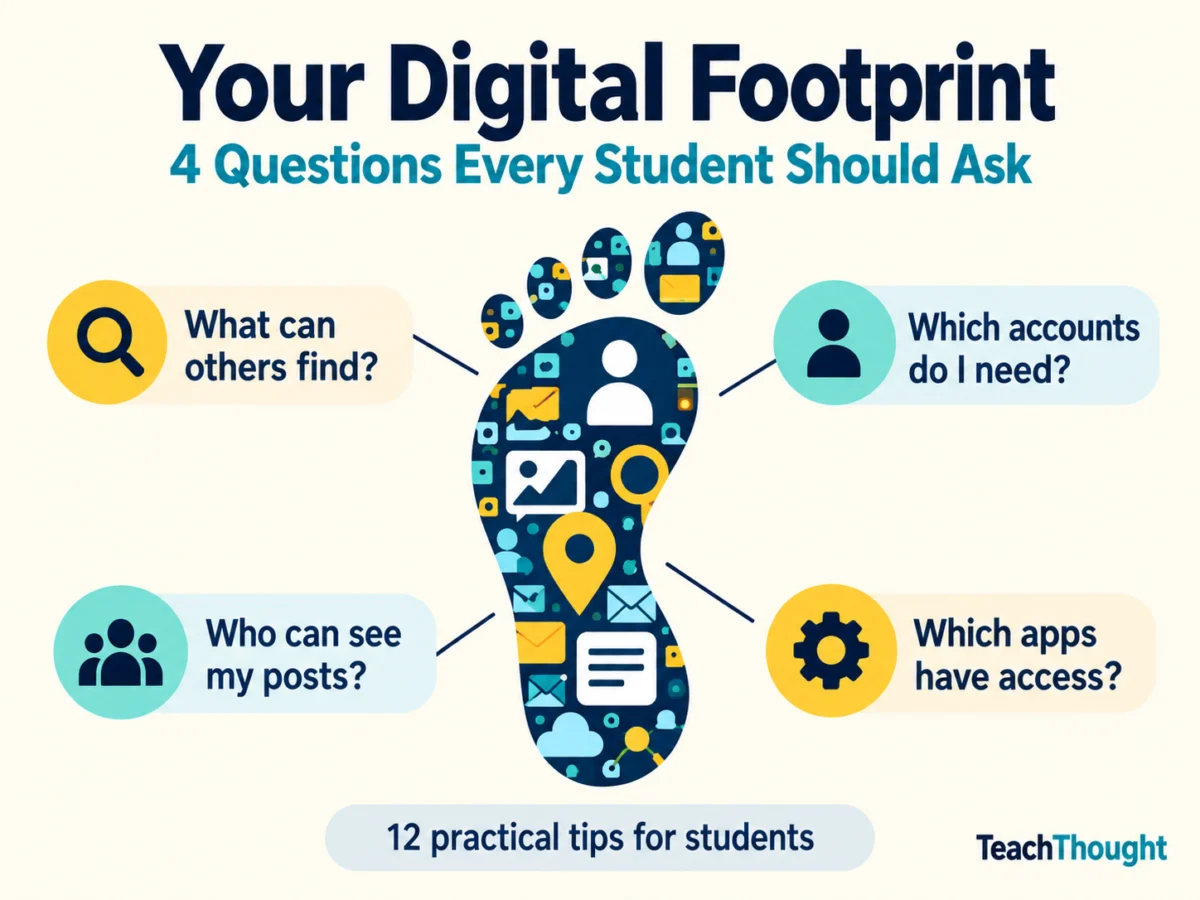
In an era where children and adolescents establish an online presence long before they graduate from high school, educators and digital literacy experts are placing renewed emphasis on proactive online management. A digital footprint—the comprehensive record of a person’s online actions, active shares, passive data harvesting, and account histories—has evolved into a critical factor influencing everything from modern college admissions to future employment opportunities. Recent data from digital safety organizations underscores that more than 70 percent of hiring managers and admissions officers routinely review applicant social media profiles, making early education on digital footprints a vital component of modern youth development.
The origins of digital footprint tracking trace back to the commercialization of the internet in the late 1990s and early 2000s, shifting dramatically with the widespread adoption of smartphones and social media platforms in the 2010s. What once consisted of static personal homepages and forum posts has transformed into an intricate, continuous stream of geo-tagged photos, instantaneous messaging logs, and algorithmic behavioral tracking. Recognizing this shift, schools globally are moving away from restrictive internet bans and toward comprehensive digital citizenship curricula that empower students to navigate the virtual landscape responsibly.
Conducting a Digital Audit: The First Step Toward Online Awareness
Understanding one’s digital footprint begins with assessment. Educators recommend guiding students through a structured, private self-audit rather than demanding public disclosures of personal information. This foundational step asks learners to evaluate four key pillars of their online identity: public search visibility, active versus dormant accounts, sharing boundaries, and third-party app permissions. By systematically evaluating what information is currently accessible via search engines or linked applications, students can establish a baseline understanding of their personal data exposure.
Cultivating Positive Digital Citizenship and Behavioral Norms
Beyond personal defense against data collection, a digital footprint reflects an individual’s character and interactions within online communities. True digital citizenship requires practicing empathy, respecting intellectual property, and fiercely protecting the privacy of others. Experts advise establishing clear behavioral guidelines for young internet users: always secure explicit permission before publishing someone else’s photograph, properly attribute digital works, and contribute constructively to online discussions. These habits not only prevent cyberbullying and relational aggression but also build a positive, professional online reputation that stands up to scrutiny by educators, peers, and future employers.
Mastering Privacy Settings and Managing Account Longevity
Privacy settings are rarely a one-time fix. Platforms frequently update their interfaces and default configurations, often expanding data-sharing parameters without explicit user notification. Students must regularly audit their audience restrictions, tagging capabilities, location services, and contact permissions across all active platforms.
Furthermore, the lifecycle of an online account demands active management. Dormant accounts created years prior—often forgotten on legacy gaming platforms, old forums, or defunct social networks—frequently remain active, harboring sensitive personal details, photographs, or outdated contact information. Cybersecurity specialists recommend drafting a private inventory of all digital accounts, purging those no longer in use, and permanently deleting associated data rather than merely removing applications from a mobile device.
Strategic Sharing and the Permanence of Digital Content
The golden rule of modern internet safety—think before you post—remains paramount. Young users often underestimate how background details in photographs, such as street signs, school identification badges, or household documents, can inadvertently compromise personal security and physical safety. The core evaluation metric for any shared content is simple yet profound: would the creator be comfortable if the material reached an audience far beyond their intended recipients?
Compounding the risk of oversharing is the persistent illusion of deletion. Messages sent to peers, whether via direct message or ephemeral apps, can easily be captured via screenshots or screen-recording software. Consequently, students must treat every act of sending digital media as an act of permanent publishing. When missteps occur, swift mitigation—such as removing the offending content, requesting peer cooperation, or seeking guidance from a trusted adult—can substantially limit long-term damage.
Fortifying Digital Infrastructure: Passwords and Multi-Factor Authentication
Robust security practices serve as the armor protecting a student’s digital footprint from malicious actors, identity theft, and unauthorized account takeovers. Relying on simple, repeated passwords leaves accounts vulnerable to credential-stuffing attacks. Cybersecurity frameworks now universally recommend unique, complex passwords generated and stored securely through trusted password managers, supplemented by multi-factor authentication (MFA) wherever available. Educational institutions implementing these standards report a dramatic decrease in security breaches and compromised student accounts.
Analyzing App Permissions and Public Visibility
Modern applications frequently request expansive permissions to function, ranging from contact lists and photo libraries to real-time geographical tracking and microphone access. Students must critically evaluate whether an application genuinely requires these permissions to operate. By regularly reviewing connected third-party services—particularly those utilized for single sign-on authentication across the web—users can sever unauthorized data pipelines. Additionally, separating casual accounts from critical correspondence by utilizing alternative email addresses for optional sign-ups helps mitigate spam and compartmentalizes personal data.
Understanding the Broader Implications and Institutional Responses
The implications of an unmanaged digital footprint extend far beyond individual embarrassment; they touch upon legal, economic, and psychological dimensions. Educational policymakers and consumer protection agencies, including the Federal Trade Commission (FTC) and the Cybersecurity and Infrastructure Security Agency (CISA), have intensified calls for comprehensive digital literacy integration in foundational education.
Industry reactions to these growing security and privacy concerns have yielded mixed results. While major technology platforms have introduced more granular privacy dashboards and automated data deletion tools, critics argue that default settings remain intentionally convoluted to encourage data harvesting. In response, privacy advocacy groups emphasize that technological tools—such as virtual private networks (VPNs) and tracker blockers—must be understood in terms of their specific utility and limitations. A VPN, for instance, encrypts internet traffic but does not erase a user’s self-published social media posts or prevent a logged-in platform from building a behavioral profile.
Ultimately, managing a digital footprint is an ongoing practice rather than a static achievement. By breaking the process down into manageable, recurring habits—such as reviewing app permissions monthly, auditing search results annually, and questioning sharing practices daily—students can transform online safety from an abstract concept into an instinctive life skill. As the digital landscape continues to evolve, equipping the next generation with these analytical tools remains an essential mandate for educators, parents, and society at large.

