
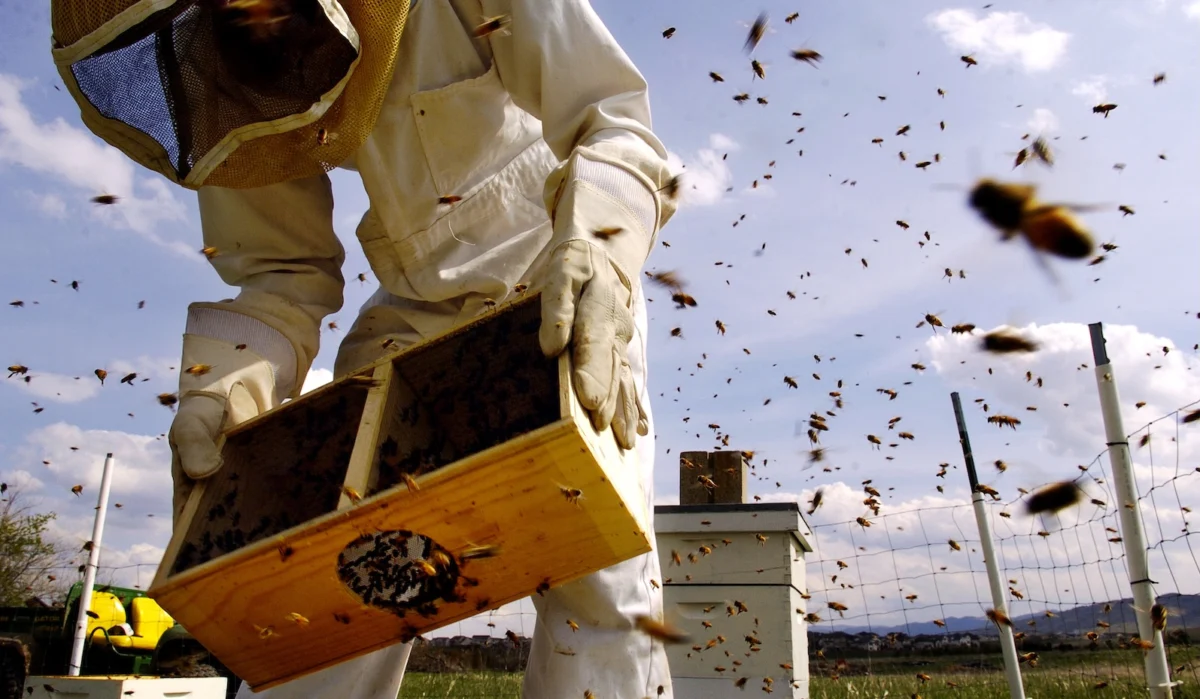
The decline of the American honeybee has long been a subject of ecological concern, but for Cory Kreft, a second-generation beekeeper in Colorado, the crisis is neither abstract nor distant. Kreft, who began his career on a honey farm at the age of 15 and eventually purchased the business, witnessed a catastrophic collapse of his livelihood beginning in 2021. That year, 85 percent of his hives perished without warning. The trend did not reverse; instead, the losses compounded year after year, eventually totaling millions of dollars in damages. After rigorous investigation and environmental testing, Kreft identified the source of the devastation: neonicotinoids. Often referred to as "neonics," this class of neurotoxic pesticides has quietly become the most widely used insecticide in the United States, largely due to a regulatory framework that allows them to bypass the oversight applied to traditional spray-on chemicals.
The Rise of the Systemic Insecticide
Neonicotinoids were introduced to the global market in the 1990s, marketed by agrichemical giants as a "safer" alternative to older, more volatile pesticides like organophosphates and carbamates. Unlike traditional pesticides that are sprayed onto the leaves of a plant, neonics are systemic. They are most commonly applied as a coating to the seeds of major field crops, such as corn, soybeans, and wheat, before they are even sold to farmers.
As the seed germinates and grows, the chemical is absorbed into the plant’s vascular system. It permeates every part of the organism, from the roots and stalks to the leaves, pollen, and nectar. While this provides the plant with a built-in defense against pests, it also ensures that any non-target insect—including essential pollinators like honeybees and butterflies—that interacts with the plant is exposed to the toxin. According to data from the Natural Resources Defense Council (NRDC), neonics work by permanently binding to the nicotinic acetylcholine receptors in an insect’s nervous system, causing overstimulation, paralysis, and death.
The adoption of this technology has been nearly universal. Recent agricultural surveys indicate that almost 100 percent of conventional corn seed and more than 50 percent of soybean seed in the U.S. is pre-treated with neonicotinoids. This ubiquitous presence has created a landscape where pollinators have virtually no refuge from chemical exposure.
The "Treated Article" Loophole
The primary reason for the explosive growth of neonicotinoid use lies in a legal nuance within the Federal Insecticide, Fungicide, and Rodenticide Act (FIFRA). Under a provision known as the "treated article exemption," seeds coated with pesticides are not legally classified as "pesticides" themselves. Instead, they are categorized similarly to consumer goods like antimicrobial-coated toothbrushes or pressure-treated lumber.
Because of this classification, the Environmental Protection Agency (EPA) does not require the same level of registration, labeling, or tracking for treated seeds that it mandates for liquid or powder pesticides. This creates a massive blind spot in federal oversight. While the EPA regulates the chemical itself when it is in a jug at a manufacturing plant, once that chemical is applied to a seed, it largely falls off the regulatory radar.
"Anyone can legally go buy this pesticide-treated seed, dump it in a river, and then contaminate the entire water system," Kreft noted, highlighting the lack of disposal protocols. This loophole means that there are no federal records of exactly where, when, or in what quantities these seeds are being planted, making it nearly impossible for state agencies to intervene when mass die-offs of bees or other wildlife occur.
A Chronology of Contamination: The Mead, Nebraska Disaster
The dangers of this regulatory vacuum were most starkly illustrated in the town of Mead, Nebraska. In 2017, Dr. Judy Wu-Smart, an entomologist at the University of Nebraska-Lincoln, began observing a total collapse of bee colonies at a university research site near the town. For four consecutive years, the site experienced nearly 100 percent mortality rates.
The investigation eventually pointed to AltEn, an ethanol plant located in Mead. Unlike most ethanol plants that process raw grain, AltEn had carved out a niche by processing "surplus" or unpurchased pesticide-treated seeds—seeds that were essentially toxic waste. Because the seeds were exempt from many hazardous waste regulations due to the "treated article" loophole, the facility was able to stockpile millions of bushels of treated corn.
The byproduct of this process—a moist grain residue known as "wet cake"—was sold to local farmers as soil conditioner or left in massive, uncovered piles. This residue contained concentrations of neonicotinoids thousands of times higher than what is considered safe. Wind and rain carried the toxins into the local ecosystem. By 2021, residents of Mead reported a litany of horrors: dead birds and fish, sickened pets, and a surge in human health complaints, including respiratory issues and skin rashes. While the AltEn plant was eventually shut down following intense public pressure, the environmental damage persists. Dr. Wu-Smart reports that honey produced in the region still contains high levels of neonics, rendering it unfit for consumption.
Economic Realities and the Myth of Yield
One of the most persistent arguments in favor of neonicotinoid-treated seeds is that they are essential for protecting crop yields and ensuring food security. However, recent peer-reviewed research suggests that this benefit may be overstated or, in many cases, non-existent.
A comprehensive study by Cornell University found that neonicotinoid seed treatments provided no consistent yield benefit for corn farmers across the Northeast. Similarly, the EPA conducted an analysis of soybean production and concluded that neonicotinoid seed treatments provide "little or no overall benefit" to farmers in most situations.
Despite this, farmers find it increasingly difficult to opt out. The consolidation of the global seed market—dominated by a handful of multinational corporations—means that untreated seeds are often unavailable. Farmers are frequently forced to purchase treated seeds as the "default" option, paying a premium for chemicals they may not need. This creates a cycle of "preemptive" pest management that favors chemical manufacturers over the economic interests of the farmers or the health of the environment.
Human Health Implications: A Growing Concern
While the impact on pollinators is well-documented, the scientific community is increasingly turning its attention to the potential risks neonics pose to human health. Because these chemicals are systemic, they are present in the fruits, vegetables, and grains that enter the human food supply. They are also highly water-soluble, allowing them to leach into groundwater and tap water systems.
Research published in the journal Environmental Health found that more than 95 percent of pregnant women tested in certain regional studies had detectable levels of neonicotinoids in their bodies. Dr. Jennifer Sass, a senior scientist with the NRDC, warns that these chemicals are potent neurotoxins that may interfere with human brain development. "I want people to understand that neurotoxic chemicals are bad for our brains, especially with fetal or early childhood exposure," Sass stated. Emerging studies have suggested links between neonicotinoid exposure and developmental disabilities, including autism and heart malformations, mirroring the historical concerns once raised about lead and mercury.
Legislative Pushback and Future Outlook
In the absence of federal action to close the treated article loophole, a patchwork of state-level regulations is beginning to emerge. In New York, Governor Kathy Hochul recently signed the "Birds and Bees Protection Act," which bans the use of neonicotinoid coatings on corn, soybean, and wheat seeds—the first law of its kind in the United States. Vermont has followed suit with similar restrictions.
In Colorado, the proposed SEED Act sought to provide farmers with greater access to untreated seeds and to limit the use of neonics to instances where a specific pest pressure could be proven. However, the bill faced stiff opposition from agrichemical lobbyists and some farming groups who argued it would create an administrative burden and increase costs. The bill was ultimately defeated, leaving beekeepers like Cory Kreft in a state of professional limbo.
The international community has taken a more aggressive stance. The European Union implemented a near-total ban on the outdoor use of the three most common neonicotinoids (imidacloprid, clothianidin, and thiamethoxam) in 2018. In Canada, the province of Quebec introduced a "need-based" model in 2019, requiring farmers to obtain a prescription from an agronomist before using treated seeds. Within just a few years, the use of neonic-treated corn seed in Quebec plummeted from nearly 100 percent to less than 5 percent, with no significant impact on overall provincial crop yields.
Conclusion: The Path Forward
The story of neonicotinoid-treated seeds is a cautionary tale of how regulatory gaps can lead to widespread environmental and economic disruption. For the beekeeping industry, which contributes an estimated $15 billion annually to the U.S. economy through pollination services, the stakes could not be higher.
As the evidence of environmental persistence and human health risks continues to mount, the pressure on federal regulators to reconsider the "treated article exemption" is growing. For now, however, the burden remains on individual states and beekeepers to navigate a landscape saturated with invisible toxins. For Cory Kreft, the future of his family business remains uncertain. "If I can’t keep my bees alive because this pesticide is everywhere," he asked, "why would I keep doing this?" The answer to that question may depend on whether the U.S. agricultural system can transition from a model of default chemical use to one based on ecological necessity and scientific oversight.

