
For decades, more than 100,000 pounds of abandoned telecommunications cables, clad in toxic lead, lay undisturbed across the pristine bed of Lake Tahoe. These relics of a bygone era, installed by the predecessors of modern telecommunications giant AT&T, were described by environmentalists as "giant sea monsters" snaking through the depths. While they remained out of sight for most of the public, they were far from inert. As the protective casings deteriorated, lead—a potent neurotoxin—began leaching into the alpine waters of one of North America’s most protected and iconic natural landmarks.
The resolution of this environmental hazard did not come through government intervention or corporate altruism, but through a high-stakes legal battle that highlights a growing trend in environmental advocacy: the use of strategic, third-party litigation funding to level the playing field against multi-billion-dollar corporations. The successful removal of these cables, completed following a settlement in 2024, serves as the cornerstone for a new nonprofit organization, WHEN Justice, which aims to democratize the legal process and ensure that scientific evidence, rather than financial exhaustion, dictates the outcome of environmental disputes.
The Lake Tahoe Crisis: A Decades-Long Legacy of Contamination
Lake Tahoe, straddling the border of California and Nevada, is renowned for its exceptional clarity and serves as a primary source of drinking water for thousands of residents. The presence of lead-jacketed cables, some dating back to the early 20th century, presented a significant risk to this fragile ecosystem. Lead is a non-biodegradable heavy metal that, even in small quantities, can cause neurological damage in humans and catastrophic reproductive and developmental issues in aquatic life.
In 2021, the California Sportfishing Protection Alliance (CSPA) initiated a lawsuit to force AT&T to remove the abandoned lines. The litigation was predicated on the belief that the cables were actively contaminating the lake. However, the legal process quickly became a war of attrition. AT&T, a corporation with nearly unlimited legal resources, maintained that the cables were not leaching significant amounts of lead and that removing them would cause more environmental harm than leaving them in place.
For over two years, the case remained in a stalemate. The CSPA, a relatively small nonprofit, lacked the capital required to conduct the sophisticated scientific testing necessary to prove their claims in court. In environmental litigation, the burden of proof often falls on the plaintiff to provide empirical data connecting a specific source of pollution to environmental degradation. Without such evidence, the case was destined to linger in procedural limbo.
The "Aha Moment": Science as the Smoking Gun
The turning point occurred when Roland Peralta, a successful entrepreneur and co-founder of the wellness company Nutrafol, stepped in. Recognizing that the primary obstacle was not the law, but the cost of science, Peralta provided $100,000 through his then-nascent initiative, WHEN Justice. This funding allowed for a team of specialized scuba divers and environmental scientists to conduct targeted sampling on the lake floor.
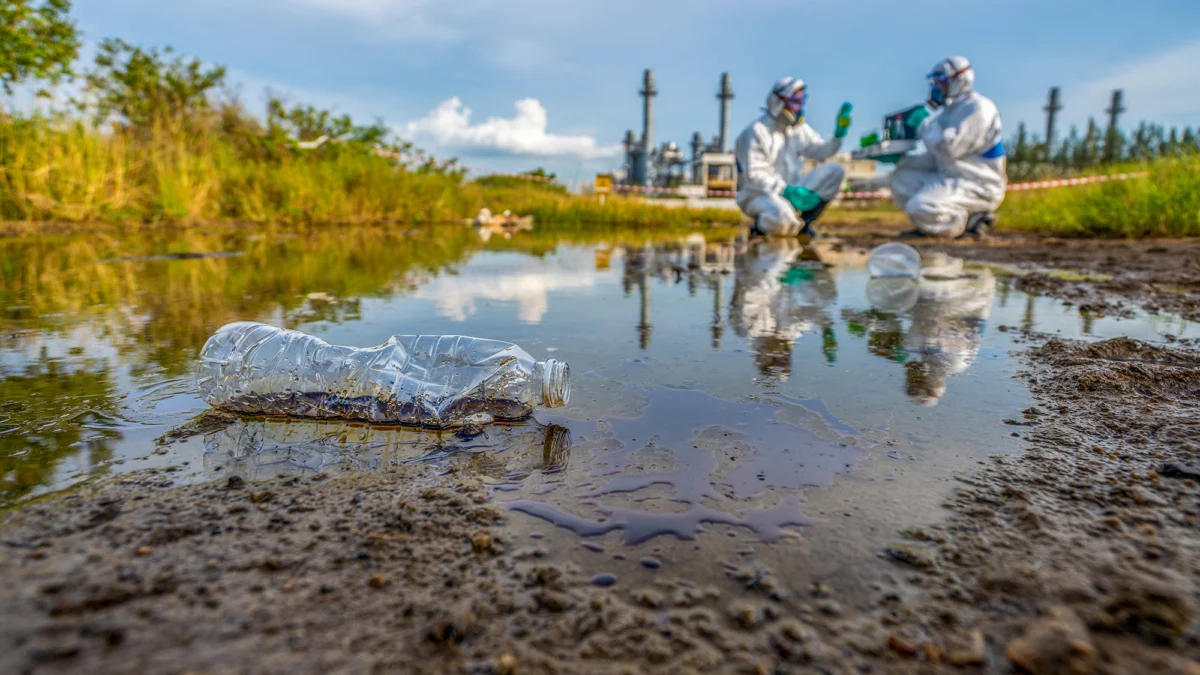
The researchers utilized lead isotopic testing, a process often referred to as "chemical fingerprinting." Because lead from different geographic sources or manufacturing processes has unique isotopic ratios, scientists can determine whether lead found in the water or sediment matches the specific lead used in a particular product. The results were definitive: the lead found in the surrounding silt and water was an exact match for the lead in the AT&T cables.
Presented with this undeniable scientific link, the legal dynamics shifted overnight. Faced with the prospect of a trial where the scientific evidence was heavily weighted against them, AT&T opted for a settlement. Within nine weeks of the data being presented, an agreement was reached. Within months, the cables were extracted from the lake.
Chronology of the Lake Tahoe Cable Removal
- Early 20th Century – 1950s: Lead-clad telecommunications cables are installed across Lake Tahoe.
- 1980s – 1990s: The cables are decommissioned and abandoned on the lake bed as technology shifts to fiber optics and satellite.
- 2021: The California Sportfishing Protection Alliance (CSPA) files a lawsuit against AT&T under the Clean Water Act and California’s Proposition 65.
- 2021–2023: Litigation proceeds slowly; AT&T disputes the environmental impact of the cables.
- Late 2023: WHEN Justice provides $100,000 for scientific testing and isotopic fingerprinting.
- Early 2024: Scientific results confirm the cables are leaching lead into the water.
- Spring 2024: AT&T settles the case, agreeing to the removal of the cables.
- Summer 2024: Extraction operations conclude, removing over 100,000 pounds of lead from the lake.
- April 22, 2026: WHEN Justice officially launches as a public crowdfunding platform on Earth Day.
The Litigation Bottleneck: Why David Often Loses to Goliath
The Lake Tahoe case exposed a systemic flaw in the American legal system: the "litigation bottleneck." While laws like the Clean Water Act include provisions for citizen suits—allowing private entities to sue polluters when the government fails to act—the cost of exercising these rights is often prohibitive.
A typical environmental lawsuit against a major corporation can cost hundreds of thousands, if not millions, of dollars. These costs are driven by:
- Expert Witness Fees: High-level scientists often charge several hundred dollars per hour for testimony and report preparation.
- Sampling and Lab Analysis: Collecting samples from remote or underwater locations requires specialized equipment and accredited laboratory testing.
- Procedural Delays: Large corporations can afford to file endless motions and appeals, hoping to drain the financial reserves of smaller plaintiffs.
"The way the legal system is set up right now, it sadly is not always about the merits of the case," explained Jacqueline Biner, WHEN Justice’s chief executive and legal officer. "It’s often just about who has more money."
By focusing specifically on funding the "missing pieces"—the data and the experts—WHEN Justice seeks to break this bottleneck. Their model is built on the principle that if a case is grounded in sound science, the legal merits will eventually prevail, regardless of the opponent’s bank account.
An Innovative "Pay-it-Forward" Model
One of the most compelling aspects of the WHEN Justice strategy is its "pay-it-forward" mechanism. Many environmental statutes include "fee-shifting" provisions, which require the losing party (or the settling defendant) to reimburse the plaintiff for their legal costs and expert fees.
When a case funded by WHEN Justice is successful, the recovered costs can be returned to the organization’s fund. This creates a revolving door of capital, where a single donation can potentially fund multiple lawsuits over several years. This sustainability model distinguishes WHEN Justice from traditional charities that must constantly fundraise for every new project.
"Strategic funding at the right moment can help public-interest cases win," Peralta stated. This approach treats litigation as a high-impact investment in public health and environmental integrity.
Expanding the Scope: San Pablo Bay and Beyond
Following the success at Lake Tahoe, WHEN Justice has turned its attention to other critical environmental threats. One current campaign involves a lawsuit concerning a long-shuttered hazardous waste landfill on the shores of San Pablo Bay in California.
The lawsuit alleges that the landfill, which contains a cocktail of industrial toxins, is leaching contaminants into the bay as sea levels rise and infrastructure decays. As with the Tahoe case, the primary hurdle is proving the pathway of the pollution. WHEN Justice is currently raising funds to pay for experts to conduct hydrogeological sampling to show exactly how toxins are migrating from the landfill into the public waterway.
Beyond landfills, the organization sees opportunities to address:
- Factory Farm Runoff: Nitrates and manure leaking from industrial agricultural operations into local groundwater.
- PFAS "Forever Chemicals": Holding manufacturers accountable for the contamination of municipal water systems.
- Urban Air Quality: Using high-resolution monitoring to link specific industrial facilities to respiratory health issues in marginalized communities.
The Role of Public Participation and Crowdfunding
A central pillar of the WHEN Justice mission is the democratization of environmental enforcement. The organization is developing an interactive platform where donors can browse active cases and direct their contributions to the issues that resonate with them.
"We think there is so much more power in a million people giving a dollar than in a single person giving a million dollars," noted Biner. This philosophy serves two purposes. First, it provides a stable and diversified source of funding. Second, it educates the public on the realities of environmental law, turning passive observers into active participants in the justice system.
Roland Peralta views this as a necessary evolution of philanthropy. For him, it is about creating a tangible way for individuals to combat the feeling of helplessness that often accompanies news of environmental destruction. "WHEN Justice is designed to be the call-to-action button that everyone has been longing for," he said.
Analysis: Implications for Corporate Accountability
The rise of organizations like WHEN Justice signals a shift in the corporate risk landscape. Traditionally, many companies have viewed environmental fines and litigation as a "cost of doing business"—a manageable expense compared to the cost of comprehensive cleanup or infrastructure upgrades.
However, if scientific evidence becomes easier for small groups to obtain, the "cost of fighting" may soon exceed the "cost of fixing." When the likelihood of losing a lawsuit increases due to better-funded plaintiffs, corporations are incentivized to address pollution proactively.
Furthermore, the focus on isotopic testing and advanced data analytics makes it harder for companies to hide behind "plausible deniability." As forensic science improves, the ability to trace a specific molecule of lead or a specific chemical compound back to its source becomes a powerful tool for accountability.
Conclusion: A New Era for Environmental Law
The removal of the lead cables from Lake Tahoe was more than just a local victory; it was a proof of concept. It demonstrated that when science is properly funded, even the most entrenched environmental problems can be resolved.
As WHEN Justice scales its operations, it seeks to build a permanent infrastructure for corporate accountability. By empowering the "Davids" of the world with the scientific "slingshots" they need, the organization is ensuring that the protection of the environment is no longer a luxury reserved for those who can afford the legal fees. In the coming years, the success of this model will be measured not just in courtrooms, but in the clarity of our lakes, the safety of our soil, and the health of the communities that depend on them.

