
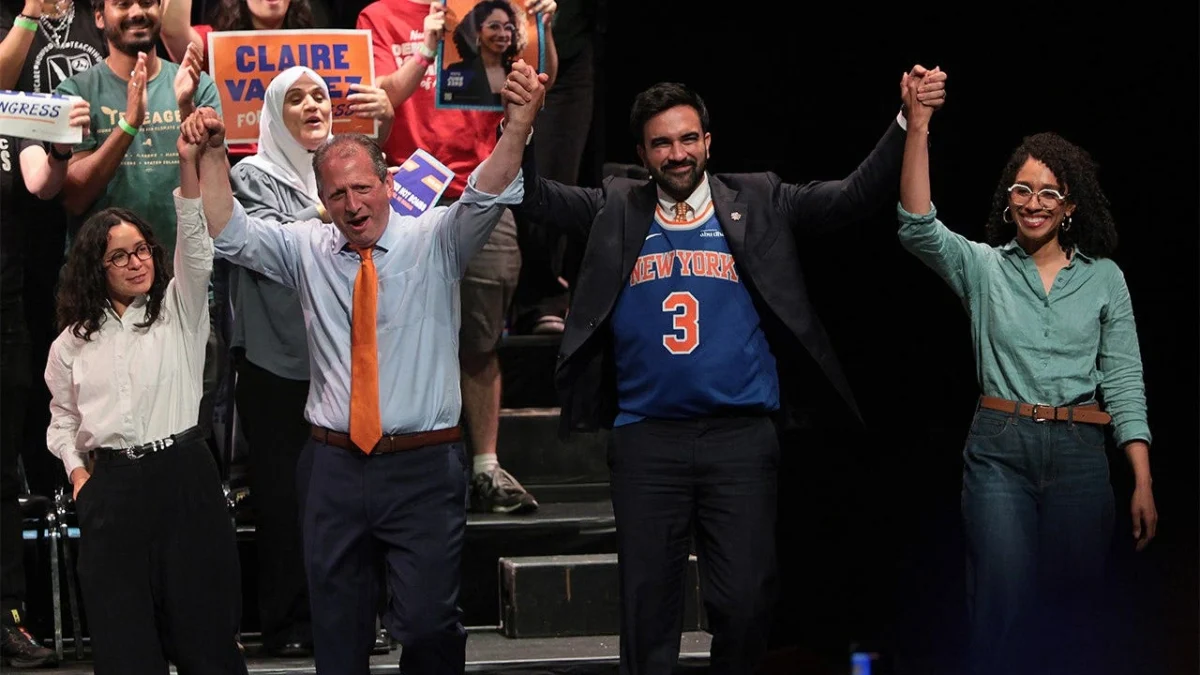
NEW CITY, N.Y. – The future control of the U.S. House of Representatives hangs precariously in the balance, with the outcome of this autumn’s midterm elections poised to be decided in a handful of crucial congressional districts. Among the most pivotal battlegrounds are New York’s 17th, 3rd, and 4th congressional districts, all strategically located in the economically vital and politically diverse suburban rings surrounding New York City. As Republicans strive to maintain their razor-thin House majority, they are increasingly leveraging the burgeoning ideological schism within the Democratic Party – a pronounced struggle between its progressive, left-wing flank and its more moderate, center-left establishment – as a potent political weapon, aiming to cast all Democrats as radical figures.
The Suburban Crucible: New York’s Key Battlegrounds
New York’s suburban districts have historically served as bellwethers for national political sentiment. Their demographics, often a blend of commuters, professionals, and long-term residents, make them highly susceptible to shifts in national mood and economic conditions. NY-17, encompassing much of New York City’s northern suburbs in counties like Rockland and Westchester, is a prime example of a district where moderate voters often determine election outcomes. Similarly, NY-3 and NY-4, situated on Long Island in Nassau County, represent the kind of affluent, diverse, and often swing-voting suburban communities that can make or break a party’s majority. In the 2024 presidential election, while President Biden carried these areas, local and state races often reflect a more nuanced and competitive landscape, making them perpetual targets for both parties. The House majority currently stands at a narrow margin, with Republicans holding 218 seats to Democrats’ 213, meaning a shift of just a few seats could flip control. This inherent volatility amplifies the stakes in districts like these.
The Democratic Divide: A Primary Power Shift
The internal dynamics of the Democratic Party have become a central theme in these races. Republican Representative Mike Lawler, a two-term lawmaker representing NY-17, articulated this strategy in a recent Fox News Digital interview, asserting, "Democrats have gone further and further and further to the left with no end in sight." Lawler’s comments came on the heels of a series of highly watched primary contests where three far-left Democratic candidates, notably backed by prominent progressive New York State Assemblyman Zohran Mamdani, successfully unseated or defeated more moderate, establishment-favored rivals.
These primary victories, which garnered significant national attention, underscored a growing momentum for the progressive wing within the Democratic Party. Two of the victorious candidates were aligned with the Democratic Socialists of America (DSA), and two of the defeated candidates were congressional incumbents, signaling a potent challenge to the party’s traditional power structures. Assemblyman Mamdani, a vocal proponent of progressive policies, has become a symbolic figure in this movement. "My district is impacted significantly by what happens in New York City. Many of my constituents work in the city, they’re cops, firefighters, nurses, teachers," Lawler noted, connecting the urban progressive shift to potential suburban anxieties. He further charged that "these radical socialists are taking over the Democratic Party, not just for Congress, but the state legislature. And as I said last year, Zohran Mamdani would become the face of the Democratic Party and its leader, and that is precisely what he is doing."
This internal struggle reflects broader national trends within the Democratic Party. For years, a tension has existed between the party’s progressive base, often advocating for transformative social and economic policies like Medicare for All, the Green New Deal, and defunding the police, and its more centrist wing, which typically prioritizes incremental reforms, fiscal prudence, and a broader appeal to swing voters. The recent primary results suggest that in certain urban and suburban strongholds, the progressive wing is gaining significant organizational strength and electoral traction, capable of challenging well-funded incumbents and establishment-backed candidates. This dynamic presents a strategic dilemma for the national Democratic Party, which must simultaneously energize its progressive base and appeal to moderate voters to win general elections.
The Republican Playbook: Portraying Democrats as Radicals
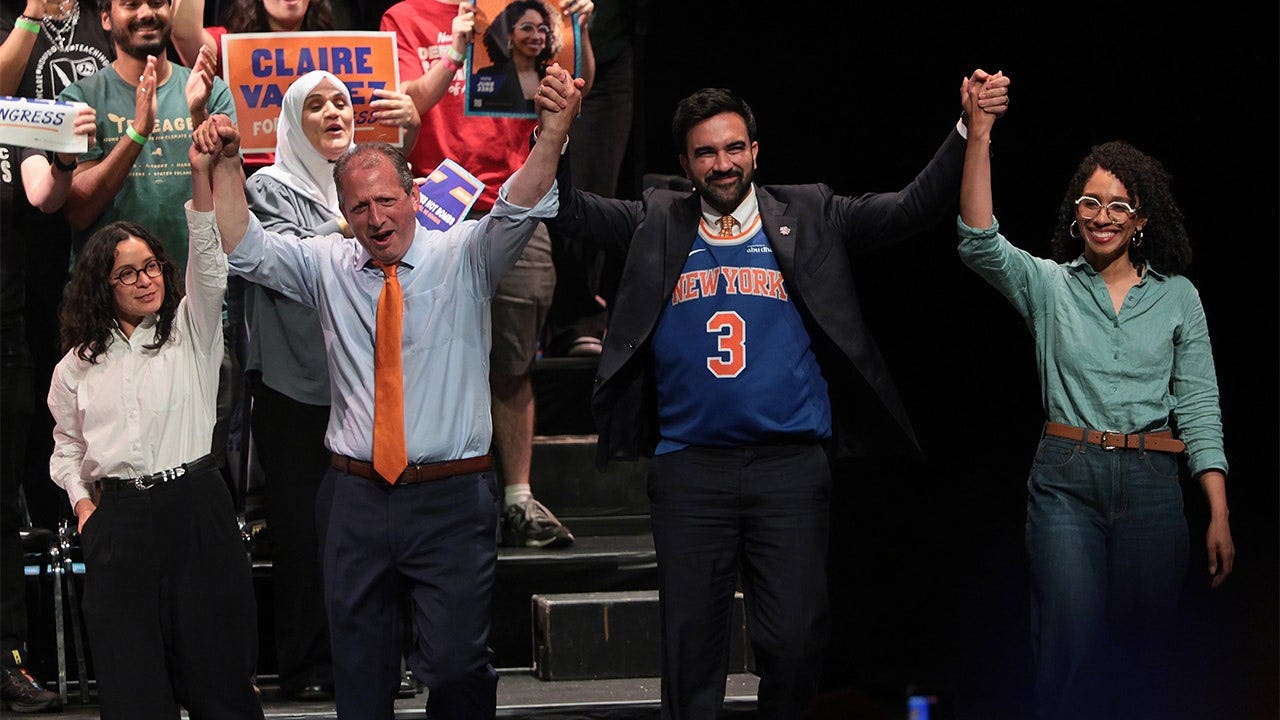
Republicans, acutely aware of the slim margins defining the House, are seizing this internal Democratic discord as a prime campaign opportunity. Their strategy is to paint the entire Democratic Party with the brush of its most progressive elements, thereby alienating moderate and independent voters who might be wary of radical policy shifts. This tactic is particularly effective in suburban districts, where voters often prioritize stability, local economic concerns, and a perceived middle-ground approach to governance.
Rep. Lawler, for instance, acknowledges that his Democratic challenger in NY-17, Cait Conley, is not explicitly endorsed by far-left groups like the DSA, Justice Democrats, or the Working Families Party. However, he contends, "The fact is that she agrees with them from a policy standpoint, even if she doesn’t couch herself in the same title of socialist." He further elaborated on his concerns: "My opponent would be a rubber stamp for the radical socialists who are coming, and she wouldn’t have the ability to stand up to these people and push back, and the fact is the Democrats have gone further and further and further to the left with no end in sight." This framing allows Republicans to link even moderate Democratic candidates to the perceived excesses of the party’s left wing.
Nationally, this messaging is amplified by prominent Republican figures. Former President Donald Trump has consistently warned of a "communist" threat from the left, a narrative that resonates with a segment of his base and aims to instill fear among undecided voters. Vice President JD Vance echoed this sentiment on Fox News’ "The Ingraham Angle," arguing that Democrats hold "a view that the United States is an evil country that must be dismantled from the ground and then built back up. That’s communism at its core, and you see more and more momentum in that direction from the Democrat Party." This strong rhetoric is designed to draw a stark contrast and motivate Republican turnout, while simultaneously attempting to push centrist voters away from the Democratic ticket.
Democratic Counter-Offensive: Focusing on "Pocketbook Issues"
Democrats are not, however, without a counter-strategy. Rep. Suzan DelBene, chair of the Democratic Congressional Campaign Committee (DCCC), dismissed the GOP’s efforts to label Democrats as far-left radicals as "desperate attacks." DelBene emphasized that the midterms would ultimately serve as "a referendum on who is going to lower costs and help improve the lives of everyday Americans – which House Republicans have failed spectacularly to do." She contended that in "purple, majority-making districts," voters are more concerned with tangible economic issues than ideological labels.
"Republicans already know they’ve lost the American people, and that’s why they are resorting to desperate attacks that aren’t actually about the pocketbook issues, but just baseless spin that falls flat with voters who are eager to reject Republicans," DelBene stated. This approach aims to pivot the conversation away from internal party divisions and onto bread-and-butter issues like inflation, healthcare costs, and job creation, where Democrats believe they have a stronger message and a better record. The DCCC’s strategy is to frame the election as a choice between a Democratic party focused on improving daily life and a Republican party fixated on divisive cultural battles and ineffective governance.
Candidate Spotlights: The Local Faces of a National Fight
The ideological tug-of-war plays out distinctly in each of the contested New York districts.
In NY-17, the race pits incumbent Republican Mike Lawler against Democratic challenger Cait Conley. Conley, a West Point graduate and military combat veteran with three Bronze Stars from six deployments in Afghanistan and Iraq, presents a compelling profile. She actively pushes back against Lawler’s criticisms, framing herself as an outsider dedicated to practical solutions. "Voters are sick of political insiders, politicians, political operatives who care more about their next reelection than they do solving the actual problems with the time they are given to represent their people," Conley told Fox News Digital, implicitly targeting Lawler, a former political strategist and state lawmaker. Her emphasis on "new leaders" seeks to draw a contrast with what she portrays as a stagnant political establishment.
Further east on Long Island, in NY-3, the race is a rematch between Republican nominee Mike LePetri and veteran Democratic Rep. Tom Suozzi, who narrowly defeated LePetri in 2024. LePetri echoes the Republican national narrative, stating, "Frankly, the people of Long Island and northeast Queens are scared. They’re concerned about the future of America if you have the Democrat Party take over the House of Representatives." He criticizes Suozzi as "two-faced," claiming he "says one thing, but votes exactly with his conference."
Suozzi, meanwhile, positions himself as a "new kind of old-fashioned Democrat," part of a group of moderate House Democrats who earlier this year launched the "Promise to America" initiative. This centrist pledge explicitly rejects socialism, advocates for secure borders, and promotes fiscal responsibility and economic growth. In a "Fox and Friends" interview, Suozzi articulated his platform: "We’re for capitalism, not socialism. We’re for safety, not lawlessness. We’re proud of America. Not ashamed of America. And we need to be promoting those things." He acknowledged the internal party struggle, noting, "There are people in the Democratic Party that are left of center that don’t agree with the far left. And we just need to do a better job organizing because you’ll see big rallies for people who are extremists, far right, far left, but if I show up and say ‘hey let’s work together to solve the problems that we face in our country,’ you’re not going to get a big rally for that."
In NY-4, Democratic Rep. Laura Gillen, who flipped the district in the 2022 midterms, faces Republican nominee Jeanine Driscoll. Driscoll, the receiver of taxes in the town of Hempstead, America’s largest township by population, believes the progressive primary victories in neighboring New York City will be a wake-up call for her constituents. "Bringing in three ultra left wing people who are proclaiming themselves to be socialists, really communists, is going to wake people up," Driscoll told Fox News Digital. She challenges Gillen’s moderate image, arguing, "they claim they’re moderate. If you look at her voting record, her voting record is not moderate."
Broader Implications and the Road to the Midterms
The outcomes in these New York districts, alongside two to three dozen other competitive races nationwide, will directly determine the balance of power in the House. The national political climate plays a significant role, with factors like presidential approval ratings, the state of the economy (particularly inflation and employment figures), and major legislative debates (e.g., immigration reform, healthcare policy) influencing voter sentiment. Historically, the party in control of the White House tends to lose seats in midterm elections, a trend that could favor Republicans. However, specific events, such as a major Supreme Court ruling or a significant foreign policy development, could alter this dynamic.
For Republicans, successfully linking all Democratic candidates to the party’s progressive wing is critical for motivating their base and swaying undecided moderate voters. The hope is that suburban voters, often concerned with property values, public safety, and educational standards, will be receptive to warnings about radical shifts in governance.
For Democrats, the challenge is twofold: they must mobilize their progressive base, which is energized by the recent primary victories, while simultaneously reassuring moderate and independent voters that the party remains committed to centrist values and practical solutions. The "Promise to America" initiative is a clear attempt to carve out a distinct moderate identity within the party, offering an alternative to both the far-left and the Republican right.
The midterms of 2026 are shaping up to be a defining moment for both major parties. The battle in New York’s suburban districts is more than just a fight for individual seats; it is a microcosm of a larger national ideological contest that will determine the legislative agenda for the latter half of the decade and potentially set the stage for the next presidential election cycle. The strategic choices made by candidates and party committees in these crucial swing seats, particularly how they navigate the internal ideological currents of the Democratic Party, will ultimately dictate who controls the gavel in Washington.

