
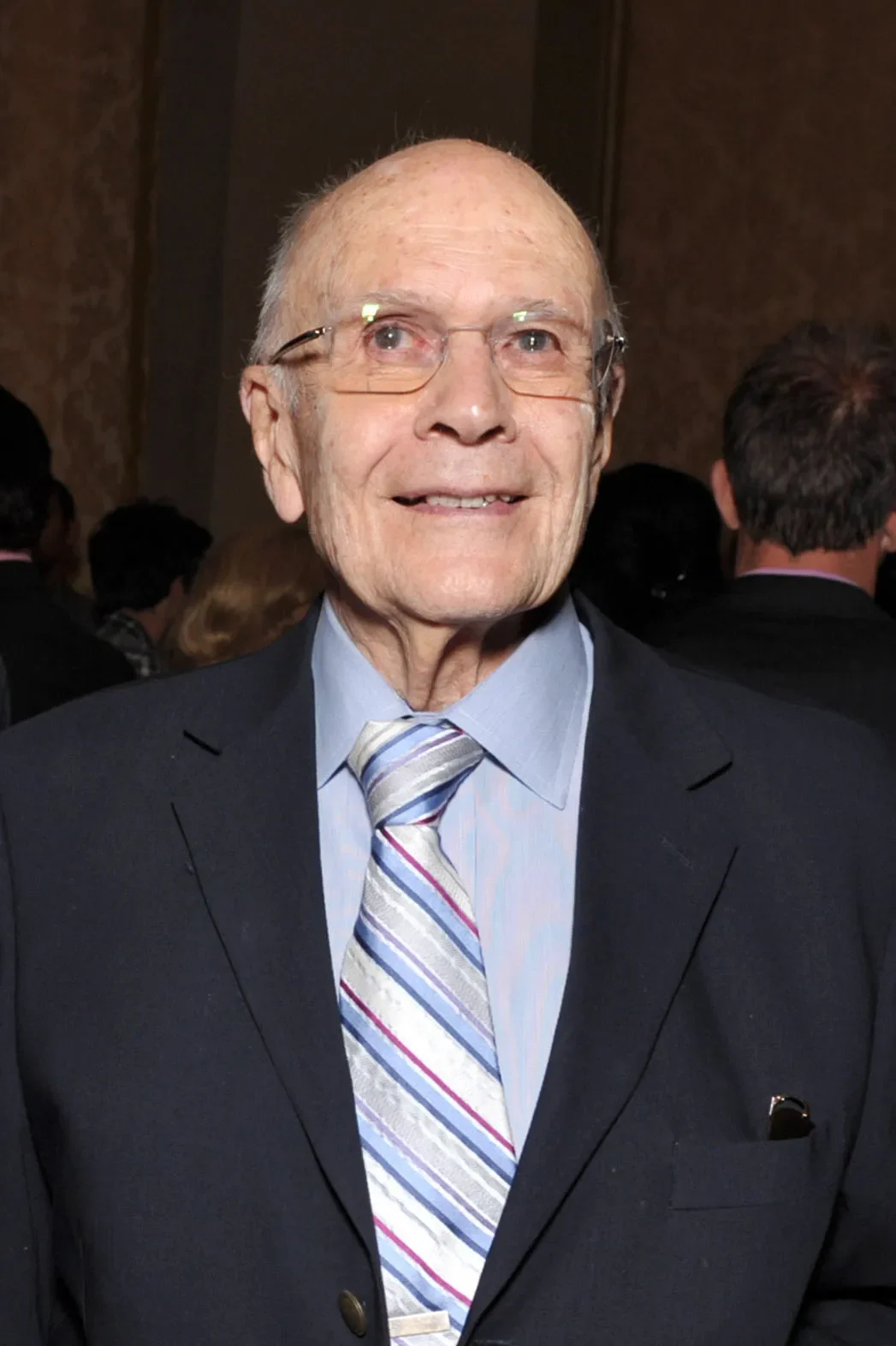
Dixon Q. Dern, a towering figure in Hollywood’s legal landscape whose innovative business acumen and groundbreaking deals helped define modern entertainment law, passed away on July 19. He was 97. His extensive career, spanning over seven decades, saw him represent some of the industry’s most iconic figures and institutions, leaving an indelible mark on how creative endeavors are financed, structured, and distributed. Dern’s passing marks the end of an era for a legal profession that often operated behind the scenes but was nonetheless crucial to the dazzling success of Hollywood.
Born in Colorado Springs, Colorado, Dern’s early academic life was steeped in intellectual rigor. He pursued his undergraduate studies and earned his law degree from the prestigious Stanford University, a foundation that would serve him well in the complex and ever-evolving world of entertainment. It was in the 1950s, a pivotal decade when television was rapidly transforming from a nascent technology into a dominant cultural and economic force, that Dern arrived in Los Angeles. This was a fertile ground for a sharp legal mind capable of navigating the uncharted territories of broadcast rights, talent representation, and the burgeoning syndication market.
Early in his career, Dern demonstrated a keen understanding of the emerging media landscape. One of his first significant clients was UPA Productions, the animation studio behind the beloved "Mr. Magoo" cartoons. This early success signaled his ability to work with creative entities and understand their unique business needs. As television’s influence grew, so did Dern’s client roster, which came to include a constellation of stars and creative powerhouses. He became the trusted legal counsel for luminaries such as Lucille Ball and Desi Arnaz, the pioneering duo behind "I Love Lucy" and the groundbreaking Desilu Productions. His representation of these titans of early television placed him at the epicenter of the industry’s formative years.
Shaping the Business of Television and Beyond
Dern’s involvement with Desilu Productions was particularly impactful. As the head of its legal department, he was instrumental in structuring the business affairs of the company during a period when television syndication was emerging as a vital economic engine. Syndication, the licensing of television programs for broadcast by multiple stations or networks, revolutionized how content was monetized. Dern’s strategic legal frameworks helped Desilu capitalize on this new model, ensuring that the creators and producers received fair compensation and control over their valuable intellectual property. This was a critical development in establishing the long-term financial viability of television programming and a precursor to many modern distribution strategies.
Beyond his work with Desilu, Dern’s influence extended to a wide array of influential figures and organizations. He represented other legendary entertainers, including the comedic genius Bob Hope and the versatile Jackie Gleason, further solidifying his reputation as a go-to attorney for Hollywood’s elite. His representation of The Jackson Five during their meteoric rise to fame placed him at the heart of the music industry’s explosive growth, navigating the complexities of recording contracts, touring, and merchandising for one of the most successful musical families in history. The Television Academy, the organization responsible for the Emmy Awards, also benefited from Dern’s expertise, entrusting him with crucial legal guidance.
A Founding Partner and Industry Architect
Dixon Q. Dern was not only a preeminent legal advisor but also a visionary businessman. He was a founding partner of the esteemed law firm Dern, Mason, Swerdlow & Floum. Under his leadership and strategic vision, the firm cultivated one of Hollywood’s most formidable entertainment law practices. His entrepreneurial spirit extended beyond his firm; he played a pivotal role in the founding of the Creative Artists Agency (CAA), a talent agency that would go on to become one of the most powerful forces in the entertainment industry. Dern’s contributions to CAA’s establishment were crucial in shaping its foundational business structure and operational philosophy, laying the groundwork for its future dominance.
Throughout his distinguished career, Dern was recognized for his pioneering work in developing innovative business structures. He possessed a unique ability to foresee industry trends and create legal frameworks that facilitated growth and protected his clients’ interests. His work often involved complex deal-making, intellectual property management, and the negotiation of intricate contracts that set precedents for future transactions. His over-seven-decade tenure in Hollywood allowed him to witness and actively participate in the industry’s transformation from its black-and-white television roots to the multi-platform, global phenomenon it is today.
A Legacy of Service and Recognition
Dern’s commitment to the legal profession and the entertainment industry extended beyond his transactional work. Recognizing the importance of dispute resolution, he began serving as an arbitrator and mediator in entertainment and labor disputes in 1967. This role underscored his commitment to fostering stability and fairness within the often-contentious environment of Hollywood. His impartiality and deep understanding of industry dynamics made him a respected figure in resolving complex conflicts.
His dedication to professional governance was equally significant. Dern held numerous leadership positions within prominent legal organizations. He served as Vice President and a Member of the Board of Governors of the State Bar of California, demonstrating his commitment to upholding the standards of the legal profession statewide. He was also President of the Beverly Hills Bar Association and a Trustee of the Los Angeles County Bar Association, actively contributing to the development and advocacy of legal practice in one of the world’s most significant legal hubs. Furthermore, his presidency of the Los Angeles Copyright Society highlighted his deep understanding and advocacy for intellectual property rights, a cornerstone of the entertainment industry.
In recognition of his profound and lasting impact on the Television Academy, Dern was honored in 2009 with its Syd Cassyd Founders Award. This prestigious award is bestowed upon Academy members who have made significant contributions to the organization, acknowledging his role not just as a legal advisor but as a dedicated member who helped shape its very fabric. The award served as a testament to his enduring influence and the respect he commanded within the television community.
A Family Man and Enduring Influence
Dixon Q. Dern is survived by his loving children: Chelsea Dern, Warren Dern, Peter Dern, Rosalin Bellante, and Greg Dern. He also leaves behind five grandchildren and many great-grandchildren, a testament to a life lived fully and a legacy that will continue through his family. His personal life, while often private, was clearly a source of strength and joy, providing a grounding counterpoint to his demanding professional life.
The passing of Dixon Q. Dern is a significant loss to the legal and entertainment communities. He was a pioneer who navigated the complex currents of Hollywood with intelligence, integrity, and foresight. His innovative legal strategies and business acumen not only benefited his high-profile clients but also contributed to the robust infrastructure of the entertainment industry as a whole. His work in shaping the business of television syndication, his role in founding CAA, and his extensive service to legal and industry organizations solidify his position as one of Hollywood’s most influential, albeit often unseen, architects. The principles and practices he helped establish continue to guide the industry today, a lasting tribute to a remarkable legal mind and a true titan of entertainment law.

