

Marie Noon, a Michigan resident grappling with adult-onset Still’s disease, a rare inflammatory arthritis, faces a daily regimen of eight medications. These vital drugs manage her heart rate to prevent strokes, alleviate debilitating headaches, and control fluid retention, all consequences of her chronic condition. For years, Noon’s life was a whirlwind of suburban normalcy: ferrying her children to cheerleading and choir, actively participating in the PTA, and managing a bank. This life was irrevocably altered by her diagnosis over a decade ago. The disease plunged her into a reality of excruciating pain, forcing her to crawl to the bathroom and endure constant suffering. For eight years, she was unable to work, her life punctuated by lengthy hospital stays, a period during which she candidly admits, "I honestly thought I was going to die."
The true shock, however, came when Michigan denied her application for Medicaid benefits last year, following the loss of her private insurance. This denial, attributed to an IT error, plunged her into a crisis where she could no longer afford her essential medical care. "I can’t afford my medical care. I have to have insurance," Noon stated, highlighting her return to work now contingent on this critical coverage.
A Systemic Flaw: Deloitte’s Role in Medicaid Eligibility
The issues faced by Marie Noon are not isolated incidents but appear to be part of a broader pattern affecting individuals with disabilities who rely on the Michigan Medicaid system, managed by the state’s Bridges program. This system, developed and operated by Deloitte, a global consulting firm, has been under contract with Michigan since 2006, with total contract values nearing $768 million. Deloitte’s extensive involvement in government benefits administration is significant; the company holds contracts with at least 25 states to build or manage computer systems that govern access to essential safety net programs like Medicaid.
KFF Health News investigations reveal that Michigan’s eligibility system has a concerning track record of misdirecting individuals with disabilities into less comprehensive benefit plans or denying them coverage altogether. This mirrors issues previously brought to light in Tennessee, where similar problems were at the heart of a class-action lawsuit, and in Texas, according to state records and interviews. The KFF Health News investigations draw upon a range of sources, including state official statements, court documents, public records requests, information provided to Medicaid enrollees, and interviews with legal professionals and patients.
Deloitte, in a statement provided by spokesperson Karen Walsh, asserted that it found "no system anomalies causing routine denials of Medicaid for people with disabilities." Walsh further explained that eligibility systems are state-owned and built to specific state requirements, and that Deloitte collaborates "at the direction of our state clients." Lynn Sutfin, a spokesperson for Michigan’s Department of Health and Human Services, echoed this sentiment, stating the department is "not aware of any widespread or systemic issues" within the Bridges system concerning disability-based eligibility pathways.
However, state contracts reviewed by KFF Health News indicate that since 2006, Deloitte has been responsible for the development, implementation, maintenance, operations, and enhancements of Michigan’s eligibility system. This responsibility places the firm at the center of the technological infrastructure governing access to vital healthcare.
The Looming Challenge of System Modernization
The problems plaguing Michigan’s Medicaid eligibility system emerge at a critical juncture as states prepare for significant overhauls to their Medicaid programs. These changes are largely driven by federal legislation, which mandates states to update their computer systems to comply with new requirements. This modernization effort is particularly complex, as approximately 15.5 million individuals on Medicaid nationwide have a disability, according to KFF data.
Pamela Herd, a professor at the University of Michigan specializing in bureaucratic obstacles to government benefits, warned of potential widespread impact: "When these administrative systems get overloaded, everyone gets impacted. The systems are going to be really, really strained." The upcoming changes, set to be implemented in stages through 2025 and beyond, could exacerbate existing vulnerabilities in these complex technological infrastructures.
Marie Noon’s Ordeal: An IT Error with Life-Altering Consequences
Marie Noon’s eligibility for Medicaid was intended to be through a program designed for disabled adults who are employed. However, Michigan’s computer system failed to recognize her disability status and incorrectly flagged her income as too high to qualify, according to documents reviewed by KFF Health News and interviews with Noon and her attorney, Anastassia Kolosova of Disability Rights Michigan.
Without Medicaid, Noon faced immense financial strain, spending hundreds of dollars out-of-pocket for her prescriptions, often relying on discount coupons. Some of these medications require twice-daily dosages. "I’m toast," she stated, describing the constant anxiety of not knowing if her monthly medication costs would range from $50 to $500. Her doctor even agreed to reduce the frequency of her visits to mitigate medical expenses. "It was kind of a nightmare," Noon recounted.

A History of Systemic Failures
Medicaid, a crucial safety net program jointly funded by federal and state governments, provides coverage to approximately 67 million individuals with low incomes or disabilities. State agencies depend on companies like Deloitte to design and operate the sophisticated computer systems that determine eligibility for Medicaid and the Supplemental Nutrition Assistance Program (SNAP).
Previous KFF Health News investigations have documented a pattern of errors in Deloitte-managed eligibility systems, leading to the deprivation of benefits for eligible individuals. Kenneth Smith, a Deloitte executive, has previously stated that Medicaid eligibility technology is state-owned and that states direct their operation and policy implementation. He emphasized, "They’re not Deloitte systems," framing Deloitte as one component within a larger administrative ecosystem.
States are currently under significant pressure to update their eligibility systems to meet the mandates of recent federal legislation. Companies such as Deloitte, Accenture, and Optum are receiving substantial taxpayer funds to implement these changes, which are projected to affect millions of individuals by 2034. While many of the new coverage restrictions do not apply to individuals with disabilities, the increased demands on state agencies and their oversight of computer systems are expected to cause disruptions in benefit access, according to advocates and healthcare experts.
The critical function of these systems is to accurately classify individuals for Medicaid, thereby determining the applicable rules and restrictions. The SNAP restrictions began taking effect in 2025, with major Medicaid provisions slated to commence later this year.
Anastassia Kolosova, a supervising attorney with Disability Rights Michigan, expressed her frustration at being unable to secure a meeting with Michigan officials to thoroughly investigate the systemic issues that led to Noon’s coverage denial.
Deloitte’s Dominance and Past Performance in Michigan
Deloitte’s involvement with Michigan’s Bridges system spans at least 14 years. The company frequently highlights its extensive national footprint in Medicaid operations as a key selling point for securing new contracts. In its bid documents for Michigan, Deloitte stated, "Deloitte understands Bridges," positioning itself as the "ideal vendor" due to its historical presence in the state and its "technical expertise drawn from across the nation" through work on similar systems in 31 other states.
However, disability advocates argue that Michigan’s computer system has consistently failed to recognize when certain adults should qualify for Medicaid benefits. This issue is not confined to Michigan. In Tennessee, a 2020 class-action lawsuit filed by Medicaid beneficiaries alleged that the Deloitte-built system "does not reliably test for eligibility" for several categories of individuals with disabilities. Deloitte’s contract in Tennessee is valued at $1.12 billion over ten years. In 2024, a federal judge ruled in favor of the beneficiaries, finding that Tennessee had violated federal law and the U.S. Constitution, though Deloitte was not named as a defendant in the suit.
A 2010 report from Michigan’s Office of the Auditor General identified significant shortcomings in the state’s oversight of the Bridges project. The audit found that government agencies "did not provide effective project administration" and failed to ensure the state could "independently maintain and operate Bridges" because the contractor "did not transfer knowledge and skills" to state officials. Consequently, Deloitte’s initial contract, valued at approximately $70 million, ballooned by an additional $50 million, a 71% increase. Further state records indicate that Michigan would eventually allocate millions more, bringing the total cost of Deloitte’s initial contract to $124.1 million. The audit concluded that continuing the contract would result in "significant additional costs."
Despite these past findings, Sutfin stated that "the state is now fully capable of operating and maintaining Bridges independently." Deloitte’s latest contract with Michigan, valued at $197.4 million, is scheduled to expire in 2030.
The Path to Reinstatement and Ongoing Advocacy
Marie Noon applied for Medicaid in August 2025. By September, she received a denial notice from the Michigan Department of Health and Human Services, citing inaccurate income information and incorrectly stating she was not disabled. Kolosova noted that when Noon contacted the state for assistance, caseworkers were unfamiliar with the "Freedom to Work" program she had applied for. "I can’t tell you how many times I just wanted to give up," Noon admitted.
For some individuals with disabilities, Medicaid regulations stipulate that only half of their earnings should be considered when determining eligibility. This crucial detail was overlooked in Noon’s case. Kolosova believes that Michigan’s eligibility system failed to identify Noon as disabled, despite the state possessing all the necessary information. This misclassification led to the application of an incorrect income formula, resulting in the denial of her benefits. Both Deloitte and Michigan officials declined to provide detailed responses to questions regarding Noon’s experience.
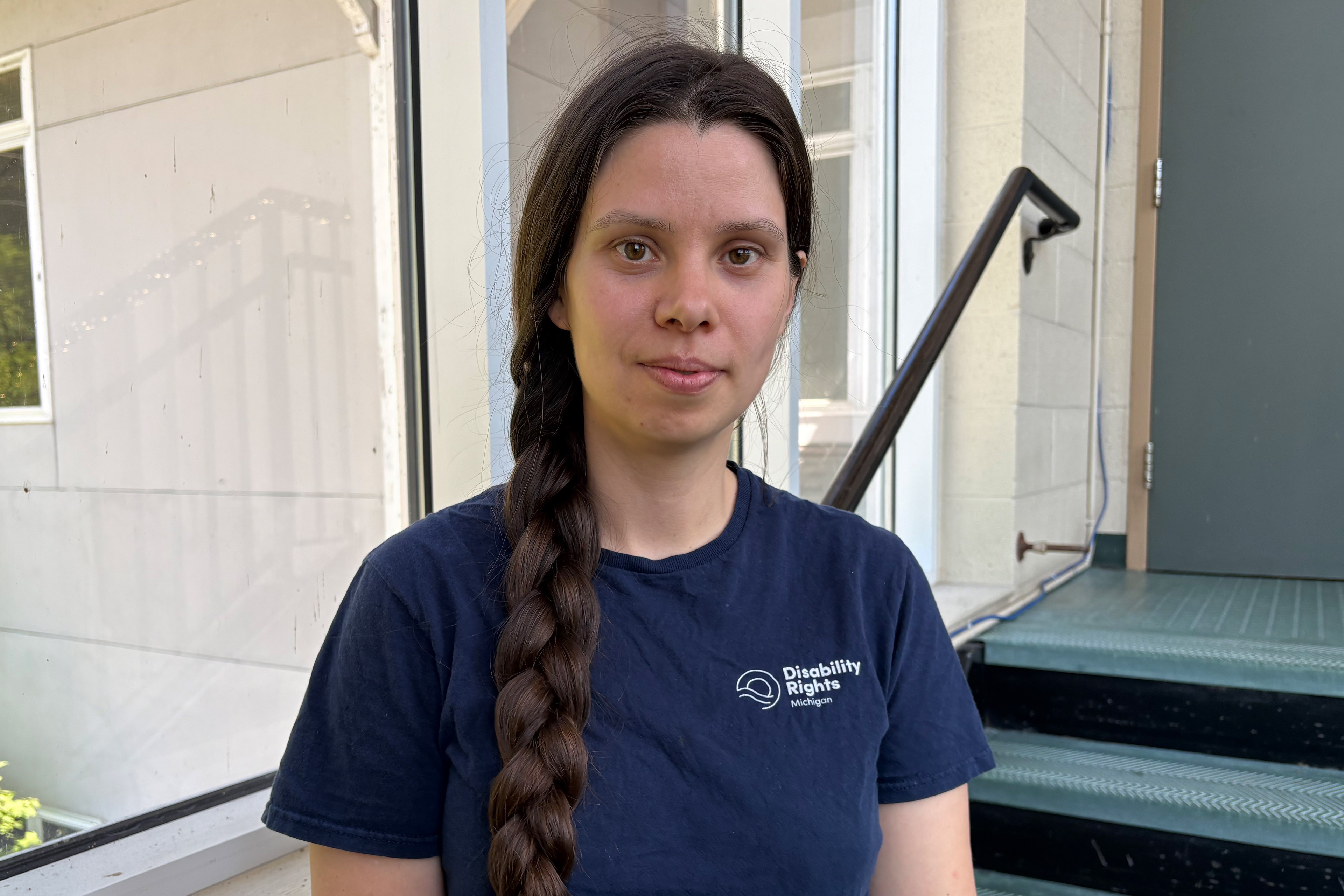
Disability Rights Michigan has observed a rising number of inquiries from individuals facing denials for Freedom to Work benefits, averaging "two or three a month," according to Kolosova. She emphasized, "There’s something wrong with the system if they’re relying on individual caseworkers to catch this. The system needs to work."
Similar Errors in Other States: The Texas Experience
Noon’s situation is not unique. In Texas, in 2023, Lilly Livingston, a 22-year-old with Down syndrome, was abruptly removed from Medicaid. Her mother, Marie Livingston, explained that her daughter requires extensive Medicaid services, including speech and occupational therapy, due to multiple surgeries to correct a severely misaligned jaw that caused sleep apnea and impaired her speech and chewing abilities. When Livingston lost her benefits, she was mistakenly enrolled in "Healthy Texas Women," a program offering limited services for breast and cervical cancer screenings and family planning. "Trying to fix that was a nightmare," Marie Livingston stated.
Terry Anstee, an attorney with Disability Rights Texas, intervened, sending an urgent email to a Texas Medicaid eligibility worker in September 2023. Anstee highlighted that an unspecified "error" had led to Livingston’s benefits being revoked, stressing that her "recovery is contingent on Medicaid." He found it inexplicable, as Livingston qualified for Medicaid through multiple pathways.
Deloitte declined to comment on Livingston’s case. Jennifer Ruffcorn, a spokesperson for Texas Health and Human Services, confirmed Livingston was erroneously enrolled in Healthy Texas Women but asserted she did not experience a lapse in coverage in 2023. Anstee disputed this, maintaining that "Ms. Livingston experienced lapses in coverage" during August and September 2023.
Michigan’s "Plan First" Program and Declining Enrollment
A similar issue emerged in Michigan in 2024, where mental health advocates reported that individuals with disabilities were being automatically enrolled in "Plan First," a limited Medicaid program covering sexual health and family planning services, such as birth control and treatment for sexually transmitted infections. This program does not offer the comprehensive coverage required by individuals with disabilities.
Malcolm Kletke, a lobbyist representing the Community Mental Health Association of Michigan and other providers, wrote to a Michigan health official, expressing concern that enrollees "had long received Medicaid due to their disability," and that enrollment in Plan First meant losing access to "services essential to their recovery and quality of life."
State records indicate a decline in Medicaid enrollment for individuals with disabilities. Over a roughly four-year period, enrollment in this category fell by 10% in Michigan, according to analysis from the Michigan House Fiscal Agency. This decline is unusual, as individuals typically leave the program due to death or recovery from temporary conditions. Robert Sheehan, former CEO of the mental health association, deemed such numbers unlikely to "balloon."
Sutfin stated that the state investigated the enrollment decline and identified "several contributing factors, including post-covid renewal patterns, changes in beneficiary circumstances and movement to other coverage categories." Following inquiries from KFF Health News, the Michigan health department acknowledged making changes to "address concerns raised by advocates." The state’s computer system now requires an evaluation of all other coverage options before approving Plan First benefits. Sutfin clarified that these changes were implemented "not to correct system errors." The state submitted a change request to Deloitte, with the fix implemented in January 2025. Prior to Kletke’s email, the state had denied the existence of problems related to Plan First.
The Long Fight for Reinstatement
Despite these systemic issues and subsequent state actions, Marie Noon’s fight for reinstatement was arduous. Her coverage denial notice arrived in September 2025. She spent months appealing the decision, "paying cash for all of the medicines through these appeals over and over and over again." It was not until January 2026 that her coverage was finally approved. "I literally cried," Noon said. "It was a really big deal." Her experience underscores the profound challenges faced by vulnerable populations when technological systems designed to provide essential support fail to function as intended, leaving individuals to navigate a labyrinth of bureaucratic hurdles and financial strain.

