
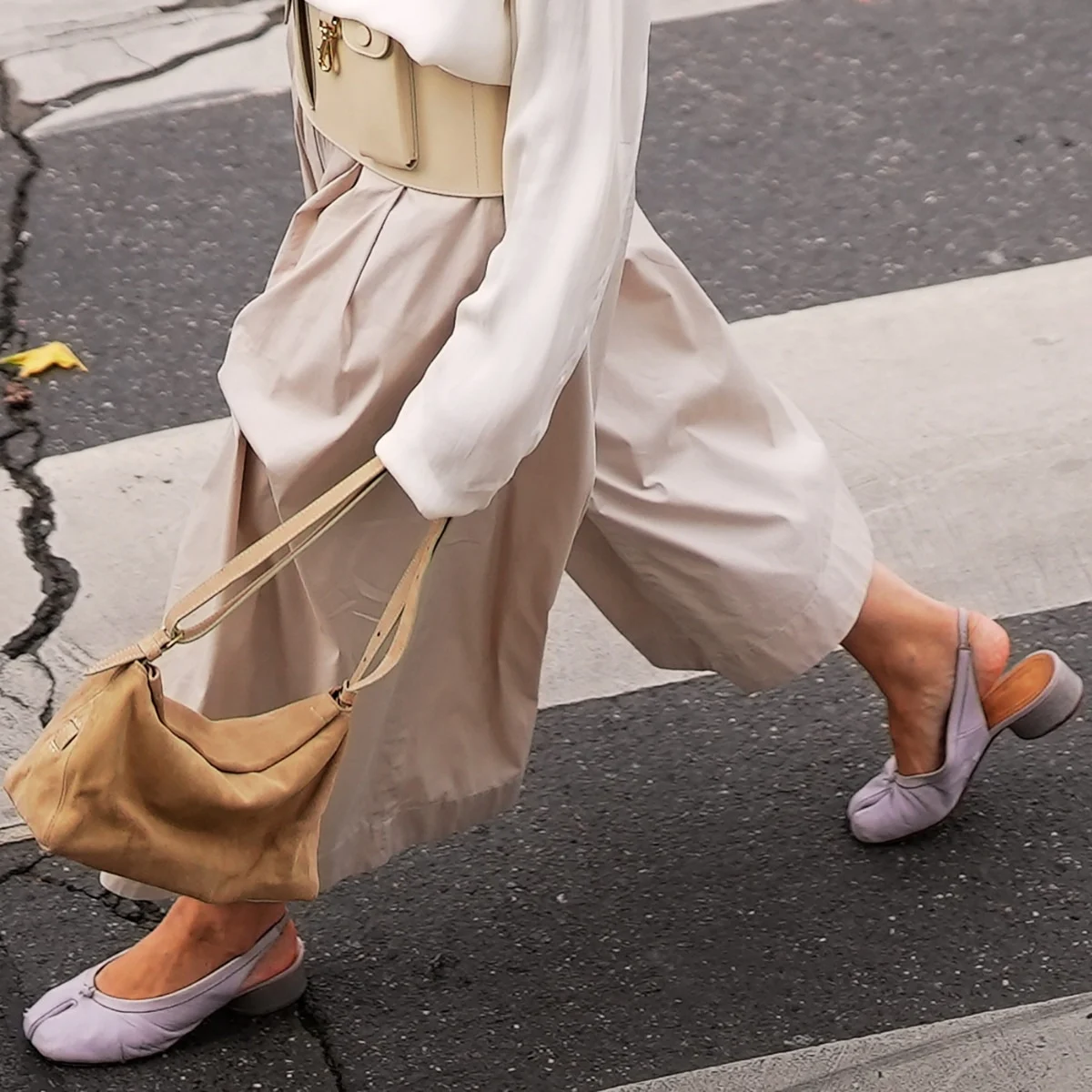
The fashion industry has long been defined by its cyclical nature, where historical artifacts frequently resurface as avant-garde statements. Currently, the most polarizing example of this phenomenon is the Tabi, a split-toe footwear design that has transitioned from a niche luxury item to a ubiquitous presence in contemporary retail. While the aesthetic—often colloquially compared to a cloven hoof—has historically divided public opinion, the current market data suggests a definitive shift in consumer sentiment. Viral social media traction, combined with the proliferation of accessible "dupe" culture, has pushed the Tabi silhouette into the mainstream, making it a defining accessory for the upcoming autumn season.
Historical Origins and Evolution
The Tabi is not a modern invention; its origins can be traced back to 15th-century Japan. During this period, the design emerged as a functional necessity. The Tabi served as a sock, constructed with a distinct separation between the big toe and the remaining toes, designed specifically to be worn with Zori—traditional thong-style sandals made from rice straw, lacquered wood, or animal hides. This design was not merely stylistic; it provided superior stability and grip for laborers and travelers navigating uneven terrain.
The transition of the Tabi into high fashion occurred in the late 20th century, most notably through the intervention of the Belgian designer Martin Margiela. In his inaugural 1989 runway show, Margiela introduced the Tabi boot to the Western fashion lexicon. By isolating the big toe, Margiela challenged traditional anatomical silhouettes in footwear. For decades, the design remained a hallmark of the Maison Margiela brand, signaling a wearer’s commitment to high-concept, intellectual fashion. These original pieces, which can retail for several thousand dollars, have historically been viewed as collector’s items rather than everyday wear.
The Surge of the Accessible Market
The recent democratization of the Tabi is primarily driven by the "dupe" phenomenon on platforms such as TikTok and Instagram. As high-end luxury items become increasingly unattainable for the average consumer, digital marketplaces have pivoted to provide lower-cost alternatives. This shift has turned the Tabi from a symbol of exclusivity into an accessible commodity.
Market analysis indicates that the availability of Tabi-style flats starting at price points under $50 has lowered the barrier to entry significantly. Brands like CUSHIONAIRE, Steve Madden, and various independent retailers on Amazon have capitalized on this demand, offering variations that mimic the split-toe aesthetic while incorporating modern, mass-produced comfort technologies like cushioned footbeds and synthetic leather uppers. This commercial pivot suggests a broader industry trend where design-led, once-niche silhouettes are rapidly scaled to meet the requirements of fast-fashion consumption cycles.
Styling and Consumer Adoption
Despite its controversial visual profile, the Tabi flat has proven to be remarkably versatile. Fashion stylists note that the design functions similarly to the classic ballet flat, providing a sleek, low-profile base for a variety of outfits. The structural eccentricity of the toe box acts as a focal point, allowing for minimalist clothing pairings to appear more intentional and curated.

The adoption of the trend has been bolstered by the emergence of specialized hosiery. The development of split-toe socks, which are now widely available, has solved the primary functional hurdle of wearing the shoe in colder weather. This technological adaptation—the creation of a "no-show" sock compatible with the split-toe silhouette—has been critical in transitioning the shoe from a summer sandal to a year-round staple, particularly for the autumn months.
Market Landscape: A Comparison of Options
The current retail landscape offers a spectrum of Tabi-inspired footwear, catering to different consumer priorities, ranging from luxury craftsmanship to utilitarian affordability:
- Luxury Tier: Maison Margiela continues to set the benchmark for the silhouette. Their collection, encompassing boots, loafers, and ballet flats, remains the standard-bearer, emphasizing premium leathers and European manufacturing.
- Contemporary Accessible Tier: Brands like Jeffrey Campbell and Steve Madden occupy the mid-range market. These labels often incorporate trend-forward elements, such as mesh textures, Mary Jane straps, or slight heels, to modernize the traditional flat.
- Mass Market Tier: Retailers utilizing platforms like Amazon, including brands like VBDB and CUSHIONAIRE, focus on high-volume production, offering diverse colorways and material finishes that prioritize immediate accessibility and affordability.
Broader Implications for Fashion Consumption
The rise of the Tabi signifies a shift in how fashion trends propagate in the digital age. In previous decades, the trickle-down theory of fashion—where styles moved from haute couture runways to mass-market retail over several years—was the industry standard. Today, that timeline has collapsed. The Tabi reached peak social media saturation within months of regaining traction, with "dupes" appearing on retail sites almost simultaneously with editorial features.
This acceleration has profound implications for luxury houses. While the proliferation of lower-cost alternatives keeps the brand name and the aesthetic at the forefront of the cultural conversation, it also risks the dilution of the "exclusivity" that often drives luxury sales. Maison Margiela has not issued formal statements condemning the proliferation of these copies, a silence that is often interpreted in the industry as an acknowledgment that the brand’s original intellectual property has already served its purpose as a trendsetter.
Future Outlook and Sustainability
As we move into the upcoming fashion weeks and the peak of the fall season, industry experts anticipate that the Tabi will become as common as the loafer or the classic pump. However, the environmental impact of this trend remains a topic of quiet concern among sustainability advocates. The mass production of non-biodegradable synthetic leathers used in many of these affordable alternatives stands in stark contrast to the traditional craftsmanship of the original Japanese Tabi.
Furthermore, the longevity of the trend is under scrutiny. While the silhouette is currently enjoying a high-velocity moment, its status as a "controversial" item means it is susceptible to rapid fatigue. Whether the Tabi becomes a permanent fixture in the modern wardrobe or remains a seasonal curiosity depends on the consumer’s willingness to continue prioritizing the unconventional silhouette over more traditional, ergonomic footwear designs.
Conclusion
The transformation of the Tabi from a historical Japanese garment to a global, internet-fueled fashion sensation is a case study in modern style dynamics. It reflects a consumer base that is increasingly eager to experiment with challenging aesthetics, provided those aesthetics are made affordable and functional. As the season progresses, the split-toe flat will likely remain a fixture of street style, serving as a reminder that in the contemporary fashion world, the most enduring trends are often those that initially provoke the most resistance. Whether one views the design as an architectural triumph or a polarizing experiment, the Tabi has successfully secured its position as the defining footwear silhouette of the current fashion cycle.

