
Humanity has long sought to impose order on the chaotic patterns of the atmosphere, developing an extensive lexicon of proverbs, superstitions, and folk wisdom to predict the shifting skies. While many of these adages—some dating back to antiquity—served as essential survival heuristics for agrarian and seafaring societies, modern meteorological science has frequently found them to be overly simplistic or fundamentally flawed. By examining the biological, atmospheric, and physical mechanisms behind our most pervasive weather myths, we can gain a clearer understanding of how the environment actually interacts with our daily lives.
The Cold Weather Causation Fallacy
Perhaps the most resilient myth in public health is the belief that exposure to low temperatures directly causes the common cold or influenza. This misconception, often reinforced by parental admonitions to wear a coat or risk illness, conflates correlation with causation.
From a medical microbiology perspective, the distinction is critical. Cold temperatures do not, in isolation, cause viral infections. These illnesses are caused by pathogens—specifically rhinoviruses, coronaviruses, and influenza viruses. The seasonal spike in respiratory illness observed during winter months is the result of a complex interplay of environmental, social, and physiological factors rather than the cold itself.
The primary driver of winter illness is the shift in human behavior. As temperatures drop, populations move indoors, often congregating in poorly ventilated, heated spaces. This increased proximity facilitates the transmission of airborne droplets and aerosols, which are the primary vehicles for viral spread. Furthermore, indoor heating systems significantly lower relative humidity. When humidity levels fall, the mucous membranes in the human nose and throat dry out, reducing the efficacy of the body’s primary mechanical defense against inhaled pathogens.

Physiologically, cold air does play a secondary role. Research indicates that inhaling frigid, dry air can induce vasoconstriction in the lining of the nose. By restricting blood flow to these tissues, the body effectively limits the delivery of white blood cells to the very site where viral particles first make contact. While this may slightly increase susceptibility, it is a nuance that has been grossly oversimplified in common parlance. The virus is the catalyst; the cold weather is merely the facilitator.
Reassessing the Lightning Paradox
The phrase "lightning never strikes the same place twice" has evolved into a common idiom used to describe the unlikelihood of a specific, rare event recurring. However, in the realm of atmospheric physics, this is demonstrably false.
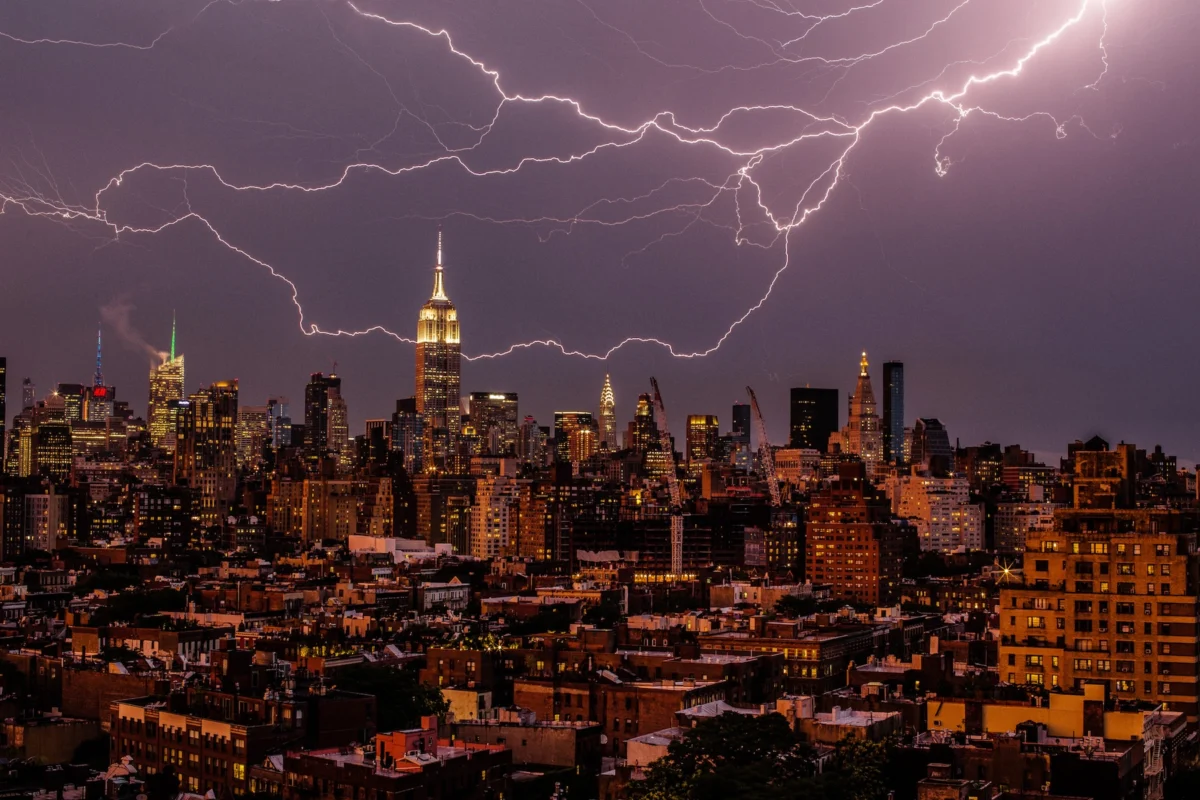
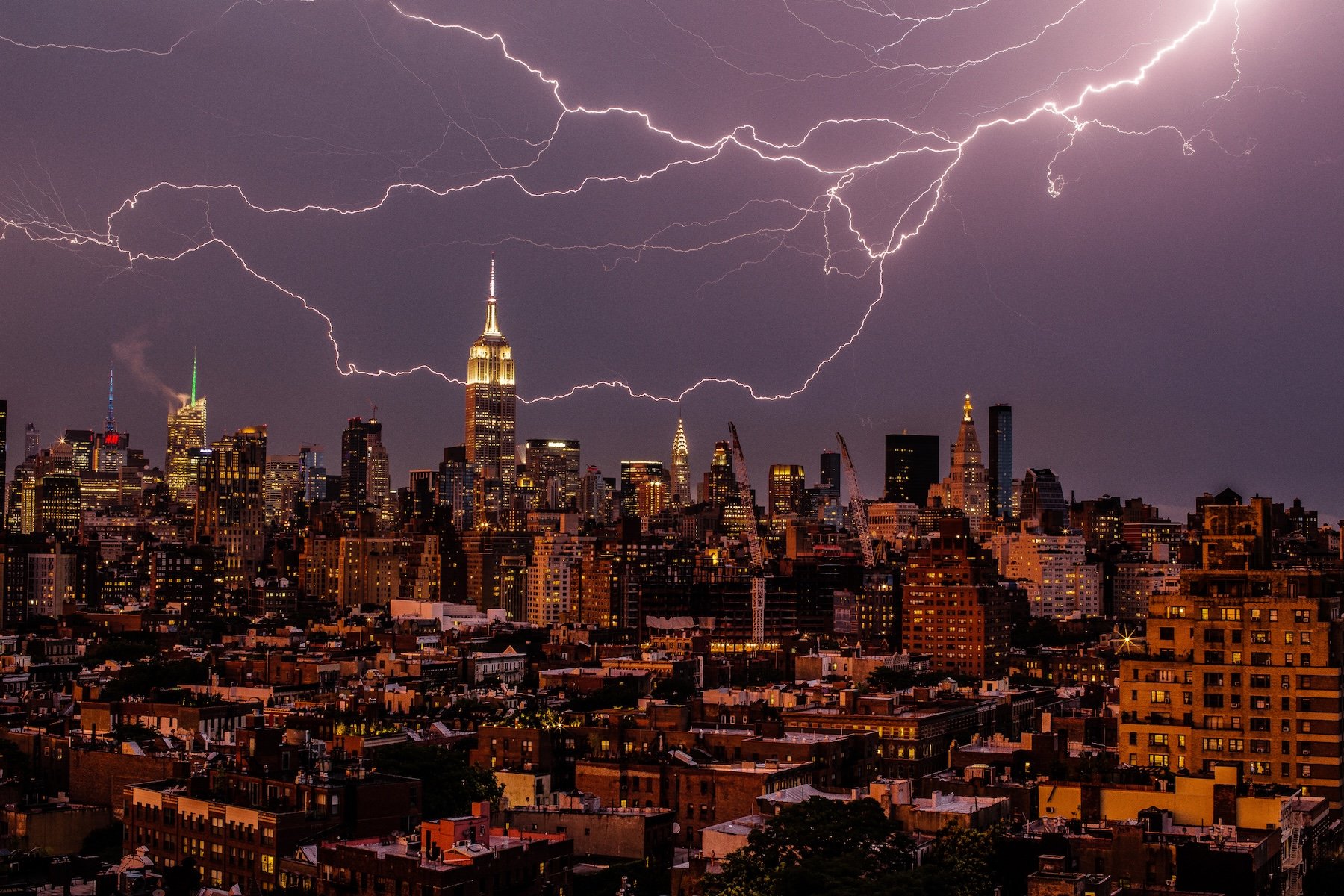
Lightning is a massive electrostatic discharge that seeks the path of least resistance to ground, which is typically the tallest, most conductive object in the vicinity. Consequently, tall structures are not only capable of being struck multiple times; they are frequently struck in rapid succession during a single storm event.
Data from the National Oceanic and Atmospheric Administration (NOAA) confirms that lightning does not randomly distribute its strikes. In dense urban environments, iconic structures such as the Empire State Building in New York City serve as lightning rods for the surrounding area. Records indicate that the building is struck approximately 25 times per year. Similarly, the CN Tower in Toronto, designed with advanced grounding systems, experiences upwards of 75 strikes annually.
These statistics highlight a significant implication for structural engineering and urban safety. Modern architecture in high-risk areas incorporates sophisticated lightning protection systems, including lightning rods (air terminals), down conductors, and grounding networks. These systems do not prevent lightning from striking, but rather manage the discharge safely, ensuring that the electrical energy is dissipated into the earth without causing structural damage or fire. While the myth persists as a metaphor for rarity, the reality of atmospheric electricity is far more predictable: if a structure is the tallest, most conductive point in a thunderstorm’s path, it will attract the discharge repeatedly.
The Predictive Validity of Atmospheric Colors
The adage "Red sky at night, sailor’s delight; red sky in the morning, sailors take warning" is one of the oldest weather-forecasting tools in existence. Unlike many other myths, this one possesses a foundation in actual fluid dynamics and atmospheric optics.
The color of the sky at sunrise or sunset is determined by the scattering of sunlight through the atmosphere. As light travels through the air, molecules and particles scatter shorter wavelengths (blue and violet) more efficiently than longer wavelengths (red and orange). When the sun is near the horizon, its light must pass through a much thicker layer of the atmosphere. If the atmosphere is laden with dust, aerosols, or high-pressure systems, the blue light is scattered away, leaving the red and orange hues to reach the observer’s eyes.
In the mid-latitudes—specifically between 30 and 60 degrees latitude—the prevailing winds blow from west to east. This is known as the "prevailing westerlies." A red sky at sunset implies that the sky to the west is relatively clear of clouds and potentially influenced by a high-pressure system, which generally brings stable, fair weather. Since this air mass will move eastward, it will likely bring that fair weather to the observer the following day.
Conversely, a red sky in the morning indicates that the high-pressure system has already passed to the east. By the logic of the prevailing westerlies, the weather system following the high-pressure zone—usually a low-pressure trough or a cold front—is approaching from the west.
This mechanism is scientifically sound but geographically limited. It relies entirely on the existence of prevailing westerlies. In the tropics, where weather patterns are often driven by localized convective heating rather than the movement of mid-latitude frontal systems, the color of the sunrise or sunset offers little to no predictive value for the coming day’s weather. Thus, while the proverb is not a universal law, it serves as a remarkably accurate observation of mid-latitude atmospheric movement.

Implications for Public Understanding
The persistence of these myths serves as a case study in how human societies attempt to reconcile complex natural phenomena with simplified cognitive models. Understanding the science behind weather patterns has profound implications, ranging from individual health decisions to large-scale infrastructure planning.
- Public Health: Recognizing that viruses—not temperature—are the cause of illness shifts the focus toward hygiene, such as hand-washing and improving indoor air quality, rather than an excessive reliance on layers of clothing.
- Infrastructure Resilience: Moving past the "lightning" myth allows for more robust investment in protective technologies. Acknowledging that certain locations are high-risk areas for lightning strikes necessitates the installation of advanced grounding systems, which have become a non-negotiable standard in urban planning.
- Climate Literacy: The "red sky" example demonstrates the importance of spatial awareness in meteorology. It teaches the public to observe the movement of weather systems rather than relying on static, universal rules.
In conclusion, the intersection of folklore and meteorology provides a unique window into the human experience. While these myths were born from a genuine, centuries-old effort to understand the environment, they are often insufficient for the demands of the modern world. By applying rigorous scientific analysis to these beliefs, we do more than just correct the record; we empower ourselves to make better-informed decisions in the face of an ever-changing climate. The weather may remain beyond our control, but through science, it is no longer beyond our understanding.

