
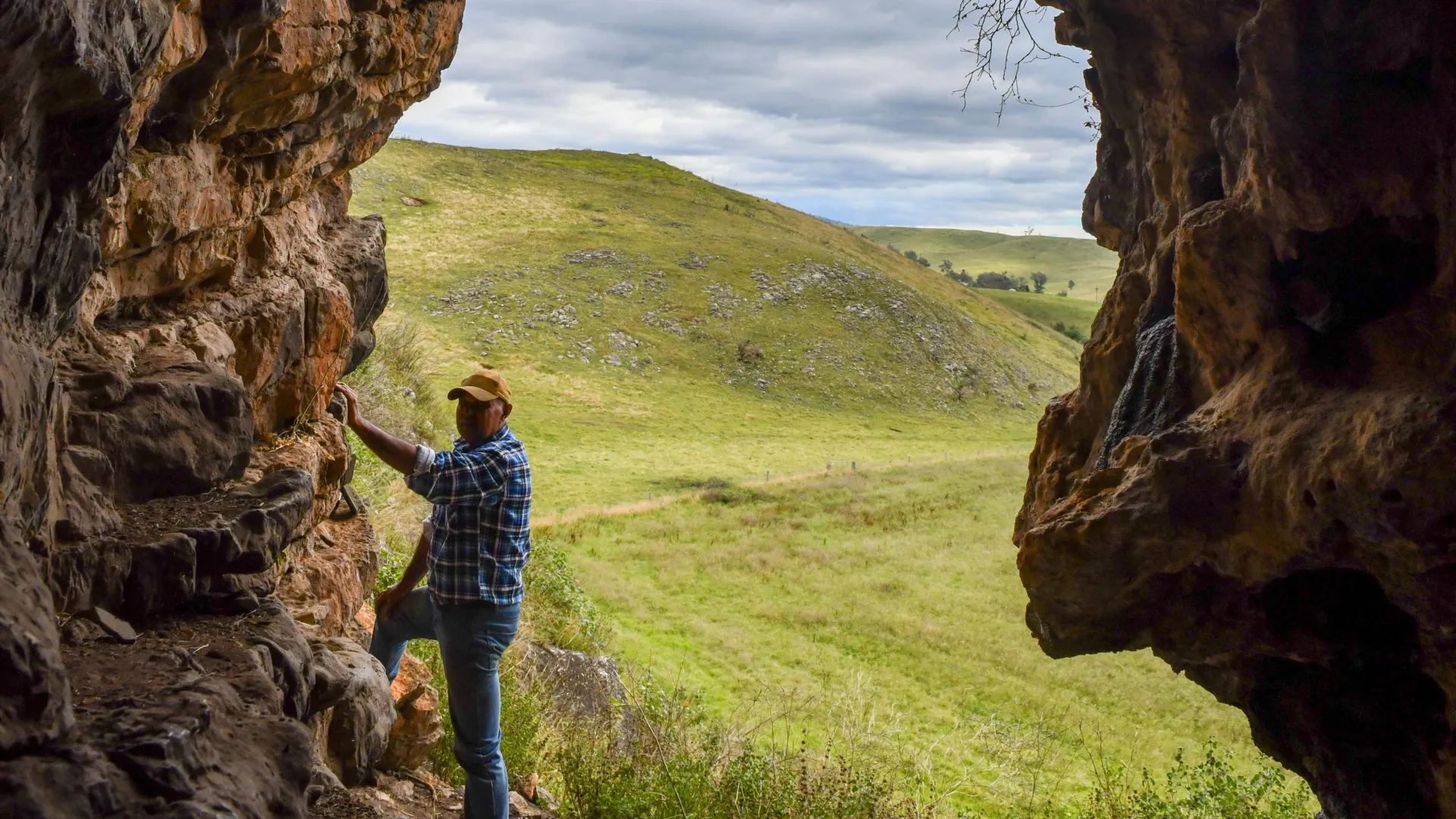
For over two and a half decades of millennia, the deep, limestone chambers of Cloggs Cave in the southern Victorian Alps have served as a repository of spiritual significance for the GunaiKurnai people. Recent archaeological investigations have provided definitive scientific validation of oral traditions that have persisted for generations. These findings indicate that the cave was not a domestic living space but a site of profound ritualistic importance, where practitioners—known as mulla-mullung—conducted ceremonies involving fire, magic, and healing, creating a continuous record of cultural activity that spans nearly the entirety of known human occupation in the region.
The latest study, published in the journal Frontiers in Environmental Archaeology, details how researchers from the Australian National University, Monash University, and international partners analyzed microscopic plant remains to reconstruct the ritual life of the GunaiKurnai ancestors. By examining phytoliths—durable silica structures formed within plant tissues—the team confirmed that the Old Ancestors intentionally transported specific grasses into the dark, lightless interior of the cave to be burned in a rhythmic, repeated fashion.
The Chronology of Ritual Persistence
The archaeological record at Cloggs Cave is remarkably dense. Excavations conducted between 2019 and 2020, spearheaded by the GunaiKurnai Land and Waters Corporation in partnership with academic institutions, focused on two primary pits measuring 1.5 meters and 2.3 meters in depth. Through the application of optically stimulated luminescence and accelerator mass spectrometry carbon dating, researchers established a precise timeline of activity.
The upper layers of the excavation revealed 73 distinct ash strata, representing a consistent cycle of ritual burning occurring between 4,400 and 1,600 years ago. However, the scope of the site’s usage extends far deeper. Evidence of burnt plant material persists throughout the dated deposits, stretching back approximately 25,000 years. This duration places Cloggs Cave among the most significant sites for understanding the long-term continuity of Aboriginal ritual practices in Australia.
Interspersed within these ancient layers, archaeologists uncovered a 28-centimeter-high standing stone. Forensic analysis of the context suggests this object was deliberately placed in the cave approximately 2,000 years ago, serving as a focal point for ceremonial activities. The placement of such an object, combined with the deliberate selection of botanical materials, highlights a sophisticated level of site management that contradicts any notion of casual or opportunistic cave usage.
Microscopic Clues and Botanical Selection
The identification of the ritual practices relied heavily on the study of phytoliths. Unlike pollen, which is easily transported by wind or water, phytoliths remain localized to the area of plant decay or burning. Because Cloggs Cave is entirely devoid of natural light, the vegetation required for photosynthesis cannot grow within its chambers. Therefore, the presence of these microscopic silica bodies—found in abundance within the ash layers—proves that they were introduced by external agents.
Dr. Elle Grono, the corresponding author of the study and a researcher at the Australian National University, noted that the distinction between natural and anthropogenic deposition was critical. "We focused on half-burnt phytoliths from ashy layers, which can only have been brought in by people," she explained. The team identified 29 distinct types of phytoliths, ranging from grasses to woody plants. Notably, 97% of the total collection consisted of grass phytoliths, suggesting a highly specific selection process.
Analysis revealed that the GunaiKurnai ancestors favored certain species of the Pooideae and Panicoideae subfamilies, often bypassing more common local vegetation found in the surrounding riparian forests and open woodlands. Furthermore, the presence of entire plant structures—stems, leaves, flowers, and roots—indicates that the gatherers brought in whole plants rather than simple forage. This deliberate curation suggests that the specific properties of these grasses, whether functional or symbolic, were central to the rituals performed within the cave.
Archaeological Significance and Cultural Collaboration
The research project represents a milestone in collaborative archaeology, characterized by a partnership between the GunaiKurnai Land and Waters Corporation and academic researchers. The GunaiKurnai representatives were involved in every stage of the process, from initial research design to fieldwork and the final interpretation of the findings. This model ensures that the scientific outcomes remain grounded in the living cultural knowledge of the Traditional Owners.
Professor Bruno David of Monash University, who co-led the excavations, emphasized that the scientific data aligns seamlessly with the historical accounts of the mulla-mullung. "Their burning is consistent with GunaiKurnai traditional practices of using ash to perform magic and rituals, and also to track the footsteps of anyone coming in, including spirit-Beings," David stated.
The findings are further supported by discoveries in deeper, older strata of the cave. Previous excavations unearthed trimmed wooden sticks smeared with animal fat, a discovery associated with the Casuarina tree. These artifacts, when viewed alongside the phytolith evidence, present a comprehensive picture of a site that served as a specialized venue for complex spiritual work. The rituals were not static; they evolved over millennia, adapting to changing environmental conditions while maintaining a core adherence to tradition.
Broader Implications for Australian Archaeology
The implications of the Cloggs Cave study extend beyond the borders of Gippsland. It challenges archaeological frameworks that have historically struggled to categorize ritual sites, often defaulting to labels such as "habitation" or "shelter." By confirming that Cloggs Cave was used for the deliberate deposition and burning of materials for 25,000 years, the research provides a template for identifying similar sites across the continent.
The persistence of these practices also underscores the resilience of the GunaiKurnai nation. Despite the environmental fluctuations of the Late Pleistocene and the Holocene, the community maintained a consistent spiritual connection to this specific landscape. The 25,000-year timeline provides empirical evidence of the deep-time heritage of the GunaiKurnai, reinforcing their status as the traditional custodians of the southern Victorian Alps and the Gippsland region.
Furthermore, the study highlights the efficacy of using microscopic botanical evidence to reconstruct human behavior in the deep past. As environmental archaeology becomes increasingly sophisticated, the ability to discern the difference between human-led activities and natural environmental change will continue to refine our understanding of how ancient societies interacted with their surroundings.
Future Research Directions
While the current findings provide a robust foundation for understanding the ritual history of Cloggs Cave, the researchers acknowledge that much remains to be explored. Future studies may look to expand the geographic scope of this work, investigating other caves within the region to determine if similar ritual patterns exist elsewhere. Additionally, further analysis of the unburnt phytoliths could provide insights into the specific environments and ecosystems that existed in the region thousands of years ago, offering a clearer picture of the landscape the GunaiKurnai ancestors navigated.
For the GunaiKurnai, the study is more than an academic achievement; it is a validation of the knowledge passed down through their oral traditions. It reaffirms the legitimacy of the mulla-mullung’s legacy and ensures that the cultural significance of the landscape is documented for future generations. As the archaeological and traditional knowledge communities continue to work in concert, the story of Cloggs Cave serves as a profound example of how scientific inquiry can honor and illuminate the enduring heritage of Australia’s First Nations.
In conclusion, the investigation at Cloggs Cave has effectively bridged the gap between oral history and physical evidence. Through the meticulous examination of microscopic plant remains and the application of rigorous dating techniques, researchers have mapped a quarter of a million years of human ritual activity. This site stands as a testament to the sophistication of the GunaiKurnai people and their long-standing relationship with the landscape, proving that even the smallest, microscopic traces can tell the story of a culture that has thrived for millennia.

