
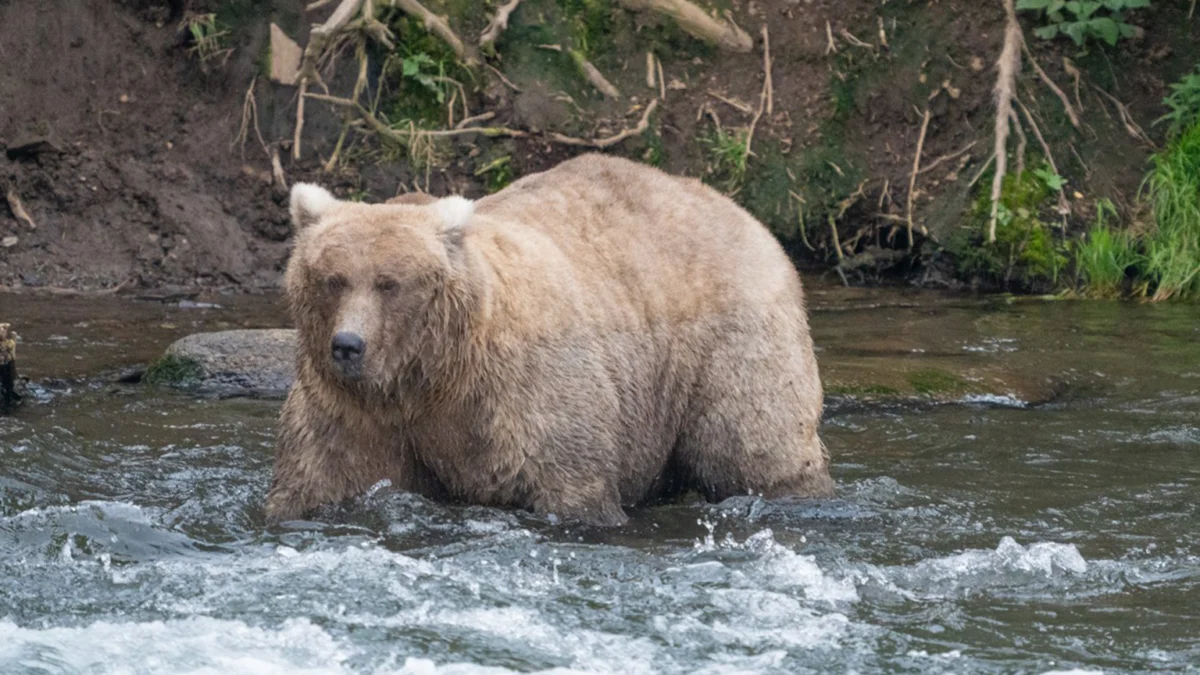
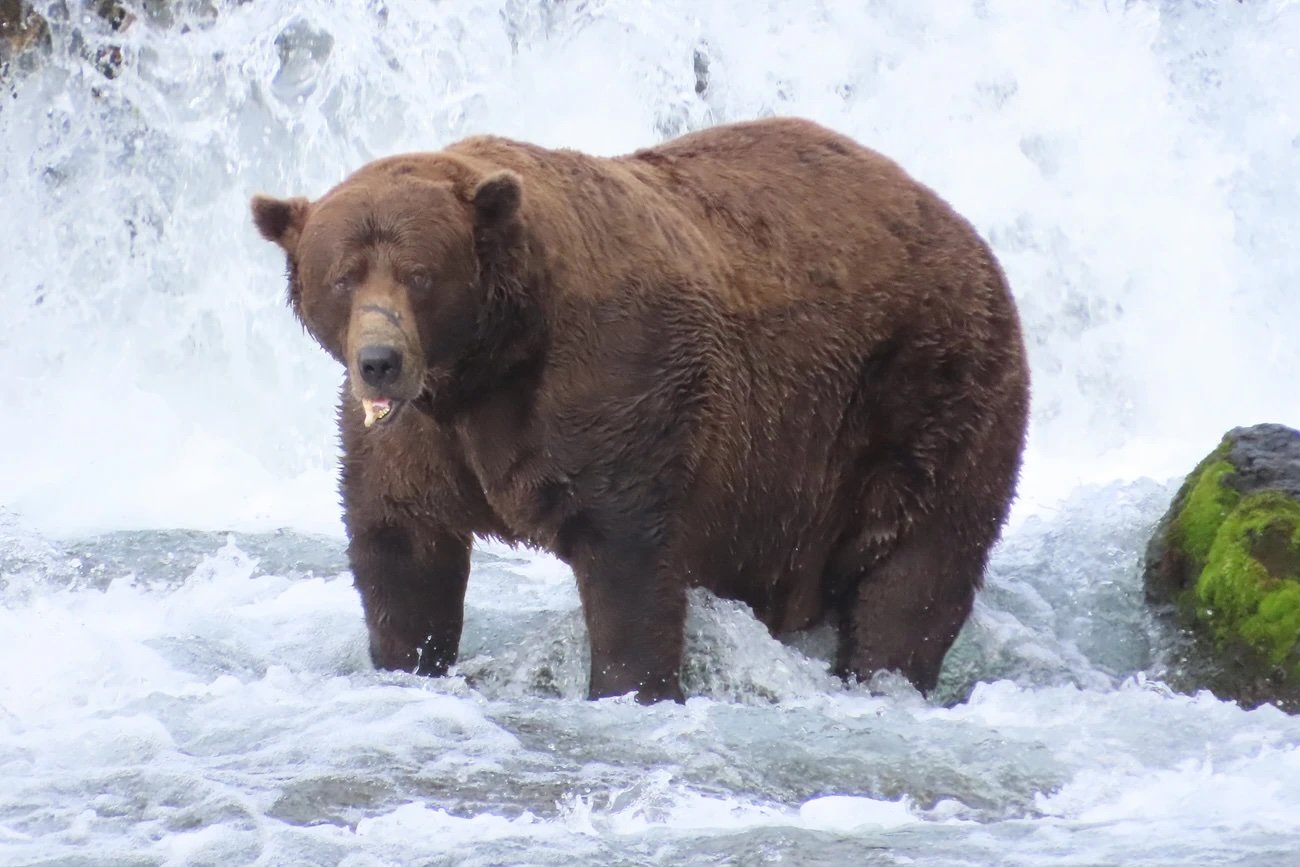
Chunk’s status as a fan favorite is well-earned. Last year, he captured the title with a commanding 96,350 votes, outperforming the runner-up, Bear #856, by a margin of 30,000 votes. Weighing in at an estimated 1,200 pounds, Chunk is physically imposing, but it is his resilience that has garnered him a dedicated following. During the 2025 season, observers noted that Chunk had suffered a severe injury resulting in a misaligned mandible. Despite this impairment, which might have proven fatal for a less capable bear, Chunk adapted his foraging techniques, successfully maintaining his position as one of the most dominant and successful fishers at Brooks Falls.
A Legacy of Resilience and Dominance
The story of Bear #32 is not merely one of aesthetic bulk, but of biological adaptation. When he first emerged from hibernation in 2025 with a broken jaw—likely sustained during an inter-male territorial dispute—park rangers and biologists expressed cautious concern regarding his ability to compete for salmon. However, Chunk demonstrated remarkable behavioral flexibility. By avoiding high-energy, direct confrontations with other large, aggressive males and refining his fishing mechanics to accommodate his jaw injury, he proved that physical trauma does not necessarily dictate a bear’s survival success in the Katmai ecosystem.
His early return this season—spotted by remote sensors as early as April—underscores the shifting patterns of the Katmai bear population. While the traditional salmon run at Brooks River typically draws bears into the camera’s view by June, early sightings of apex predators are becoming a critical focus for researchers tracking the impacts of shifting climate conditions and prey availability.
The Competitive Landscape of Fat Bear Week
The transition from the 2025 season to the upcoming 2026 competition has been marked by both triumph and tragedy. The competition, which serves as both an educational platform and a lighthearted celebration of ursine biology, highlights the extreme weight fluctuations of brown bears. An adult male can transition from approximately 700 pounds in the early summer to over 1,200 pounds by the time they enter their dens for winter.
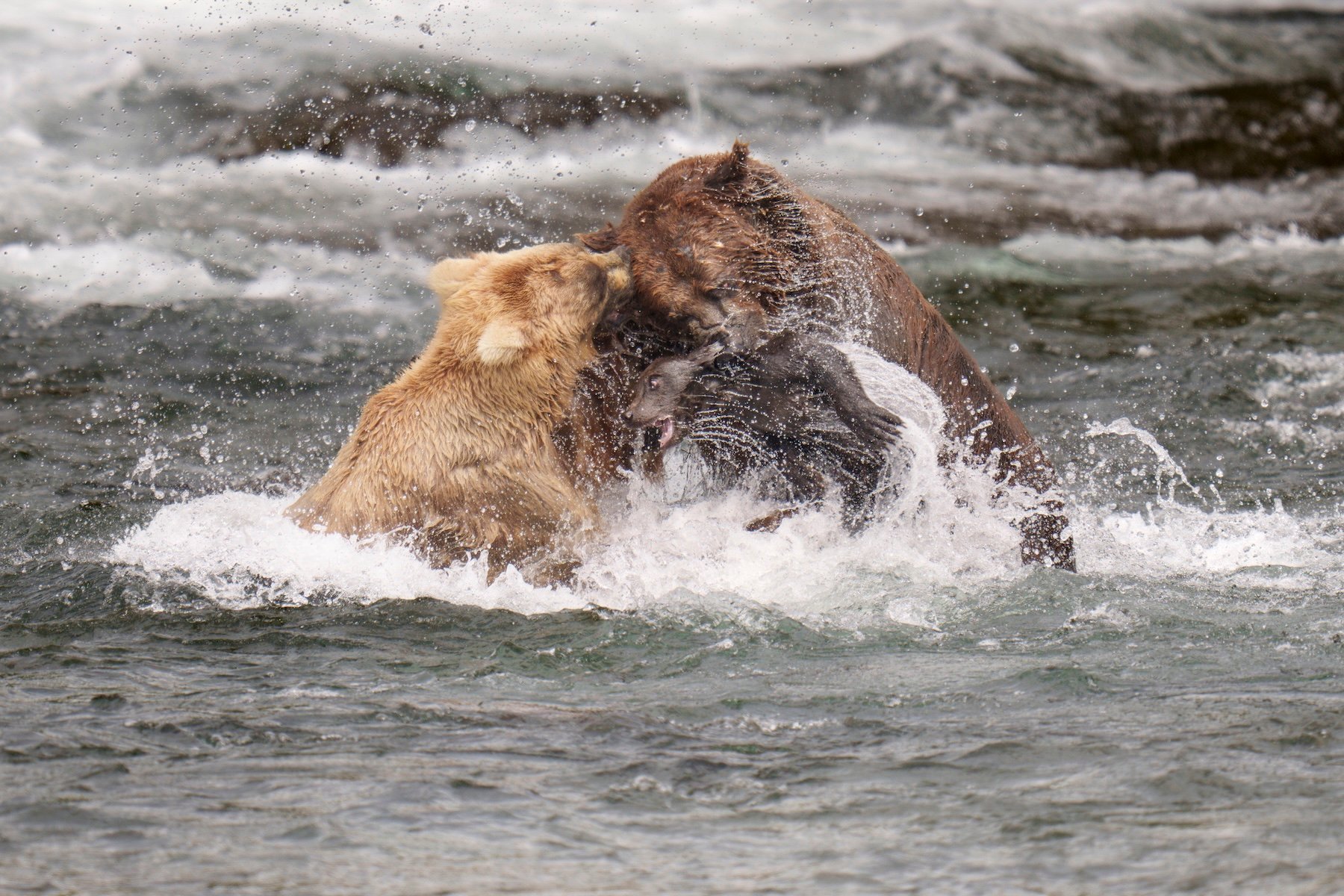
This year’s bracket, scheduled for release on September 18, will be closely watched. Chunk’s previous rivalry with Bear #402 (Grazer), a formidable female who secured the title in 2023 and 2024, remains a point of contention among enthusiasts. The competition is not just a popularity contest; it is a testament to the survival strategies of these animals. Grazer, known for her defensive prowess, has often been a polarizing figure, particularly following the 2024 incident involving her cubs and Chunk. That encounter, which resulted in the loss of one of Grazer’s cubs, highlighted the brutal realities of the wild, providing a stark reminder that these animals are not characters in a storybook, but wild creatures navigating a high-stakes environment.
Scientific Context and Biological Implications
The importance of Fat Bear Week extends far beyond the digital voting booth. It functions as a massive public engagement tool for the National Park Service and its partners at explore.org. By tracking the physical development of individual bears, the public gains a front-row seat to the ecological health of the Katmai region.
The 2026 season has been particularly informative for wildlife biologists. This summer, the cameras recorded rare instances of aggressive behavior, including infanticide by adult female bears. In late July, a young cub was killed by Bear #806, and in early August, a cub belonging to Bear #335 (Jolly) was killed following a confrontation in a tree. Naturalist Mike Fitz, alongside park rangers Christine Loberg and Sarah Bruce, have noted that these behaviors, while distressing to human observers, are part of the natural, if brutal, survival strategies observed in dense bear populations. Theories regarding these occurrences range from increased competition for prime fishing real estate to broader shifts in social hierarchy within the Brooks River population.
Official Logistics for Fat Bear Week 2026
For those intending to participate in the upcoming voting process, the schedule is strictly defined. The 2026 tournament commences on Tuesday, September 22, and will conclude with the announcement of the champion on Tuesday, September 29. Votes can be cast daily at fatbearweek.org between the hours of 12:00 p.m. and 9:00 p.m. EDT.
The selection process involves comparing photographic evidence of the bears from early summer to their late-season forms. This visual contrast provides the most objective metric for voters to assess which bear has most successfully navigated the challenges of the salmon run. Organizers encourage voters to read the provided biographical profiles, which detail the individual history, injury reports, and unique behavioral quirks of each bear, such as the fishing style of Bear #164 (Bucky Dent) or the water-traversing habits of Bear #284 (Electra).
Supporting Conservation Efforts
The longevity of this program is supported by the Katmai Conservancy, particularly through the Otis Fund. Named in honor of Bear #480 (Otis), a four-time champion who passed away around 2024, the fund supports the preservation of the habitat that allows these bears to thrive. explore.org has committed to matching all donations made between September 22 and October 3, providing a tangible way for the public to contribute to the protection of the Katmai ecosystem.
The death of Otis served as a turning point for many followers of the bear cams, solidifying the importance of documenting these animals throughout their life cycles. From the introduction of a cub with silver-hued fur to the survival lessons learned by young bears—such as the dangers of porcupine quills—the cameras offer an unprecedented, unfiltered view of North American brown bear life.

The Broader Impact of Public Engagement
The phenomenon of Fat Bear Week has successfully bridged the gap between scientific observation and public interest. By humanizing these animals through the competition, Katmai National Park has fostered a community that is deeply invested in the long-term conservation of the region. The data collected by the park and the public’s observation of individual bears provide researchers with a unique, long-term dataset on animal health and population dynamics.
As the 2026 bracket is finalized, the focus remains on the biological imperative. The salmon run is the lifeblood of the Brooks River, and the ability of bears like Chunk, Grazer, and others to thrive is a direct indicator of the river’s health. Whether or not Chunk retains his crown, his presence serves as a symbol of the resilience required to survive in one of the world’s last truly wild spaces.
For those interested in the ongoing daily lives of the Katmai bears, the explore.org live cameras remain active, offering a continuous stream of observations from the riverbanks. As the leaves begin to turn and the salmon run reaches its peak, the competition for weight, dominance, and survival at Brooks Falls continues, uninterrupted by the millions of digital eyes watching from across the globe. The upcoming week of voting will once again highlight the intersection of biological necessity and human interest, ensuring that the legacy of Katmai’s bears remains a central part of the global conversation on wildlife conservation and ecological awareness.
The 2026 Fat Bear Week is not merely a contest of mass; it is a recognition of the individual struggle of every bear that enters the Brooks River. Each participant, whether a veteran champion or a new entrant, represents a complex life story played out in the rugged terrain of Alaska. As participants prepare to cast their votes, they are reminded that every pound gained represents a successful foraging effort, a lesson learned, and a step closer to surviving the winter. The return of Chunk to the cameras this week is a reminder that in the wild, the cycle of life continues, and the upcoming champion will be the bear that most effectively balances the demands of the river with the requirements of the season.

