
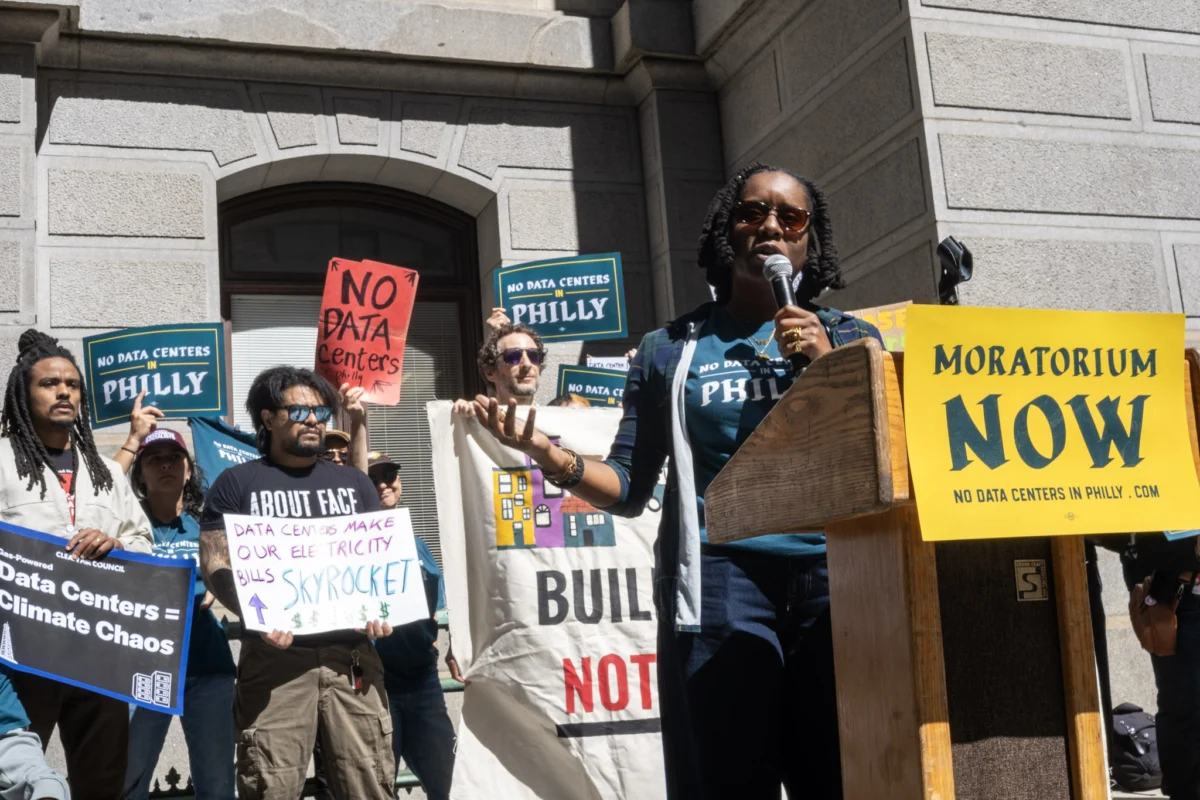
Across the United States, a significant tension is mounting between the rapid, capital-intensive expansion of artificial intelligence infrastructure and the preservation of local community health and resource stability. While tech giants and data center developers frequently champion their projects as engines of economic revitalization, job creation, and tax revenue, a growing chorus of local activists, environmental scientists, and municipal leaders are challenging these narratives. Recent data from Gallup indicates that a majority of Americans now express opposition to the construction of large-scale data centers in their immediate vicinity, citing deep-seated anxieties regarding air quality, excessive water consumption, and the strain placed on local electrical grids.
This pushback has moved beyond abstract policy debates, manifesting in organized protest movements in cities ranging from Philadelphia to Reno. For residents who have spent decades living in the shadow of heavy industrialization, the arrival of AI infrastructure is not viewed as a futuristic upgrade but as the next iteration of environmental degradation.
A Legacy of Industrial Trauma in Philadelphia
In Philadelphia’s Grays Ferry neighborhood, the skepticism toward new industrial infrastructure is rooted in painful history. Shawmar Pitts, a lifelong resident and managing co-director of the environmental justice group Philly Thrive, grew up adjacent to the Philadelphia Energy Solutions (PES) oil refinery, which, at its peak, was the largest on the East Coast.

The refinery’s presence was a constant in the lives of local residents until a massive explosion in 2019 shuttered the facility. However, the closure did not erase the health consequences. Pitts’ journey into activism began in 2018 when he encountered Philly Thrive members tabling to protest a proposed expansion of the refinery. As he reviewed the literature documenting the long-term health risks associated with living near the site, he began to draw connections between the industrial emissions and the chronic health conditions afflicting his own family and neighbors.
“I’m looking at all the sicknesses on this paper, and I’m like, ‘My mother has this, my sister has that, my next-door neighbor suffers from this’—every house, someone has something on that list,” Pitts noted. This realization transformed him into a leading voice for the “No Data Centers in Philly” campaign. The movement is now actively lobbying for a city-wide moratorium on data center construction, specifically targeting two potential sites identified by local planners: one in the Northeast and another in Grays Ferry.
The Macroeconomic Scale of AI Energy Consumption
The apprehension felt by residents in Grays Ferry is supported by increasingly stark projections regarding the energy requirements of modern AI. According to data from BloombergNEF, the demand for natural gas to power U.S. data centers is expected to reach unprecedented levels by 2035, with consumption levels projected to surpass the combined natural gas usage of Germany and Japan.
This rapid expansion represents a significant shift in national energy planning. While natural gas is often touted as a "bridge fuel" that burns cleaner than oil, it remains a potent source of carbon dioxide emissions. The environmental impact is not merely a matter of fuel choice; it is a matter of volume. Experts estimate that additional demand from data centers could generate an extra 1 million metric tons of greenhouse gas emissions daily. This scale of consumption is estimated to represent roughly 12% of current total U.S. greenhouse gas emissions.

The public health implications are equally concerning. Research from Harvard University in 2021 linked fossil fuel-related air pollution to one in five deaths worldwide. As data centers proliferate, the increased reliance on on-site diesel generators—often used to bridge gaps when the electrical grid reaches capacity—threatens to degrade air quality in the immediate vicinity of these facilities.
The Regulatory Counter-Movement: A Growing Trend
The movement against data centers is gaining legislative traction. In July 2026, New York Governor Kathy Hochul issued an executive order placing a temporary halt on the approval of permits for large-scale data center projects. Governor Hochul’s stance reflects a growing realization among state leaders that the rapid deployment of AI infrastructure must be reconciled with existing climate goals and local infrastructure limits.
“Progress shouldn’t arrive with a higher utility bill, deleted water supply, or noise pollution,” Governor Hochul stated during the announcement. Her administration’s move has set a precedent for other regions, with moratoriums or extended review periods already implemented in Denver, Indianapolis, Asheville, Charlotte, and Reno.
These municipal actions are primarily intended to provide breathing room for city planners to evaluate the long-term impacts on water tables, grid stability, and noise pollution. In Indianapolis, the Metropolitan Development Commission recently approved a unanimous moratorium, citing the need for a comprehensive study on the "cumulative impact" of energy-intensive computing facilities.

Voices from the Front Lines
At a rally held at Philadelphia’s City Hall, the emotional toll of industrial proximity was palpable. Sonya Sanders, president of the Philly Thrive board, shared the story of her husband, who succumbed to a rare form of bone cancer in 2020. A non-smoker who lived in Grays Ferry, Sanders remains convinced that the emissions from the nearby refinery were the primary catalyst for his illness.
“In my eyes, they killed him,” Sanders said. “I believe he would be here today if he wasn’t silently murdered, because it was the pursuit of profit that killed him.” Her words resonated with the crowd of over 100 people, highlighting the visceral distrust that many communities harbor toward large-scale projects that promise economic prosperity but deliver environmental burden.
Donna Greenberg, another attendee at the rally, emphasized that the concern is not limited to air quality. “I’m worried about surveillance and the fact that they’re going to have access to information they have no business knowing,” she said, pointing to the intersection of data center infrastructure and the privacy concerns inherent in the AI age. Furthermore, the massive water requirements for cooling high-performance computing racks have caused anxiety regarding the depletion of local resources.
The Conflict of Priorities
The conflict reflects a broader national debate: how should the U.S. balance its ambition to maintain global leadership in artificial intelligence with the fundamental rights of citizens to safe, sustainable living environments?

Industry representatives argue that data centers are the backbone of the digital economy, enabling advancements in medicine, logistics, and scientific research. They maintain that modern data centers are becoming increasingly efficient and that their presence can attract tech-focused companies to the region, creating high-skilled jobs.
However, critics, including environmental attorneys like the Clean Air Council’s Annie Fox, argue that these benefits are often overstated and geographically disconnected from the communities that bear the brunt of the physical infrastructure. “A typical data center planned in Pennsylvania has hundreds of diesel engines that spew air pollution,” Fox argued. “We can expect [grid strain] to get more frequent… Fossil fuel-hungry data centers will worsen climate change, making those heatwaves more frequent and severe.”
Conclusion: A Turning Point
The current landscape is defined by a significant power imbalance between tech conglomerates and local municipalities. However, the legislative successes of activists in cities like New York and Charlotte suggest that the tide may be turning. The demand for greater transparency, clearer environmental impact assessments, and more equitable distribution of the risks associated with AI infrastructure is becoming a mainstream political issue.
For activists like Shawmar Pitts, the goal is not merely to block specific sites but to fundamentally change the way that industrial expansion is planned. The "No Data Centers in Philly" campaign represents a demand for agency—a desire to ensure that the cities of the future are built with the health of their current residents as the primary metric of success, rather than the efficiency of the servers that power the digital economy. As the industry continues to scale, the ability of municipal governments to balance these competing interests will likely serve as a defining challenge of the coming decade.

