
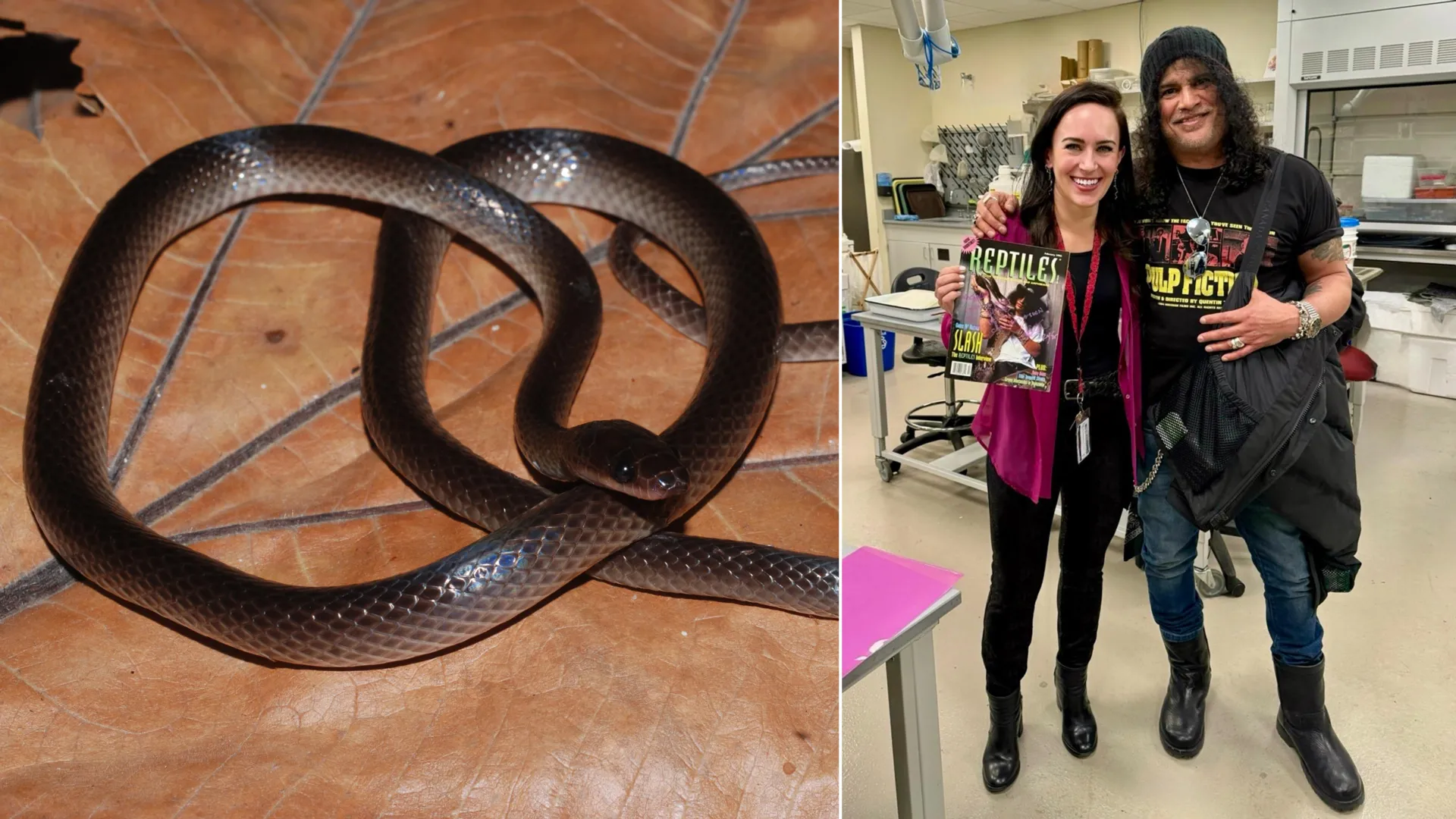
Saul Hudson, globally recognized by his stage name Slash, has solidified his legacy in music history as the iconic lead guitarist of Guns N’ Roses. However, beyond the sold-out stadiums and the legendary guitar solos, the musician has nurtured a lifelong, private dedication to the study and preservation of reptiles. This parallel passion has recently culminated in a unique intersection of pop culture and biological taxonomy: a newly identified species of snake found in the dense, biodiverse forests of New Guinea has been officially named Lielaphis slashi, or "Slash’s groundsnake."
The naming of the species, published in the scientific journal Zootaxa, serves as more than just a nod to a rock star; it highlights the critical, ongoing efforts of the herpetological community to catalog the immense biological diversity of New Guinea, an island that remains one of the final frontiers for scientific discovery.
A Convergence of Music and Herpetology
For the lead researcher on the project, Sara Ruane, Associate Curator of Herpetology at the Field Museum, the naming choice was deeply personal. Ruane, who grew up as an avid fan of Guns N’ Roses, recalls a formative moment in her childhood when she saw Slash on the cover of Reptiles Magazine, cradling a reticulated python. That image bridged the gap between her musical interests and her professional ambitions, reinforcing the idea that an interest in the natural world was both sophisticated and "cool."
When the opportunity arose to assign a name to the 28-inch, reddish-brown snake, Ruane looked back at interviews with the musician. She found that Slash’s long-standing advocacy for museums, zoos, and the natural history of reptiles aligned perfectly with the scientific values she championed. Upon being informed of the honor, Slash expressed a mix of humility and excitement, noting that as a dedicated "herpephile," he never anticipated such a significant scientific tribute.
Chronology of a Discovery
The journey to identifying Lielaphis slashi began nearly two decades ago. In 2006, during a nocturnal field expedition in the lush wilderness of New Guinea, Chris Austin, a professor and curator of herpetology at the Louisiana State University Museum of Natural Science, encountered a specimen that did not match the morphological profiles of known groundsnakes.
The collection of the specimen was part of a broader, long-term initiative to document the reptilian fauna of New Guinea, an island divided politically between Indonesia and Papua New Guinea. The environment is notoriously difficult to survey, characterized by extreme humidity, dense vegetation, and a high concentration of venomous species that often mimic the appearance of non-venomous ones.
Following the initial collection, the specimen remained part of a larger research collection. It was not until 2016, when Ruane began collaborating with Austin, that the two researchers began a systematic review of the New Guinea groundsnake genus. This partnership, which has continued for nearly a decade, utilized the extensive resources of the Louisiana State University Museum of Natural Science and the Field Museum to perform a comparative analysis of the snake’s anatomy and genetics.
Methodology and Genetic Validation
The classification of Lielaphis slashi as a distinct species relied on a multi-disciplinary approach. Tianqi Huang, the study’s first author and a post-doctoral researcher at the Field Museum, spearheaded the laboratory analysis. The team employed state-of-the-art genetic sequencing to compare the DNA of the specimen against other known members of the Lielaphis genus.
The genetic data revealed clear, evolutionary divergence, confirming that the snake represented a unique lineage. To solidify these findings, the team conducted a detailed morphological study, identifying specific variations in scale patterns—a primary diagnostic tool in herpetology. Furthermore, the team utilized ecological modeling software to analyze the environmental variables of the snake’s habitat. The data indicated that Lielaphis slashi occupies a specific ecological niche distinct from its close relatives, reinforcing its status as a separate species.
The Biology of the Groundsnake
Despite the formal classification, the behavior of Lielaphis slashi remains largely a mystery to science. The nocturnal nature of the species makes field observation exceptionally challenging. Based on the anatomical structure of the specimen, researchers have inferred potential dietary habits.
The snake possesses large teeth located in the rear of its mouth, a feature that differentiates it from constrictor species. Experts suggest that these specialized teeth are likely used to secure and manipulate slippery, small-scaled lizards and the eggs of other reptiles, which are common food sources in the forest understory. Notably, while the media often associates the name "Slash" with the "most dangerous band in the world," this species is not medically significant to humans; it does not possess venom capable of inflicting harm on people, allowing it to exist in its natural habitat without posing a threat to the local human population.
The Broader Implications for Biodiversity and Conservation
The discovery of Lielaphis slashi is a microcosm of the larger challenges facing New Guinea’s ecosystems. The island, which ranks as the world’s second-largest, is a critical biodiversity hotspot. However, it is also a region facing rapid environmental transformation due to industrial expansion, specifically in the sectors of large-scale coffee farming and mining operations.
Ruane emphasizes that the formal naming and description of such species is a prerequisite for conservation. "We cannot conserve animals or other living things that we don’t know about," Ruane stated. By identifying Lielaphis slashi, researchers have added a new data point to the map of New Guinea’s biological wealth, providing a legal and scientific basis to advocate for the protection of the specific forests where this snake resides.
The study reflects a collaborative effort involving experts from the Field Museum, Rutgers University, Louisiana State University, Slippery Rock University, the American Museum of Natural History, the Papua New Guinea National Museum and Art Gallery, the Virginia Museum of Natural History, and the University of Kentucky.
Future Perspectives in Herpetology
The naming of Lielaphis slashi underscores a growing trend in the scientific community: the use of public-facing figures to draw attention to taxonomic research. By linking a new species to a recognizable name, researchers can effectively bridge the gap between niche scientific literature and public interest, thereby increasing the visibility of biodiversity loss.
As habitat destruction continues to threaten the unexplored reaches of New Guinea, the work of Ruane, Austin, and their colleagues serves as a vital record. Each species described is a piece of the puzzle in understanding how global ecosystems function and how they might be preserved in the face of anthropogenic climate change and land-use shifts.
For Slash, the honor is a permanent fixture in the annals of natural history, ensuring that his name will be associated with the advancement of herpetology long after his musical career has concluded. For the scientific community, the discovery is a reminder that even in the 21st century, the natural world still holds vast, uncatalogued secrets waiting for the right team to discover them. The documentation of Lielaphis slashi stands as a testament to the importance of institutional collaboration, persistent field research, and the enduring fascination with the natural world that connects scientists and the public alike.

