
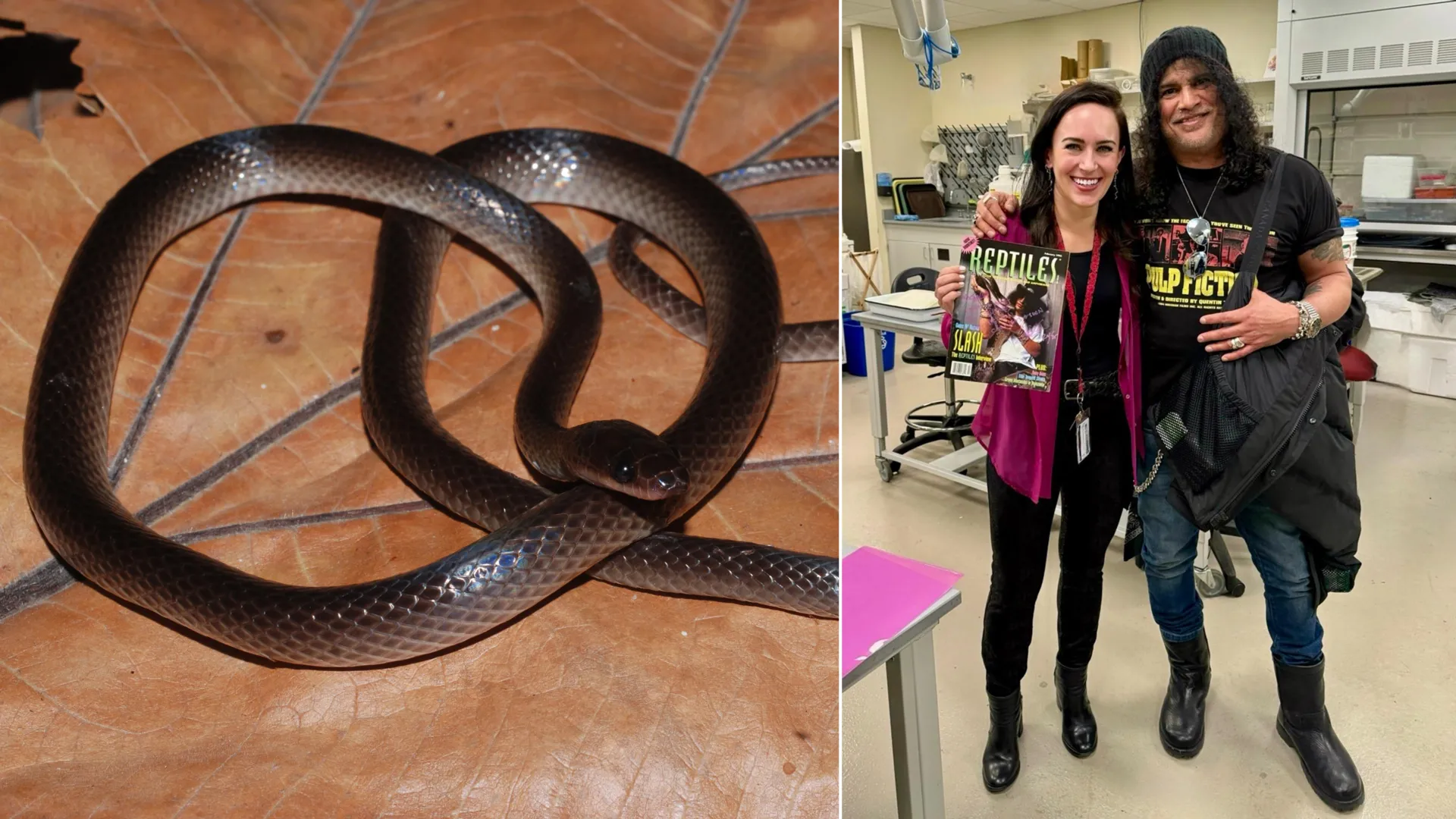
Saul Hudson, globally recognized by his stage name Slash, has cemented his status as a rock icon through his virtuosic lead guitar work with Guns N’ Roses. However, behind the leather, top hats, and arena-filling solos lies a dedicated advocate for the natural world. This intersection of musical fame and biological curiosity has recently culminated in a rare scientific honor: the naming of a newly identified snake species from the forests of New Guinea, Lielaphis slashi, colloquially known as Slash’s groundsnake.
The formal description of the species, published in the scientific journal Zootaxa, marks a significant milestone in herpetological research. For the scientific community, the discovery represents more than just a taxonomic update; it serves as a testament to the ongoing effort to document the world’s hidden biodiversity. For Slash, it represents a bridge between his lifelong fascination with reptiles and the formal world of academic natural history.
A Chronology of Discovery
The journey of Lielaphis slashi began long before it received its formal moniker. In 2006, during a nocturnal field expedition in the dense, biodiverse forests of New Guinea, Chris Austin, a professor and curator of herpetology at the Louisiana State University Museum of Natural Science, encountered a specimen that defied standard classification.
New Guinea, the world’s second-largest island, remains one of the most underexplored frontiers for biologists. Its rugged terrain and complex ecosystem present significant logistical challenges for researchers. During that 2006 expedition, the specimen was collected under the cover of darkness—the optimal time to observe nocturnal groundsnakes as they emerge from the base of large trees to forage.
The formal classification process, however, would not begin in earnest for several years. In 2016, the collaboration between Chris Austin and Sara Ruane, currently the Field Museum’s Associate Curator of Herpetology, accelerated the study of New Guinea’s reptilian fauna. Utilizing the specimens gathered over the previous decade, the team employed modern molecular techniques to differentiate the various species within the region’s complex ecosystem.
Genetic Analysis and Taxonomic Distinction
The identification of Lielaphis slashi relied on a rigorous, multi-faceted scientific approach. While the snake shares physical similarities with other species in the same genus, the researchers utilized cutting-edge genetic analysis to isolate the specific markers that define the new species.
Tianqi Huang, the study’s first author and a post-doctoral researcher at the Field Museum, emphasized that morphology alone was insufficient for identification. By comparing scale counts—a traditional method for identifying reptiles—with advanced genomic sequencing, the team successfully established the species as distinct. Furthermore, the researchers utilized ecological niche modeling to determine that the snake occupies a specific environmental footprint that differs from its closest relatives.
This process of "integrative taxonomy"—the combination of genetic, morphological, and ecological data—is increasingly vital in modern biology, where cryptic species often look identical to the naked eye but represent distinct evolutionary lineages.
The Personal Connection: Bridging Music and Science
The decision to name the species after the Guns N’ Roses guitarist was spearheaded by Dr. Sara Ruane, whose own career path was influenced by the musician’s public persona. As a youth, Ruane was a devotee of herpetology, and her interest was galvanized by a 1990s cover of Reptiles Magazine, which featured Slash with his pet reticulated python.
In a statement regarding the honor, Slash noted his genuine surprise and gratitude. "As a long-time herpetophile, I am extremely honored and humbled to have Lielaphis slashi from New Guinea named after me. It is really exciting, I never would have imagined this moment would arrive," he said.
This naming convention serves a dual purpose: it draws public attention to the field of herpetology and provides a tangible link between pop culture and scientific inquiry. Historically, scientists have often used eponyms to honor individuals who have contributed to the advancement of natural history or public interest in science. In this case, the choice acknowledges Slash’s long-standing support for zoos, museums, and wildlife conservation.
Ecological Context and Behavioral Traits
While the scientific community has formally cataloged Lielaphis slashi, much about its life history remains a mystery. The snake, which measures approximately 28 inches in length and possesses a distinct reddish-brown coloration, is part of a genus characterized by specialized dental morphology.
"Snakes in this genus often have large teeth in the back of their mouths," explains Dr. Ruane. Unlike constrictors, which use force to subdue their prey, these groundsnakes are believed to utilize their specialized dentition to secure small, slippery prey, such as skinks and other lizard species, as well as reptile eggs.
Despite the "dangerous" reputation associated with the band Guns N’ Roses, the snake itself is non-venomous and poses no threat to humans. This distinction is crucial for local populations in New Guinea, where accidental encounters with venomous, similarly appearing species are a constant risk for researchers and residents alike.
The Stakes of Biodiversity Conservation
The description of Lielaphis slashi carries significant weight in the context of global conservation. The habitats in which the snake resides are currently facing severe pressure from industrial expansion, particularly coffee plantations and mining operations.
"Every species should be recognized in order for us to better understand how ecosystems work, how everything fits into the environment," says Dr. Ruane. "We can’t conserve animals or other living things that we don’t know about."
This sentiment is echoed by the broader scientific community, which views taxonomic documentation as the first step toward effective environmental policy. By mapping where these animals live and defining their ecological needs, scientists provide the data necessary for governments and environmental groups to establish protected areas.
Future Implications for Research
The discovery of Lielaphis slashi is part of a larger, ongoing effort to document the immense biological richness of New Guinea. The research team, which includes experts from the Louisiana State University Museum of Natural Science, the Field Museum, the American Museum of Natural History, and the Papua New Guinea National Museum and Art Gallery, continues to study the region’s complex herpetofauna.
The identification of this species highlights the need for continued international collaboration. As the pressures of climate change and habitat destruction mount, the work conducted by these researchers provides a critical snapshot of current biodiversity. Each new species described is an entry in a massive, ongoing biological ledger, providing insights into evolutionary history and potential ecological shifts.
For the public, the inclusion of a rock icon in the nomenclature of a New Guinea groundsnake acts as a bridge. It invites fans of music to consider the importance of biodiversity and the scientific labor required to sustain it. In the quiet, humid forests of New Guinea, the Lielaphis slashi continues its life, largely indifferent to the acclaim its name has received in the global scientific community. However, its existence is now officially recognized, ensuring that as researchers move forward in their efforts to protect these environments, this particular piece of the puzzle is accounted for.
Conclusion
The identification of Lielaphis slashi is a rare convergence of history, science, and culture. It serves as a reminder that the world remains full of undiscovered life, waiting to be identified and protected. The partnership between scientists like Dr. Sara Ruane and Dr. Chris Austin, and the recognition of public figures like Saul Hudson, underscores the diverse ways in which the scientific community engages with the world. As habitat loss continues to threaten the delicate balance of New Guinea’s forests, the formal documentation of species becomes an act of stewardship, ensuring that the natural heritage of the region is documented, understood, and preserved for future generations.

