
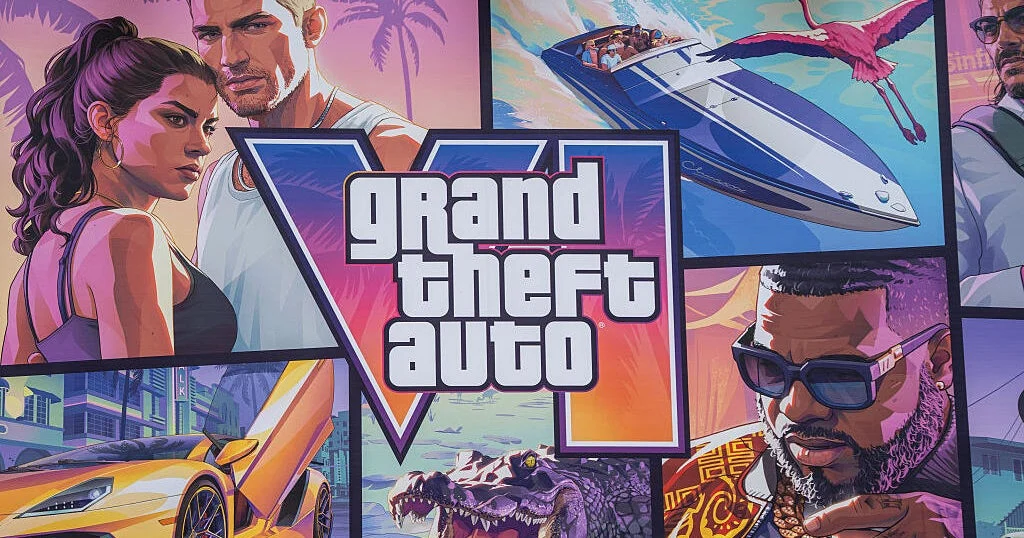
For many, this is not merely a product launch; it is a cultural phenomenon thirteen years in the making. As the successor to Grand Theft Auto V—which remains one of the best-selling video games of all time—Grand Theft Auto 6 is poised to shatter records across the entertainment industry. The anticipation has reached such a fever pitch that it is fundamentally altering workplace attendance patterns for the week of November 18, 2026.
A Surge in Paid Time Off Requests
The impact on the labor market is quantifiable. Data from payroll processor Gusto indicates that PTO requests for the day of the game’s commercial release have spiked by 9% compared to the two-week average preceding the launch. This trend suggests a widespread prioritization of digital recreation over professional obligations, reflecting a shift in how modern employees view their personal time.
The phenomenon is not limited to casual gamers. A 27-year-old postal clerk from Grays Harbor, Washington, revealed that she secured her time off as early as March 2026. Her primary motivation was twofold: to experience the game the moment it went live at 9 p.m. PST on Wednesday and, perhaps more crucially, to avoid the rapid proliferation of spoilers on social media. For this demographic, the threat of having the narrative ruined by online discourse is a significant driver for taking leave.
In the United Kingdom, the fervor is equally palpable. A tech finance professional, who spoke on condition of anonymity, confirmed he has taken a long weekend starting Wednesday to dedicate his full attention to the game. He went as far as configuring his PlayStation account to appear as though he were located in New Zealand—where the game debuted earlier due to time zone differences—to gain early access. This behavior highlights the extreme lengths to which the core fanbase is willing to go to participate in the global launch window.
Historical Context and Development Timeline
The scale of this release is unprecedented. Since the launch of Grand Theft Auto V in 2013, the gaming landscape has evolved significantly. For over a decade, Rockstar Games has remained tight-lipped regarding the development of the next entry, creating a vacuum of information that fueled rampant speculation and anticipation.
The thirteen-year gap between the two titles has allowed for technological advancements in hardware, graphics, and narrative complexity. Industry analysts at PwC, including partner Bart Spiegel, suggest that the release of Grand Theft Auto 6 is a cultural moment that transcends the gaming industry. Spiegel noted that the attention commanded by the title could rival major global events, such as the Olympics, and that the resulting "brain drain" in offices is an expected consequence of such a significant cultural release.
Corporate and Institutional Responses
Some organizations are choosing to lean into the enthusiasm rather than fight it. Logitech, the California-based hardware giant, made headlines earlier this month by introducing an official "Gaming Time Off" (GTO) perk, acknowledging that their employees would likely be distracted regardless of company policy.
Even more striking is the intersection of gaming culture and institutional policy. In August, a U.S. Army unit stationed in Georgia made international headlines when it offered active-duty soldiers a four-day pass as an incentive for reenlistment, with the explicit understanding that the time would be used to play the game. These instances suggest that large institutions are increasingly acknowledging the role of gaming as a primary leisure activity for their workforce, sometimes even leveraging it as a tool for retention and morale.
Economic Implications: Is There a Productivity Crisis?
While the rise in PTO requests might suggest a potential economic slowdown, experts remain largely unconcerned. Victor Matheson, a professor of economics at the College of the Holy Cross, argues that the impact on the broader U.S. economy will be negligible.
"Even if 5 million workers in the U.S. took the day off, the total U.S. labor force is roughly 170 million people," Matheson explained. "That represents about 3% of the labor force. While individual teams or departments might feel the absence of their colleagues, it does not constitute a systemic risk to the national economy."
Moreover, the financial performance of the game itself is projected to be monumental. Sensor Tower, a market intelligence firm, reports that over 17 million copies of the game have already been pre-ordered globally. Analysts project the user base could climb to over 50 million by the conclusion of 2026, positioning Grand Theft Auto 6 as the most profitable entertainment product in history.
A Multi-Generational Experience
The appeal of the franchise has spanned generations. For individuals like Cameron Logan Cox, the excitement is nostalgic. He first played the original Grand Theft Auto on a PlayStation console in 1999. Today, he is sharing the experience with his own child. In a rare instance of parental cooperation, Cox has granted his son permission to miss two days of school to play the game, provided that all schoolwork is completed in advance.
"It feels like I’m a kid again," Cox noted. This sentiment—a blend of childhood wonder and adult anticipation—is the engine driving the game’s success. It represents a rare alignment where the target demographic from the late 90s and early 2000s has matured alongside the franchise, maintaining their loyalty while introducing the experience to a new generation.
Looking Ahead
As the world prepares for the full rollout of Grand Theft Auto 6, the focus of the conversation is shifting from the game’s mechanics to the sociopolitical impact of its release. The "spoiler economy," the normalization of gaming-related leave, and the sheer volume of concurrent players expected to log on simultaneously will serve as a stress test for digital infrastructure providers and workplace management systems alike.
While the immediate fallout will likely be a temporary dip in office attendance and a surge in late-night gaming sessions, the long-term implications are clear: video games are no longer a peripheral hobby. They have solidified their position as the dominant form of interactive media, capable of commanding the time, resources, and attention of millions of people worldwide. As of this writing, the gaming community remains in a state of high alert, awaiting the final moments before the game is accessible to all, marking the end of a long wait and the beginning of a new chapter in digital entertainment.

