
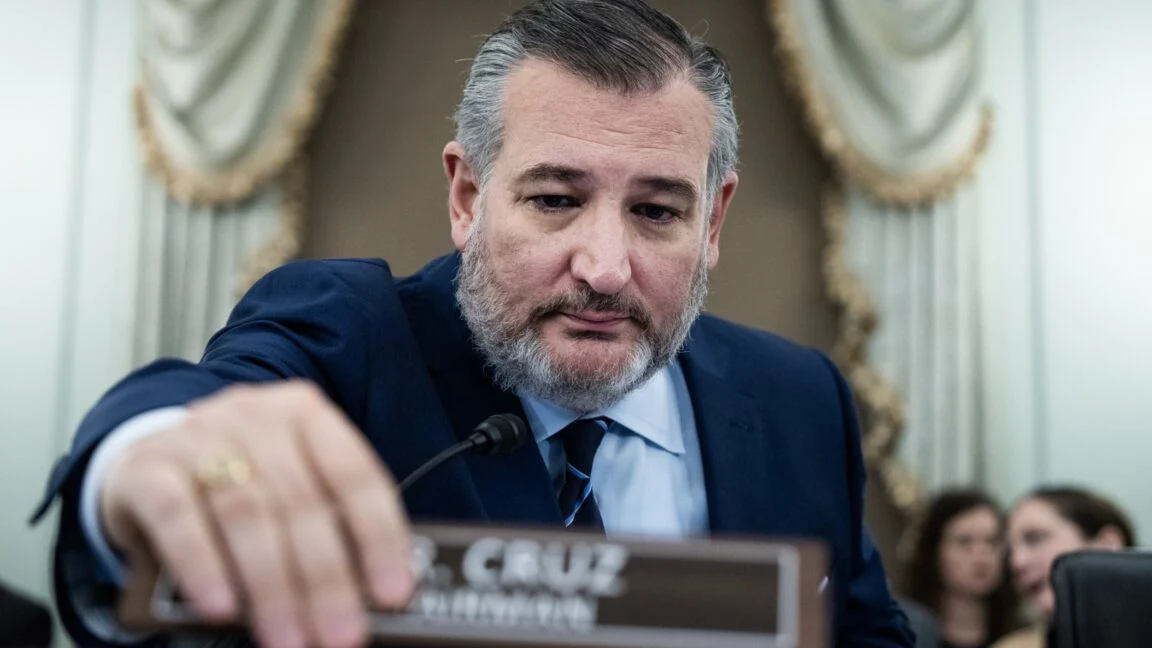
Washington — The Senate Commerce, Science, and Transportation Committee voted unanimously along party lines to advance the nomination of Danielle Thumann to the Federal Communications Commission (FCC), overcoming a fierce procedural boycott by committee Democrats. The session, convened by Chairman Ted Cruz (R-Texas), saw all 15 Republican members vote in favor of Thumann’s confirmation, while all 13 Democratic members abstained to protest what they characterized as a partisan attempt to stack the independent regulatory agency during a lame-duck congressional session.
The confirmation hearing and subsequent vote marked the culmination of escalating tensions between congressional Republicans and Democrats over the future direction of telecommunications policy, media regulation, and institutional norms governing independent federal commissions. As the Senate prepares for a transition of power, the expedited consideration of Thumann has triggered intense scrutiny regarding her past professional disclosures, communications with agency leadership, and the fundamental rules governing committee quorums.
The Core Controversy and the Boycott
The procedural standoff began to crystallize days prior to the vote, when Senate Commerce Committee Democrats announced a unified boycott of the scheduled markup. Ranking Member Maria Cantwell (D-Wash.) and her Democratic colleagues argued that advancing Thumann’s nomination during the lame-duck session violated established committee precedents and circumvented the traditional practice of pairing nominees to maintain a balanced partisan composition at the FCC.
"All Democratic members of the Commerce, Science and Transportation Committee object to the majority stacking independent commissions with Republicans and rushing nominees through the Committee process in this lame duck session with no Democratic pairs," Cantwell stated prior to the vote.
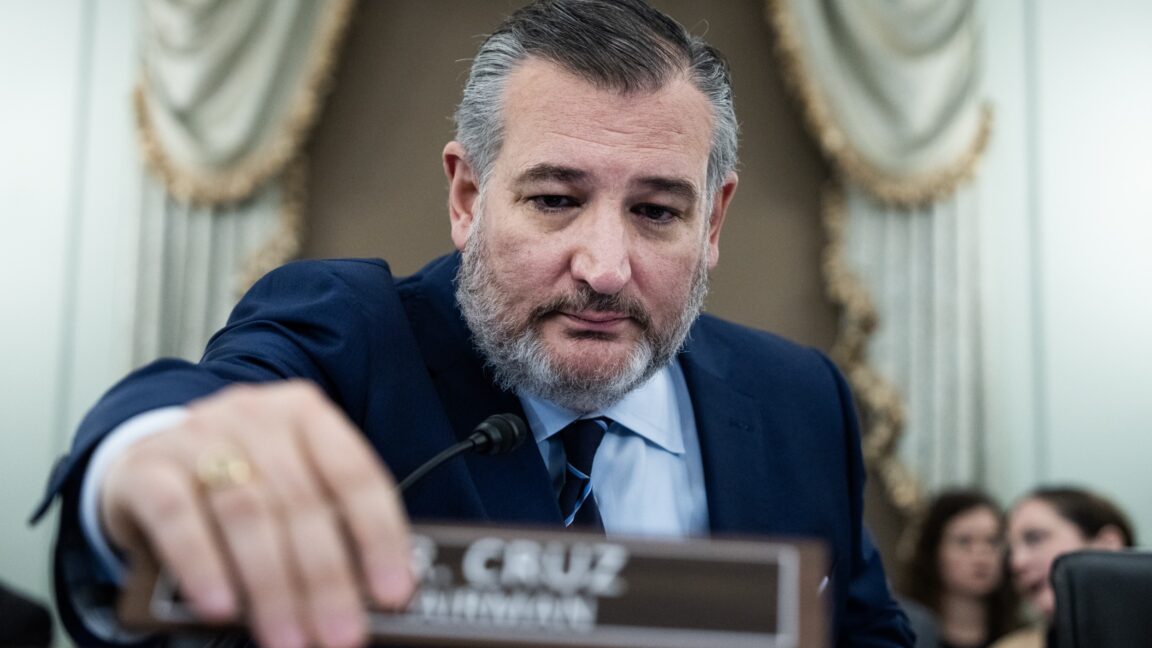
Despite the absence of the entire minority bloc, Chairman Cruz elected to proceed with the markup, invoking procedural interpretations of Senate rules to justify the action. "We’re going to be doing our job today, even if the Democrats refuse to show up to do theirs," Cruz declared at the outset of the hearing. He further dismissed the necessity of pairing nominations, pointing out that statutory frameworks governing the FCC simply limit single-party majorities rather than mandating bipartisan submission bundles.
The Nominee Under Fire: False Testimony Allegations
At the center of the political storm is Danielle Thumann, who has served as senior counsel to FCC Chairman Brendan Carr. Thumann’s path to a full commission seat hit a major roadblock following a contentious confirmation hearing held the previous week. During that session, Senator Ben Ray Luján (D-N.M.) questioned Thumann regarding her direct or indirect involvement in media-related matters under Carr’s purview, specifically asking whether she supported what Democrats have characterized as an aggressive regulatory approach toward broadcast networks, including controversial public commentary surrounding late-night television and news reporting.
In response to Luján’s direct inquiry regarding her involvement in media-related disputes, Thumann testified unequivocally: "I have not worked with the chairman on any media-related issues."
However, this assertion was swiftly challenged after watchdogs and lawmakers uncovered documents through Freedom of Information Act (FOIA) requests and public records disclosures. Public interest groups, including Protect Democracy, obtained agency correspondence revealing that Thumann had indeed interacted with matters touching upon media policy and regulatory filings. Specifically, records showed she was looped into communications regarding commitments made by Skydance Media to facilitate FCC approval of its high-profile merger with Paramount Global, as well as informal complaints directed at CBS’s 60 Minutes regarding an interview with then-Vice President Kamala Harris.
In a formal letter sent to Chairman Cruz, Senator Luján asserted that Thumann had misled the committee. "It appears that Ms. Thumann misled the Committee and offered false testimony, seriously calling into question her judgment and character and impeding the Committee’s work in determining whether she should be seated on the Commission," Luján wrote. He noted that while Thumann claimed to have zero involvement in media matters, FOIA documents demonstrated she played a role in processing informal news-distortion complaints and drafting agency correspondence regarding public controversies.
Thumann subsequently submitted follow-up clarifications to the committee, stating that her duties occasionally required reviewing documents or filings outside her primary wireline and public safety portfolios, while maintaining that she never engaged in direct negotiations with Paramount, CBS, or Skydance concerning their corporate merger. Furthermore, internal emails showed that while she coordinated consumer response language regarding the 60 Minutes controversy—directing complainants to submit formal comments via the agency’s Electronic Comment Filing System (ECFS)—her direct involvement was largely administrative rather than policy-formulating.
Chronology of Events and Escalating Tensions
The timeline leading up to the committee vote highlights the rapid acceleration of the confirmation process:
- November 2024–January 2025: Regulatory shifts occur within the FCC under Chairman Brendan Carr, with heightened agency scrutiny directed at broadcast networks, media mergers, and news distortion complaints.
- Mid-November 2026: Confirmation hearings take place for FCC nominee Danielle Thumann, during which she testifies that she has not worked on media-related issues under Chairman Carr.
- Late November 2026: Public records requests unearth internal FCC correspondence showing Thumann’s exposure to merger commitments and broadcast complaint management. Senator Luján demands a retraction and further investigation into potential false testimony.
- Days Prior to Vote: Senate Commerce Committee Democrats formally announce a boycott, citing procedural overreach, the lack of pairing, and hypocrisy regarding lame-duck confirmations, referencing Cruz’s own 2024 statements cautioning against controversial confirmations by outgoing lawmakers.
- January 28, 2025 (Markup Day): Chairman Cruz convenes the committee. With all 13 Democrats absent, the 15 Republican members establish a quorum under alternative Senate rule interpretations and vote 15-0 to advance Thumann’s nomination to the full Senate.
The Quorum Debate: Committee Rules vs. Standing Senate Rules

The legality and procedural integrity of Tuesday’s vote immediately became a battleground over parliamentary interpretation. Committee rules traditionally mandate that a quorum for official actions—such as advancing bills, resolutions, or nominations—must include at least one member of the minority party. This requirement has been a standard operating procedure of the Senate Commerce Committee since 2005.
However, Democratic aides pointed out a technicality: due to an administrative oversight or failure by Chairman Cruz to formally pass updated committee rules for the current legislative session, the committee had operated by adopting the customary practices of the previous Congress. Cantwell’s office argued that by violating this long-standing bipartisan custom, the Republican majority acted outside the bounds of established committee etiquette.
In response, Cruz’s office relied on the Standing Rules of the Senate—specifically Paragraph 7 of Rule XXVI. This rule stipulates that committee reporting measures require a physical majority of members present but does not explicitly mandate minority attendance. Furthermore, legal analysts pointed to the rule’s internal "cleansing clause," which protects measures reported from a committee against points of order on the Senate floor, provided the physical majority threshold of Rule XXVI is satisfied. A Cruz spokesperson maintained that this mechanism shields the nomination from being overturned on procedural technicalities once it reaches the broader legislative body.
Broader Policy Implications and the Future of the FCC
The advancement of Thumann’s nomination carries profound implications for the regulatory balance of the Federal Communications Commission. Under the Communications Act of 1934, independent regulatory agencies are structured to prevent absolute partisan domination by limiting the number of commissioners from a single political party to a simple majority. For the FCC, which consists of five commissioners, this means no more than three members can belong to the same political party.
If Thumann is confirmed by the full Senate, the commission will tilt toward a 3-1 Republican majority, assuming current vacancies and terms. The remaining Democratic commissioner, Anna Gomez, faces a term expiration at the end of 2027 unless renominated. Democrats argue that rushing Thumann through the committee breaks historical norms that pair nominees across party lines to ensure ideological balance and institutional stability.
Republicans, however, argue that the executive branch possesses full constitutional authority to put forward qualified nominees without artificial bipartisan pairing mandates, provided the statutory limits on party affiliation are strictly observed. With the committee vote successfully cleared, the nomination now moves toward the full Senate floor. While the path ahead remains politically charged, the Republican majority aims to secure final confirmation before the shifting congressional landscape alters the chamber’s voting dynamics in the new year.

